

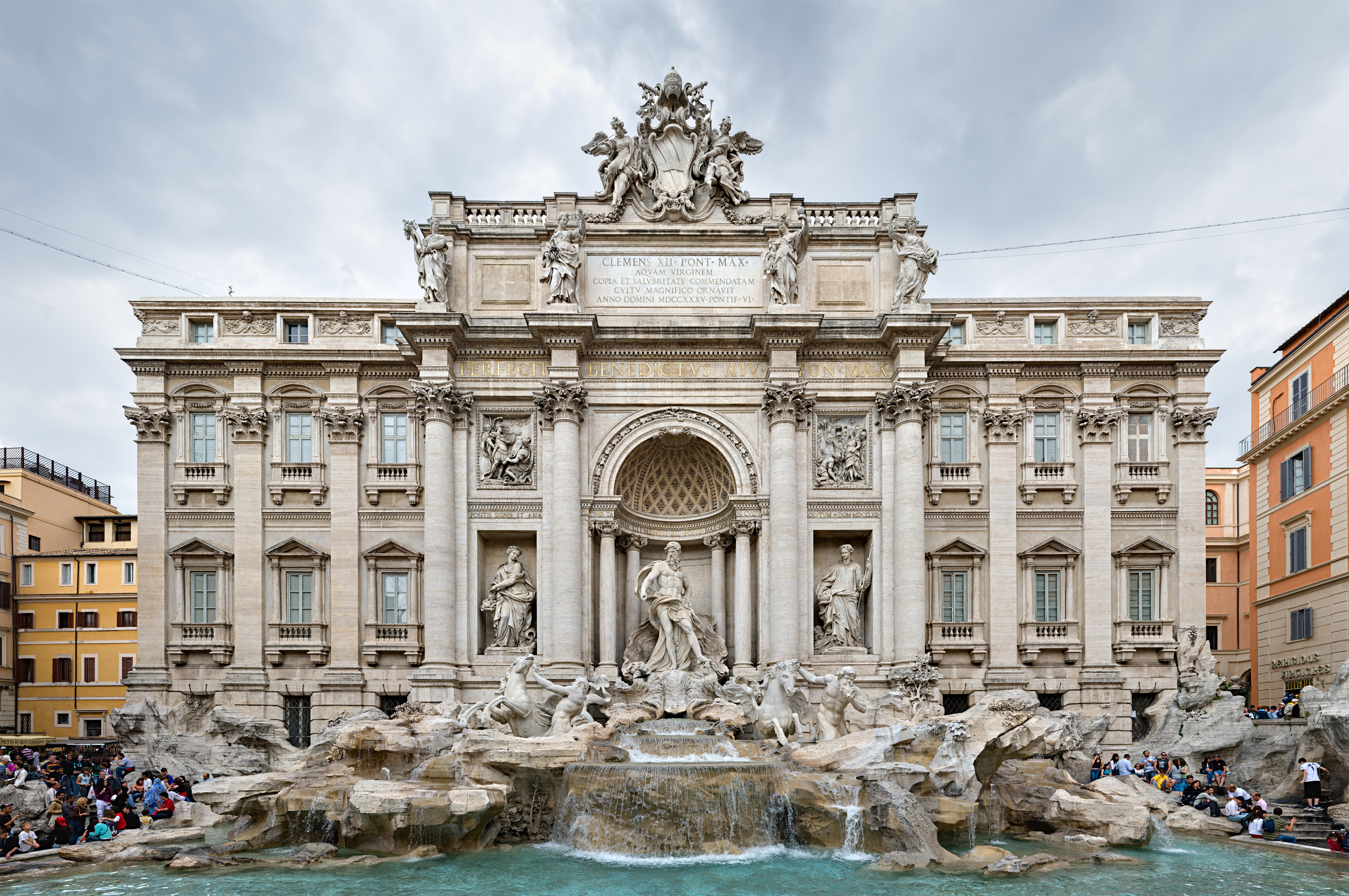
The sound of Rome is not the roar of traffic or the chatter of the crowds in the surrounding narrow alleys; it is the rhythmic, eternal resonance of rushing water. At the heart of the Quirinale district, where three ancient roads meet, stands the most theatrical display of hydraulic engineering and Baroque sculpture ever conceived. The Trevi Fountain is not merely a monument; it is a living organism, a symbolic crossroads where Italian history, global cinema, and modern urban management collide. As we mark the 275th anniversary of the passing of its primary architect, Nicola Salvi, the fountain remains the undisputed ambassador of the Italian spirit, representing a unique synthesis of monumental ambition and delicate preservation. It is the altar where the world pays homage to the Italian “Great Beauty,” a site that has transitioned from a practical water source to a global stage for the collective imagination, a mirror reflecting the evolving identity of Italy itself.
The Ghost of Nicola Salvi and the Centuries of Stone: A Heritage of Genius
Nicola Salvi, the visionary who dedicated his entire existence to this project starting in 1732, passed away on February 8, 1751. In this spring of 2026, we celebrate exactly 275 years since the departure of a man whose name is often overshadowed by the sheer fame of his creation. To understand the Trevi Fountain, one must understand that it was not built in a vacuum, but was the culmination of centuries of Roman hydraulic obsession. The history of the fountain is a relay of genius that spans the Renaissance and the Baroque. Long before Salvi, the site was the terminal point of the Acqua Vergine, an ancient Roman aqueduct that had served the city since the time of Augustus.
In 1640, Pope Urban VIII, a man of immense cultural ambition, found the existing terminal fountain to be insufficiently grand. He commissioned Gian Lorenzo Bernini, the undisputed titan of the Baroque, to rethink the entire square. Bernini’s vision was radical: he proposed moving the fountain to its current location to face the Quirinal Palace, creating a direct visual link with papal power. Although Bernini’s project was halted due to the death of the Pope and a lack of funds, his shadow looms large over the current structure. It was Bernini who first conceived the idea of a monumental “theatre” where the water would not just flow, but perform.
Nearly a century later, Pope Clement XII Corsini revived the project by announcing a public competition. In a period where Rome was competing with the rising architectural stars of France and Austria, the choice of an architect was a matter of national pride. Nicola Salvi won not just because of his aesthetic brilliance, but because his project was the most “Roman” in its grandiosity. Salvi, a member of the Accademia degli Arcadi, infused the design with a complex philosophical allegory. He didn’t just want to build a fountain; he wanted to create a narrative of the taming of the waters. He spent nearly twenty years navigating the complex politics of the papal court and the technical difficulties of carving massive travertine blocks, often personally inspecting the quarries at Tivoli to select the perfect stone.
The tragedy of Salvi is that of the unfinished masterpiece. He lived long enough to see the monumental shapes of the tritons and the central Oceanus emerge from the Roman earth, but his health failed him. The continuous exposure to the damp quarries and the stress of the construction led to his death in 1751. The work was eventually completed in 1762 by Giuseppe Pannini, who brought the project to its conclusion by slightly modifying Salvi’s original design, particularly regularizing the central basins to improve the hydraulic flow. Today, this legacy represents the gold standard of the late Baroque—a testament to an era when Italy dictated the aesthetic rules of the civilized world, merging the architectural rigidity of the Palazzo Poli with the organic chaos of the sculpted cliffs.
The Global Stage: From Fellini’s Dream to the Performance Art of 2026
The global fascination with the Trevi Fountain is a phenomenon that has been irrevocably cemented through the lens of cinema, turning a stone monument into a fluid symbol of Italian lifestyle. While Federico Fellini’s La Dolce Vita in 1960 transformed the fountain into a temple of modern desire—with Anita Ekberg’s moonlit dip becoming the ultimate icon of the “Dolce Vita” era—the fountain has never ceased to be a muse for contemporary artists. It is a site where the ancient and the avant-garde are forced into a constant dialogue.
In recent months, this artistic dialogue reached new, provocative heights. The Italian artist Achille Lauro, known for his ability to deconstruct and reassemble Italian cultural icons, recently released the music video for his hit “Incoscienti Giovani.” In a masterstroke of visual storytelling, Lauro collaborated with the actress Celeste Della Porta—a rising star recently celebrated for her role in Paolo Sorrentino’s Parthenope—to recreate the iconic Fellinian scene. However, this was not a simple parody; it was a contemporary reinterpretation that spoke to the immortality of Roman beauty and the fleeting nature of youth.
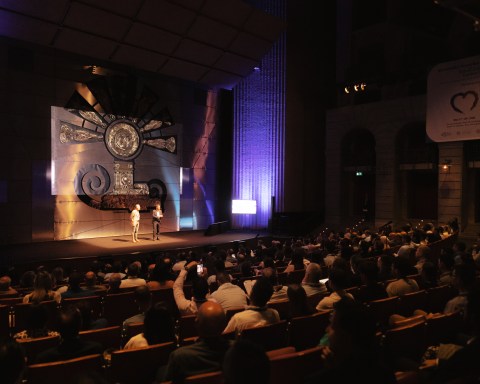
The climax of this artistic reclamation occurred on April 18, 2026. In an event that captivated the international media, Achille Lauro held an unannounced, suggestive “secret” concert directly in front of the fountain. Performing for a curated group of 700 fans who had followed a cryptic social media countdown, the artist celebrated his new album and the special edition of “Comuni Immortali.” As Lauro performed, bathed in a sophisticated lighting design that accentuated the white travertine against the dark Roman sky, the fountain ceased to be a tourist destination and became once again a living, breathing theatre. This event proved that the “Made in Italy” brand is not just a commercial label, but a dynamic force capable of generating new culture from the foundations of the old.
The Science of Preservation: Innovation in Modern Restoration
Maintaining a monument made of porous travertine, constantly submerged in water and exposed to the atmospheric pollutants of a modern capital, is a monumental task in itself. The Trevi Fountain has recently been the subject of some of the most technologically advanced restoration efforts in Europe. Following the historic 2014-2015 restoration—a project that became a global case study for private-public partnerships—the city of Rome has continued to innovate in the field of cultural stewardship.
Modern restoration is no longer just about cleaning stones; it is about “preventative conservation.” Recent interventions have utilized nanotechnology to create invisible protective layers on the travertine, preventing the infiltration of micro-organisms and pollutants. Furthermore, the hydraulic system, which circulates over 80,000 cubic meters of water daily, has been fitted with advanced filtration and softening systems to prevent the buildup of calcium, which can erode the delicate sculptural details over time.
One of the most significant changes in recent years has been the philosophy of “open restoration.” During maintenance phases, rather than hiding the monument behind unsightly scaffolding, the city has utilized transparent barriers and elevated walkways. The horseshoe-shaped walkway installed over the basin allowed visitors to see the masterful carvings of the tritons and the “abundance” statues from a distance of just a few centimeters. This approach has transformed a logistical necessity into a premium educational experience, allowing the public to appreciate the sheer craftsmanship involved in Salvi’s vision. It is a model of transparency and engagement that has been exported to other heritage sites worldwide, reinforcing Italy’s position as a global leader in the science of conservation.
Managing the Human Tide: The New Frontier of Sustainable Tourism
As we navigate the spring of 2026, the management of the Trevi Fountain has become a central theme in the global debate on sustainable tourism. The piazza is a relatively small space that must accommodate millions of visitors annually. This “human tide” mirrors the fountain’s own waters, but it also poses a significant threat to the physical integrity and the atmosphere of the site. The transition from a free-access monument to a managed cultural site is perhaps the most controversial but necessary step in its 275-year history.
Rome has pioneered a new model of “high-quality fruition.” The experimental introduction of controlled access—whereby the number of people allowed on the lower steps of the fountain is strictly monitored—has significantly reduced the “crowd stress” on the monument. Furthermore, the introduction of a symbolic entry contribution for access to the lower basin area has allowed the city to reinvest directly into the square’s maintenance and security. This move is not about exclusion, but about valorization. By ensuring that every visitor has the space and time to actually see the monument, rather than just being pushed through a crowd, Rome is reclaiming the dignity of its heritage. This strategy is a vital component of the “Made in Italy” management philosophy: treating culture not as a mass-market commodity, but as a luxury experience that requires care, respect, and sophisticated logistics.
The Economic Heartbeat: Philanthropy, Brands, and Soft Power
The Trevi Fountain is also an economic engine of extraordinary scale. It sits at the center of a commercial ecosystem that includes luxury hotels, high-end boutiques, and traditional Roman craftsmanship, generating hundreds of millions of euros for the national economy. However, its most fascinating economic aspect is the intersection of tradition and modern corporate patronage.
The famous “coin toss”—a ritual that promises a return to Rome—results in over 1.5 million euros being collected from the fountain’s floor every year. This money is traditionally managed by Caritas to support the city’s most vulnerable populations, turning a superstitious gesture into a massive philanthropic operation. It is a uniquely Italian example of how a cultural monument can provide direct social welfare.
On a larger scale, the Trevi Fountain has become the flagship for the “New Mecenatismo.” The trend of major Italian fashion houses—most notably Fendi—investing millions in the restoration of Roman monuments has redefined the relationship between the private sector and national heritage. This is not merely “branding”; it is a strategic investment in the “Brand Italy.” When a luxury house protects a monument like Trevi, it is protecting the very cultural soil from which its own prestige grows. This synergy is a powerful tool of cultural soft power, projecting an image of Italy as a country that is both immensely wealthy in its history and profoundly committed to its future. It is a message that resonates in the global markets, from New York to Shanghai, reinforcing the perception that “Made in Italy” is a synonym for eternal quality.
The Eternal Flow of the Italian Spirit
As we look toward the future, the Trevi Fountain stands as a testament to the resilience and adaptability of the Italian soul. It survived the fall of the Papal States, the industrialization of the capital, the darkness of world wars, and the rapid shifts of the digital age. In an era where digital experiences and virtual realities often threaten to replace physical presence, the sheer physical power of Salvi’s masterpiece remains an insurmountable reality.
Nicola Salvi may have closed his eyes 275 years ago, perhaps frustrated by the scaffolds and the debts that plagued his final years, but his vision has become immortal. The fountain is more than a work of art; it is a promise. It is the eternal water theatre where every splash tells a story of ambition, every coin represents a hope, and every stone reflects the genius of a nation that refuses to be static. For the readers of The Ambassador, the Trevi Fountain is a call to recognize that beauty is the ultimate Italian currency—a living force that must be experienced, managed, and shared with the world, ensuring that the water of Nicola Salvi continues to flow for centuries to come.
Discover more from The Ambassador
Subscribe to get the latest posts sent to your email.