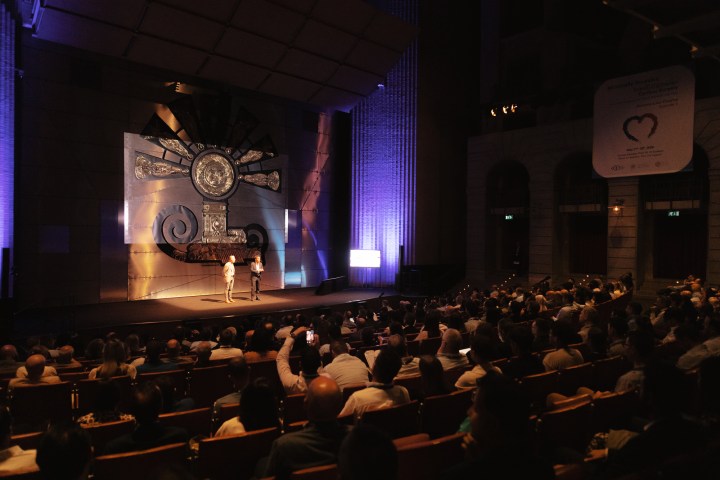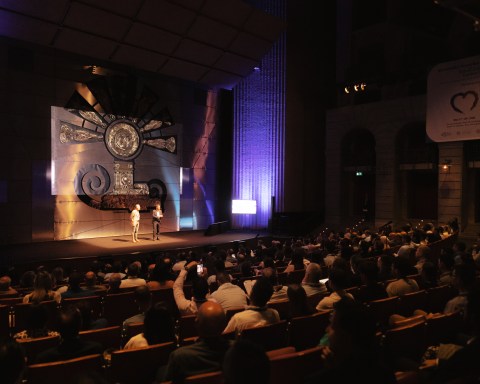



If an uninformed observer were to stand outside the monumental, lead-roofed structures of the Auditorium Parco della Musica in Rome on a brisk Sunday morning in early spring, witnessing the massive, restless crowd of thousands of people violently clamoring for tickets, they would naturally, and quite logically, assume that a major international rock star, a globally renowned pop icon, or perhaps an exclusive Hollywood film premiere was about to take place within those cavernous, acoustically perfect halls. However, this assumption would be entirely, astonishingly incorrect. The thousands of individuals waiting in line—a remarkably diverse demographic cross-section featuring university students with multiple facial piercings, exhausted middle-aged professionals clutching espresso cups, retired school teachers, and young couples holding hands—are not gathered to consume superficial entertainment; they have physically mobilized, paid premium ticket prices, and surrendered their precious weekend leisure time to sit in absolute, reverent silence for two unbroken hours to listen to a solitary academic standing behind a simple wooden podium discussing the geopolitical nuances of the Battle of Lepanto, the agrarian economic reforms of the Carolingian Empire, or the devastating psychological trauma endured by infantrymen during the Battle of Caporetto. This spectacular, deeply counter-intuitive scenario is not an isolated, freak occurrence, but rather the highly visible tip of a massive, peninsula-wide cultural iceberg that sociologists and media analysts have dubbed the “History Fever.” In an era supposedly defined by the total, irreversible obliteration of human attention spans, where the global digital economy is ruthlessly optimized for fifteen-second viral videos, algorithmic dopamine hits, and the relentless, exhausting consumption of the immediate present, Italy is experiencing a profound, unprecedented, and incredibly lucrative renaissance in the popularization of deep, complex historical narrative. History is no longer a dreaded, pedagogical chore inflicted upon bored high school students, nor is it a dusty, exclusive discipline jealously guarded by elitist academics hiding in the silent archives of ancient universities; it has miraculously morphed into a mainstream obsession, a communal ritual, and a multi-million-euro industry that encompasses chart-topping Spotify podcasts, prime-time television dominance, best-selling literary essays, and a sprawling circuit of sold-out theatrical lectures that crisscross the nation from the industrial north to the deep Mediterranean south.
Professor Turned Rockstar
To understand the absolute magnitude and the specific mechanics of this cultural earthquake, one must inevitably confront its undisputed, reluctant, and utterly charismatic high priest: Professor Alessandro Barbero. A highly respected, rigorously trained medievalist who holds a chair at the University of Eastern Piedmont, Barbero possesses absolutely none of the superficial, manufactured attributes typically associated with modern celebrity. With his unruly gray beard, his wire-rimmed spectacles, his professorial tweed jackets, and his endearingly unassuming physical posture, he looks exactly like the quintessential, slightly eccentric academic archetype. Yet, when he speaks, a bizarre, almost magical alchemy occurs. Barbero is not merely a historian; he is a master of the ancient, tribal art of oral storytelling, a modern-day Homer who possesses the extraordinary, unparalleled ability to completely resurrect the dead, making the distant, petrified figures of the past breathe, sweat, bleed, hesitate, and fear right before the audience’s eyes. His rhetorical technique is entirely devoid of academic pretense or deliberately obfuscating jargon; he does not read monotonously from a prepared, heavily footnoted manuscript, but rather performs his lectures entirely from memory, utilizing a vibrant, highly expressive, and unapologetically colloquial vocabulary punctuated by his now-iconic, sudden pauses, his dramatic vocal crescendos, and his genuine, infectious bursts of laughter when recounting the absurdities of human behavior across the centuries. Barbero’s ultimate genius lies in his profound, radical empathy; he treats the medieval peasant, the frightened Roman legionnaire, or the rebellious nineteenth-century textile worker with the exact same psychological dignity, narrative weight, and emotional complexity as he does kings, popes, and conquering generals. When he describes the terrifying, claustrophobic reality of a medieval cavalry charge, he does not merely list the dates, the troop movements, and the geopolitical outcomes; he obsessively describes the agonizing weight of the iron chainmail, the blinding sweat stinging the eyes of the terrified young knights, the deafening, horrific sounds of splintering lances, and the absolute chaos of the melee, violently pulling the listener out of their comfortable modern reality and plunging them directly into the visceral, unvarnished mud of the battlefield. It is this extraordinary capacity to humanize the macro-forces of history, transforming abstract historical paradigms into deeply relatable human dramas, that has elevated him from a respected scholar to an absolute cult figure, spawning a vast, decentralized online fandom that creates memes out of his catchphrases, prints his face on t-shirts, and treats his lectures with the fanatical devotion usually reserved for religious sermons or sporting events.
Digital Audio Revolution
Crucially, however, the Barbero phenomenon—and the wider historical renaissance it spearheaded—was not engineered by a massive corporate media conglomerate, a television network, or a traditional publishing house, but was born organically, almost accidentally, from the chaotic, grassroots democratization of the internet. The initial spark was ignited by a young, anonymous fan who simply began extracting the audio tracks from various obscure, poorly filmed YouTube videos of Barbero speaking at small, provincial literary festivals, compiling them into an unauthorized, entirely amateur podcast simply titled Il podcast di Alessandro Barbero. Without any marketing budget, institutional backing, or search engine optimization, the podcast became a viral, uncontrollable sensation, eventually accumulating tens of millions of downloads and remaining permanently anchored at the absolute top of the Italian Spotify charts, consistently beating out celebrity interviews, true crime serials, and daily news briefings. This digital audio revolution exposed a massive, previously invisible demand for long-form, intellectually rigorous content, proving definitively that the modern public was not inherently stupid or hopelessly addicted to superficiality, but was simply starved of high-quality, engaging narratives. The podcast medium proved to be the perfect, frictionless vehicle for this historical contagion; the inherent intimacy of audio, the sensation of having a brilliant, erudite professor whispering directly into your ear, perfectly suited the modern lifestyle of the Italian commuter. Today, it is a statistically verifiable reality that hundreds of thousands of Italians currently endure the agonizing, bumper-to-bumper morning traffic on the Grande Raccordo Anulare in Rome or the smog-choked Tangenziale in Milan not by listening to mindless pop music or angry political talk radio, but by immersing themselves deeply in detailed, hour-long analyses of the French Revolution, the tactical blunders of the Second World War, or the complex theological schisms of the early Christian church. This technological democratization successfully bypassed the traditional, often snobbish gatekeepers of Italian culture, proving that rigorous historical analysis did not need to be artificially simplified, dumbed down, or sensationalized in order to achieve massive, unprecedented commercial and cultural success.
Anxiety And Roots
However, to fully comprehend why this specific phenomenon has reached such stratospheric, feverish heights in the Italy of spring 2026, one must look beyond the undeniable charisma of individual professors and examine the profound, underlying sociological and psychological anxieties of the modern era. We are currently living in an epoch defined by unrelenting, compounding crises: the existential, ticking clock of climate change, the terrifying, destabilizing return of conventional warfare to the European continent, the brutal, unpredictable fluctuations of the globalized economy, and the dizzying, often terrifying acceleration of artificial intelligence, which threatens to fundamentally disrupt the very nature of human labor and cognition. In this landscape of chronic, exhausting uncertainty, where the immediate future appears incredibly dark, confusing, and completely unmoored from the comforting realities of the recent past, the public has instinctively, defensively turned backward in search of a sturdy, immovable anchor. History, in this fraught contemporary context, is no longer consumed merely as a casual intellectual curiosity; it is actively utilized as a vital, psychological therapeutic tool, a mechanism for processing modern trauma by contextualizing it within the vast, enduring sweep of human experience. When millions of anxious Italians tune in to hear how their ancestors survived the terrifying, seemingly apocalyptic devastation of the fourteenth-century Black Death, how they rebuilt their shattered, starving cities from the absolute rubble of the Second World War, or how previous civilizations navigated periods of immense technological and social upheaval, they are essentially seeking a profound, reassuring message of resilience. Popular history provides a vital, comforting cognitive map; it reminds the contemporary citizen that humanity has faced seemingly insurmountable, world-ending catastrophes before, and not only survived them, but eventually thrived, adapted, and built anew. Furthermore, in a modern political landscape heavily polluted by the instantaneous proliferation of fake news, digital manipulation, and the deliberate, weaponized distortion of reality by social media algorithms, the rigorous, evidence-based methodology of the historian—the meticulous cross-referencing of primary sources, the careful weighing of contradictory evidence, and the pursuit of objective, documented truth—has become incredibly, deeply attractive. The historian has inadvertently become the ultimate, trusted arbiter of reality in a post-truth world, offering a stabilizing narrative grounded in verifiable fact rather than fleeting, emotionally manipulative digital outrage.
Legacy Of Television
While the digital podcast revolution undeniably provided the explosive fuel for this contemporary historical fever, it is absolutely essential to acknowledge the deeply ingrained, pre-existing cultural fertile ground meticulously cultivated over decades by traditional Italian television, most notably through the monumental, multi-generational legacy of the Angela family. Piero Angela, a universally beloved, avuncular figure who sadly passed away but left an indelible mark on the national consciousness, and his son, Alberto Angela, essentially invented the modern grammar of Italian cultural broadcasting with programs like Quark and Ulisse, bringing high-quality, visually stunning scientific and historical documentaries directly into the living rooms of millions of ordinary, working-class families who might never have otherwise stepped foot inside a museum or an archaeological site. Alberto Angela, with his telegenic presence, his ability to wander through the deserted ruins of Pompeii or the silent, frescoed corridors of the Vatican at midnight, communicating complex archaeological concepts with absolute clarity and infectious enthusiasm, demonstrated to the Italian broadcasting industry that culture could, in fact, generate massive, prime-time television ratings, consistently beating out crude reality shows and superficial variety programs. The current wave of academic rockstars like Barbero, or the brilliant, sharp-tongued historical analyses of journalists and essayists like Paolo Mieli—whose daily television appearances and highly successful books dissect the complex, often dark intersection of history, journalism, and political power—are essentially building upon this solid, pre-existing foundation of public trust, taking the visual legacy of the Angela dynasty and adapting it for the decentralized, on-demand, and highly analytical expectations of the digital age.
Festivals And Community
The most fascinating, physically tangible manifestation of this cultural paradigm shift is the explosive proliferation and staggering commercial success of live historical festivals and theatrical lecture series. The concept of Lezioni di Storia (Lessons of History), initially pioneered by the venerable, highly respected independent publishing house Editori Laterza, was originally conceived as a modest, niche intellectual experiment: placing a recognized academic on a stage to deliver a monologue to a presumably small, highly educated audience. Instead, it triggered a national phenomenon. Today, these events routinely sell out massive, multi-tiered theaters in Rome, Milan, Turin, and Naples within mere hours of the tickets being released online, rivaling the box office frenzy of major international pop concerts. Furthermore, regional, highly specialized cultural gatherings, such as the Festival della Mente in the small Ligurian town of Sarzana, or the Festival del Medioevo in the Umbrian city of Gubbio, have morphed into massive, multi-day cultural pilgrimages, completely taking over the historic squares, cloisters, and theaters of the host cities, injecting millions of euros into the local hospitality and tourism economies. What drives thousands of people to physically travel, queue, and sit in a crowded theater to hear a lecture they could easily stream for free on their smartphones in the comfort of their own homes? The answer lies in the profound, ancient human need for intellectual communion. In an era where digital consumption is overwhelmingly solitary, isolating, and highly fragmented by individualized algorithms, attending a live historical lecture is an act of collective cultural participation, a modern recreation of the ancient Greek agora or the civic assemblies of the medieval communes. Sharing the physical space, breathing the same air, and collectively experiencing the tension, the tragedy, and the humor of a well-told historical narrative creates a powerful, ephemeral sense of community, transforming the consumption of knowledge from a passive, isolated act into a vibrant, shared civic ritual.
Voices From Below
This extraordinary resurgence of public interest has also coincided with, and deeply influenced, a profound shift in the actual content and methodological focus of the history being consumed. The modern Italian public has largely grown exhausted by the traditional, top-down, “Great Man” approach to historiography, which focused almost exclusively on the political maneuvering of kings, the strategic brilliance of generals, and the signing of treaties. Driven by the masterful storytelling of figures like Barbero, there is now an insatiable, overwhelming demand for “microhistory” and the history of everyday life—the so-called voices from below. Audiences are absolutely captivated by the detailed, gritty reconstruction of how ordinary people actually lived, survived, loved, and died in the past. They want to know exactly what a Roman legionnaire ate for breakfast on the freezing frontiers of Britannia, how a sixteenth-century Venetian woman circumvented the crushing patriarchal laws of her society to run a business, what crude medical instruments were used by medieval surgeons during the plague, and how the massive, macroeconomic shifts of the industrial revolution actually impacted the daily, exhausted lives of child laborers. This democratization of historical subjects mirrors the democratization of the medium; by focusing on the struggles, the fears, and the triumphs of ordinary, anonymous individuals who were previously ignored by the official, state-sanctioned chronicles, modern historians are making the past infinitely more relatable, proving that while the technological trappings of society change constantly, the fundamental, core architecture of human emotion, ambition, and suffering remains strikingly, comfortingly constant across the millennia.
Guarding Human Memory
Ultimately, the fact that this specific, intense fever for history has taken root so deeply and passionately in Italy is perhaps not entirely surprising, but rather the inevitable awakening of a deeply ingrained cultural DNA. Italy is not merely a country that possesses history; it is a nation that is physically, overwhelmingly, and inescapably constructed out of it. An ordinary Italian citizen cannot walk to the supermarket, take a train to work, or dig a foundation for a new house without literally tripping over the physical, monumental remnants of the Roman Empire, the Middle Ages, or the Renaissance. Living in a constant, unbroken dialogue with the spectacular ruins of the past breeds a natural, subconscious receptivity to historical narrative. By finally figuring out how to successfully translate the rigorous, complex findings of academic research into compelling, accessible, and deeply empathetic storytelling, the new generation of Italian historians has performed a miraculous cultural service. They have not dumbed down the past to make it palatable; they have elevated the general public, proving that there is a vast, unquenchable thirst for intellectual depth in contemporary society. In doing so, they have transformed the study of history from a melancholic contemplation of dead ashes into a vibrant, fiercely burning flame, ensuring that as Italy navigates the terrifying, uncharted waters of the twenty-first century, it does so not with the nervous, amnesiac panic of a society that has forgotten its origins, but with the profound, stabilizing wisdom of a civilization that knows exactly where it came from, and therefore, possesses the confidence to decide exactly where it is going.
Discover more from The Ambassador
Subscribe to get the latest posts sent to your email.