

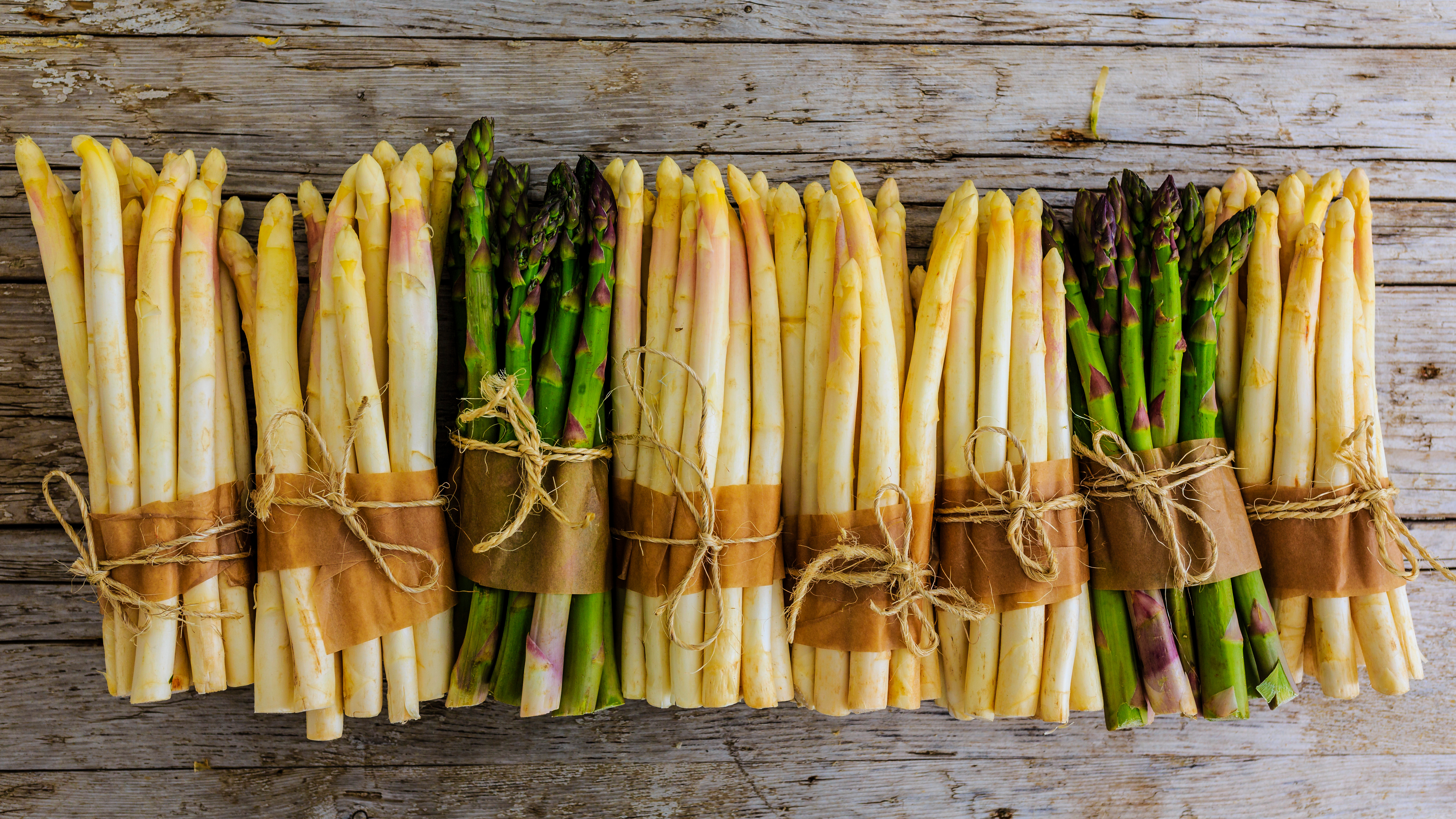
When the freezing, incredibly dense, and bone-chilling nocturnal fogs that aggressively blanket the swirling, emerald-green waters of the Brenta River finally begin to slowly, miraculously lift beneath the looming, snow-capped shadow of the majestic Monte Grappa, revealing the iconic, perfectly engineered wooden trusses of Andrea Palladio’s legendary Ponte degli Alpini, a deeply secretive, fiercely guarded, and completely exhausting agricultural ritual silently commences across the damp, sandy, and incredibly fertile alluvial plains of the Veneto region. Long before the very first, tentative rays of the brilliant Italian spring sun can even begin to crest the jagged eastern horizon and strike the rolling, vineyard-draped hills of the surrounding countryside, a dedicated, calloused, and intensely focused army of local farmers is already wide awake, deeply kneeling in the freezing, waterlogged mud, meticulously executing a grueling, backbreaking, and incredibly delicate harvest that represents the absolute, undisputed pinnacle of the regional culinary calendar. They are systematically, gently, and obsessively unearthing the legendary Asparago Bianco di Bassano, a phenomenally rare, astonishingly sweet, and completely pristine botanical masterpiece that is universally revered by Michelin-starred chefs and fiercely traditional local grandmothers alike as the true, undisputed white gold of the Italian spring awakening. To fundamentally comprehend the immense, logic-defying agricultural effort required to safely produce these flawlessly pearlescent, incredibly fragile, and phenomenally expensive ivory spears, one must first entirely discard the familiar, ubiquitous image of the common, aggressively green, and highly fibrous supermarket asparagus; the revered white asparagus of Bassano is absolutely not a distinct, genetically modified botanical species, but rather a breathtaking, agonizingly labor-intensive miracle of deliberate, systematic, and unrelenting light deprivation. In a profound, counter-intuitive defiance of the natural, warming progression of the season, the meticulous farmers must aggressively, continuously bury the burgeoning plant crowns under massive, perfectly sculpted mounds of soft, finely sifted, and deeply aerated sandy soil, immediately covering these extensive, geometric earthworks with thick, impenetrable layers of heavy, dark plastic tarpaulins, a drastic, uncompromising measure specifically designed to absolutely, entirely block out the violent, life-giving radiation of the Mediterranean sun. By strictly, ruthlessly preventing even a single, microscopic photon of sunlight from ever reaching the fragile, desperately reaching tips of the growing shoots, the farmers successfully, miraculously halt the natural, inevitable biological process of photosynthesis, entirely preventing the aggressive development of chlorophyll—the chemical compound directly responsible for both the tough, stringy green pigmentation and the sharp, deeply herbaceous bitterness conventionally found in standard asparagus—resulting instead in a phenomenally tender, wildly succulent, and impossibly sweet spear that boasts a remarkably complex, lingering, and delicately nutty flavor profile utterly devoid of any harsh, astringent fibrousness. This obsessive, agonizingly precise battle against the light explicitly dictates the brutal, punishing rhythm of the daily harvest; because the absolute slightest, briefest exposure to the dawn’s early rays would instantly, irreversibly trigger the greening process and completely ruin the spear’s pristine, highly coveted DOP (Protected Designation of Origin) status, the exhausted harvesters must frantically, blindly work in the absolute, freezing darkness of the early morning mist, utilizing a highly specialized, deeply traditional, and incredibly sharp iron gouge known locally as a gorbia to blindly, carefully probe deep into the soft, shifting mounds of earth, cleanly severing the thick, incredibly fragile stalks a precise twenty-two centimeters below the surface purely by practiced, instinctual touch, ensuring that the delicate, tightly closed, and heavily sought-after tips remain absolutely, flawlessly intact. Once these incredibly precious, glowing white spears are triumphantly extracted from their dark, subterranean incubators, they are immediately, meticulously washed in freezing, crystal-clear spring water to decisively halt any further metabolic development, carefully, obsessively sorted by their exact, varying millimeter thicknesses, and finally, traditionally bound together in tight, perfectly uniform bunches using a flexible, freshly cut green willow twig known locally as a stroppa, creating a striking, incredibly elegant, and deeply historical visual presentation that has remained absolutely, stubbornly unchanged for over five uninterrupted centuries. The spectacular, deeply emotional, and profoundly satisfying climax of this agonizing, months-long agricultural struggle absolutely does not occur in a sterile, hyper-modern processing plant, but rather upon the lively, chaotic, and incredibly colorful springtime dining tables of the region, where the cooking and consumption of the Asparago Bianco is passionately elevated to the status of a sacred, unbending, and highly ritualistic civic religion. To aggressively mask or unnecessarily complicate the astonishingly delicate, bittersweet, and profoundly earthy flavor of this pristine ingredient with heavy, overwhelming modern sauces is universally considered an absolute, unforgivable culinary heresy; instead, the pristine bunches are meticulously, gently boiled perfectly upright in specialized, narrow cylindrical pots, allowing the violently boiling, heavily salted water to vigorously cook the thicker, denser stalks while the incredibly fragile, tender tips are merely, gently steamed to absolute, yielding perfection by the rising, aromatic vapor. They are then ceremoniously, proudly presented on a massive, warm ceramic platter, steaming violently into the crisp, floral spring air, to be instantly, joyously consumed alla bassanese—aggressively smothered in a violently rich, intensely colorful, and wildly chaotic sauce created by vigorously crushing steaming hot, hard-boiled eggs directly at the table, aggressively emulsifying the bright, golden-orange, farm-fresh yolks with copious, incredibly generous glugs of intensely peppery, grass-green extra virgin olive oil, a splash of sharp, biting white wine vinegar, and a heavy, aggressive dusting of freshly cracked, incredibly aromatic black pepper. The resulting visual and sensory explosion is absolutely, undeniably staggering, a masterpiece of pure, unadulterated color contrast ideally suited for this vibrant central insert: the pale, ghostly, and incredibly elegant ivory of the steaming, yielding asparagus violently juxtaposed against the chaotic, aggressively vibrant, and unapologetically rich yellow of the crushed egg sauce, all while being continuously, joyously washed down with endless, freezing, and wildly acidic glasses of Vespaiolo, the fiercely local, intensely mineral-driven, and highly aromatic white wine specifically, miraculously cultivated on the exact same volcanic, breccia-rich hillsides simply to provide the ultimate, hyper-regional enological pairing. This extraordinary, deeply communal, and overwhelmingly joyful culinary experience is rendered infinitely more precious, urgent, and profoundly melancholic by its incredibly strict, biologically dictated brevity; the entire, frantic, and exhausting harvest season lasts for a mere, fleeting two months, officially, abruptly, and permanently terminating on the traditional feast day of Saint Anthony in mid-June, ensuring that the legendary white gold of Bassano never, ever becomes a banal, easily acquired, or ubiquitous commodity, but remains forever a fiercely awaited, deeply celebrated, and phenomenally luxurious ephemeral gift, a pristine, edible, and breathtakingly beautiful distillation of the immense physical labor, the stubborn agricultural genius, and the unparalleled, intoxicating culinary passion that entirely, unapologetically defines the vibrant, colorful soul of the Italian spring.
Discover more from The Ambassador
Subscribe to get the latest posts sent to your email.