
The radiant Italian territory functions as an unyielding, globally dominant superpower of historical memory, territorial preservation, and spatial beauty. Italy commands the international cultural imagination not through a passive survival of its ancient ruins, but through a highly strategic, continuous expansion of its recognized artistic, environmental, and intangible boundaries. In this pivotal summer season, the national commission for UNESCO systematically advances a brilliant, dual-track suite of monumental candidacies that profoundly redefine the intersection of human civilization, physical landscape, and living anthropological memory. From the deeply evocative, ancient rock-cut funerary architectures of Sardinia’s Domus de Janas to the complex, fluid expressions of ancestral craftsmanship and community rituals, the country presents a vision of heritage that is profoundly active, structurally complex, and economically invulnerable. To observe these candidate territories and living traditions under the blinding, hyper-saturated rays of the mid-summer sun is to witness an incredible explosion of raw geographic and human truth. The intense, deep emerald of maritime forests, the rich ochre and warm sienna of ancient stone masonry, the brilliant pigments of ceremonial vestments, and the blindingly bright azure of the surrounding coastal waters form a spectacular chromatic tapestry that permanently elevates the baseline standards of planetary historical preservation. This is entirely not an exercise in superficial aesthetic indulgence, but rather a deliberate, highly capitalized choreography of national identity that invites the global elite to discover a country where both the physical monument and the living spirit remain sovereign, highly profitable engines of future innovation and corporate resilience.
Tangible Geological Foundations
The execution of these prestigious international candidacies operates with a rigorous, highly analytical diplomatic strategy that transforms localized historical architecture into a formidable instrument of contemporary geopolitical influence. Within the multi-layered arena of global cultural diplomacy, a nation’s capacity to identify, document, and legally protect its ancestral landscapes functions as a powerful indicator of structural stability, legislative maturity, and intellectual leadership. The Italian state, leveraging decades of unparalleled expertise in heritage legislation, carabinieri conservation units, and forensic restoration, commands an absolute authority within the international sessions of the World Heritage Committee. This institutional supremacy allows the country to actively shape the global legal frameworks governing conservation, establishing rigorous international benchmarks of authenticity and structural integrity that foreign states must continuously struggle to emulate. Cultural diplomacy thus ceases to be a passive academic exercise and becomes an active vector of international prestige, reinforcing national soft power across continents.
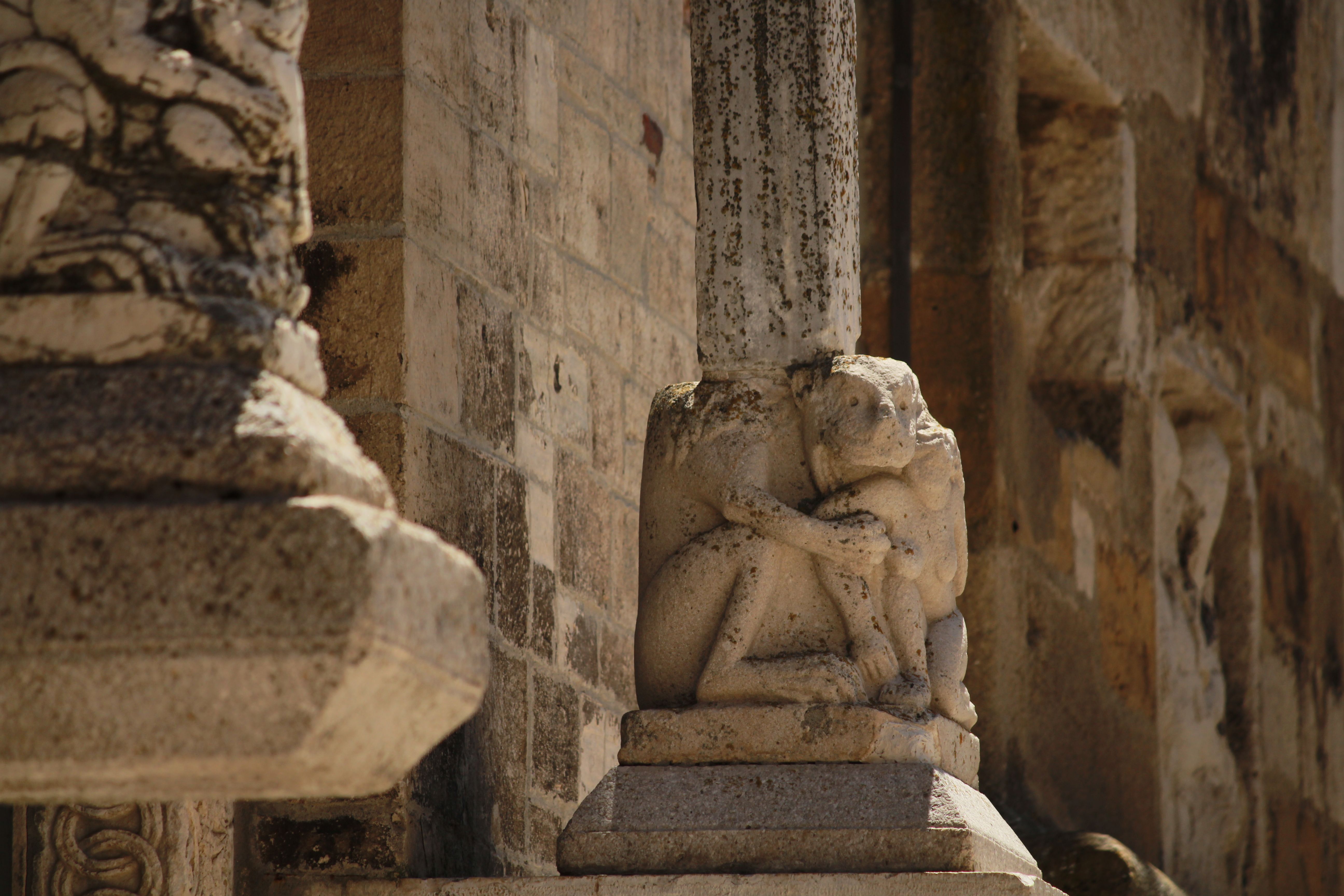
The physical, spatial reality of these new candidate sites reveals an intricate harmony between historical human intention and environmental permanence. In the sun-bleached expansions of the Sardinian interior, the mysterious, hypogeum chambers of the Domus de Janas project an almost mythical architectural power through the surrounding valleys. These prehistoric funerary monuments, carved directly into severe volcanic and limestone outcrops with primitive tools between the Neolithic and the Bronze Age, are captured by modern editorial photography as pristine geometric voids of absolute silence. The intense, vertical light of July cuts razor-sharp, pitch-black shadows across the carved rock thresholds, exposing the sophisticated spatial engineering of an ancient, pre-Nuragic society that achieved immortality by merging its ritual structures seamlessly into the living geology of the earth. By elevating these archaic, deeply territorial stone testimonies to the status of global universal value, the nation systematically expands the historical consciousness of humanity, asserting its role as the ultimate, unyielding custodian of Mediterranean memory and human architectural origin.
Living Anthropological Repositories
Simultaneously, the strategic focus of the nation’s heritage policy aggressively expands into the delicate, highly complex domain of intangible cultural assets, acknowledging that the living rituals, oral traditions, and ancestral craftsmanship of the population constitute an equally powerful form of sovereign intellectual property. The current candidacies submitted to the UNESCO Intangible Cultural Heritage list represent an extraordinary, hyper-saturated tapestry of living history, where centuries-old community practices are violently preserved against the diluting currents of globalized homogenization. These non-physical assets—ranging from highly synchronized, fiercely competitive historical pageants to deeply secretive, generationally transmitted artisanal manufacturing techniques—are treated not as mere passive folklore, but as active, vital repositories of collective human intelligence.
Under the blinding summer sun, these intangible traditions erupt into spectacular displays of collective devotion and kinetic energy, filling historic town squares with an intense explosion of color, sound, and movement. The vibrant carmines and deep indigos of traditional ceremonial textiles, the rhythmic resonance of polyphonic choral arrangements echoing off ancient masonry, and the scent of rare botanical infusions utilized in ancient culinary rituals create an atmosphere of complete sensory saturation. By codifying these fluid, performance-based traditions into official international listings, Italy establishes a permanent cultural moat that legally protects and aggressively commercializes the living soul of the territory, ensuring that the unique psychological and social structures that birthed Western civilization remain completely intact and globally revered.
Macroeconomic Value Density
From a rigorously corporate and macroeconomic standpoint, the systematic pursuit of both physical and intangible UNESCO World Heritage designations functions as an exceptional financial locomotive that permanently reconfigures the asset valuation and economic trajectory of the surrounding territory. An official inscription operates on the global stage as an unassailable premium brand certification, instantly triggering exponential increases in regional equity, corporate inward investment, and international institutional funding allocations. This influx of high-density capital is managed through sophisticated, forward-looking public-private partnerships that deliberately reject the low-margin, high-volume models of mass predatory tourism. Instead, the strategic framework is meticulously engineered to cultivate a highly liquid, low-impact economic ecosystem tailored specifically for the global cultural elite, prioritizing value density over sheer volumetric congestion.
The financial ripple effect of these candidacies acts as a powerful protective shield for localized real estate markets, premium hospitality networks, and traditional high-end artisanal industries, generating substantial, long-term non-speculative wealth within rural and historically isolated provinces. High-net-worth international investors, elite hospitality developers, and private equity asset management funds actively redirect their portfolios toward these newly certified heritage zones, recognizing that the severe regulatory protections governing the preservation of both physical architecture and living traditions effectively insulate the territory from volatile global market cycles and guarantee steady, permanent capital appreciation. The enormous revenues generated by luxury hospitality takeovers, premium eco-tourism syndicates, and bespoke regional agricultural branding are subsequently reinvested directly into the structural maintenance and security of the historic sites and the active transmission of living arts, proving unequivocally that the meticulous defense of cultural authenticity is a hyper-profitable strategy for national economic resilience.
Material and Digital Preservation
The continuous preservation, management, and monitoring of these vast, topographically and anthropologically complex candidate landscapes require a monumental deployment of cutting-edge industrial technology and hyper-precise engineering solutions. Modern Italian preservation strategies have entirely abandoned passive, reactive curation, implementing instead an aggressive, hyper-preventive paradigm that seamlessly merges advanced aerospace logistics with microscopic material science and digital ethnography. Across the expansive geographic boundaries of the candidate zones, a silent, omnipotent network of high-resolution orbital satellites, autonomous airborne LiDAR arrays, and cloud-integrated environmental sensors continuously maps the physical terrain with mathematical invulnerability, tracking microscopic variations in structural stability, chemical decomposition, and atmospheric friction in real-time.
Concurrently, state-of-the-art digital preservation laboratories deploy advanced audio-visual capturing matrices and spatial computing algorithms to systematically document and index the vanishing linguistic, musical, and kinetic nuances of the intangible candidacies, creating an unassailable digital archive of human expression. This massive technological infrastructure creates a highly accurate digital twin of the national heritage, allowing authorities to anticipate physical and cultural threats long before they can inflict damage. Within the clinical, highly sophisticated environment of national laboratories, this data is processed by advanced artificial intelligence matrices that simulate long-term preservation variables, ensuring that both the ancient stone and the living tradition remain perfectly insulated against entropic decay, firmly cementing Italy’s position as the technological lighthouse of global preservation.
Discover more from The Ambassador
Subscribe to get the latest posts sent to your email.