

A blinding, parallel infinity of polished steel cleaves the sun-bleached topography of the Italian peninsula, vibrating silently under the oppressive, atmospheric weight of the summer sky. These high-speed rail lines form a massive, hyper-calibrated nervous system that systematically overrides the ancient, rugged barriers of regional geography, binding distant metropolitan centers into a singular, highly compressed economic reality. Across the vast plains of the Po Valley, through the deep, subterranean channels bored into the rocky heart of the Apennines, and down toward the sun-drenched coastal expansions of the south, the landscape is violently, beautifully redefined by the physics of pure kinetic acceleration. To view this network through the unblinking lens of high-contrast monochrome photography is to strip away the casual, romantic illusions of European train travel and expose the raw, monumental engineering that dictates modern continental logistics. The stark chiaroscuro aesthetic accentuates the razor-sharp, geometric alignment of the tracks, where the brilliant, metallic flash of the rails cuts directly through pitch-black fields of dense summer shadow, creating a visual rhythm that mirrors the absolute, mathematical discipline of the scheduling algorithms. This is an empire of speed, a multi-billion-euro industrial achievement where human ingenuity has forced time itself to yield to the structural demands of a hyper-connected nation.
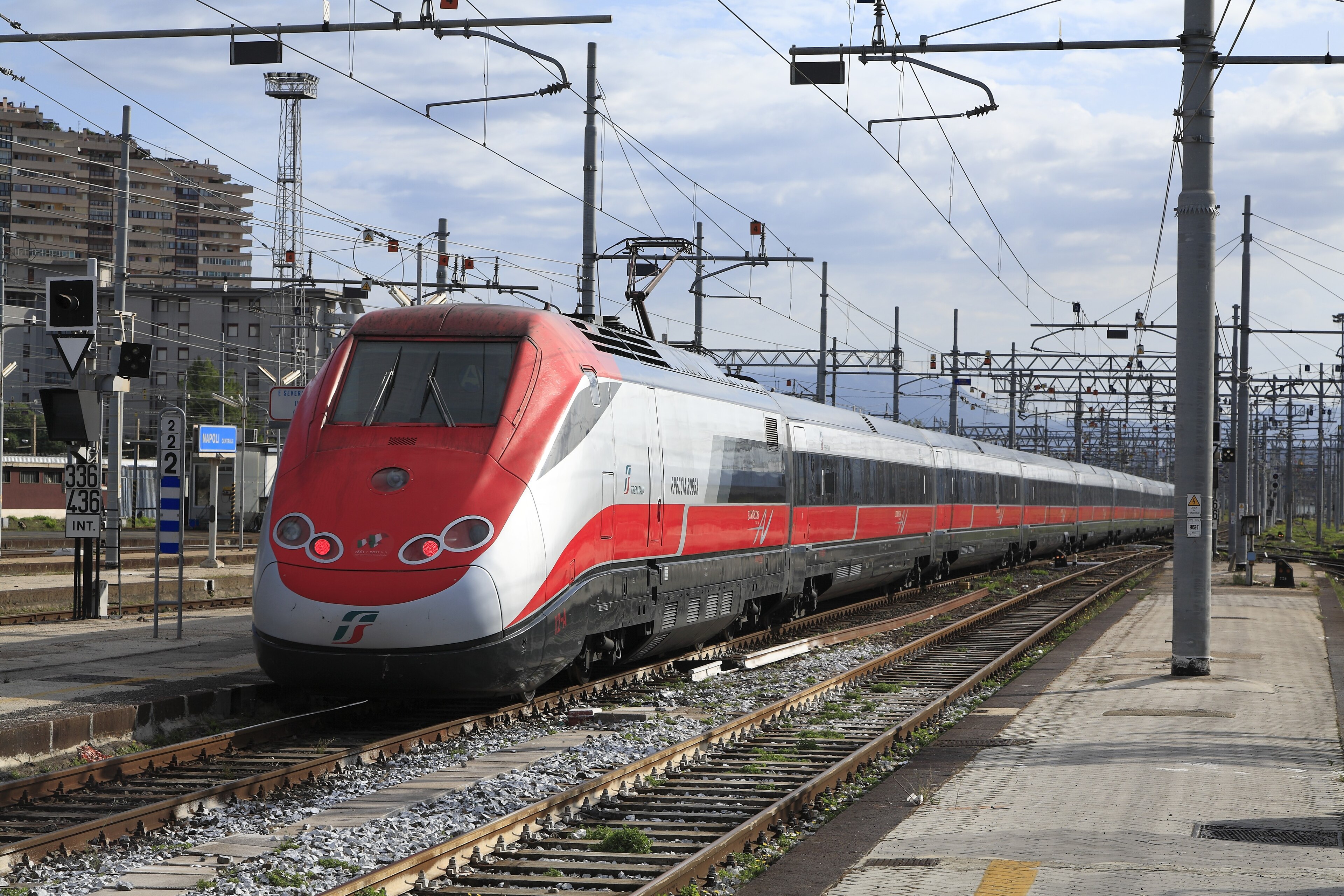
The structural core of this mobility revolution relies on a fleet of aerodynamic marvels, most notably the Frecciarossa 1000 platforms, engineered through the combined metallurgical and electronic mastery of Italian manufacturing consortiums. These sleek, dark silhouettes, slicing through the heavy, shimmering thermal haze of mid-afternoon at three hundred kilometers per hour, operate not merely as transport vehicles, but as heavy instruments of macroeconomic consolidation. The physical friction of steel against steel is managed with an almost monastic precision, utilizing advanced active lateral suspension systems and sophisticated pantograph mechanics that draw massive currents from overhead catenaries without a single micro-second of interruption. When captured in high-contrast black and white, the train in motion dissolves into a magnificent, ghostly streak of pure velocity, a dense, metallic motion blur that cuts a clean, horizontal scar across the unchanging, historic architecture of the rural countryside. The atmosphere surrounding the tracks is aggressively compressed, creating a localized shockwave of displaced air that loudly, violently announces the passage of the convoy before returning to an absolute, dead silence under the baking sun. This silent, subterranean and surface infrastructure operates with a flawless, unyielding reliability, demonstrating how the heritage of Italian industrial design permanently elevates the baseline efficiency of continental commerce.
From a financial and corporate standpoint, this compression of national space has fundamentally restructured the internal gravity of the Italian market, shifting institutional capital and elite labor pools with unprecedented fluidity. The corporate corridor connecting Milan’s financial district to the historical administrative chambers of Rome has evolved into a hyper-efficient, single-day transit ecosystem, effectively displacing domestic aviation monopolies and establishing a new paradigm for corporate operational efficiency. State-backed infrastructure giant Ferrovie dello Stato Italiane, alongside private open-access pioneers like Italo, have transformed this high-speed corridor into a lucrative battleground of high-margin corporate hospitality and logistical optimization, attracting massive volumes of international institutional investment. The economic yield of this infrastructure is immense, directly boosting the regional GDP of medium-sized urban centers that were historically isolated from the main arteries of global commerce, such as Bologna, Florence, and Reggio Emilia. By transforming these historic transit hubs into hyper-modern stations, the network has created a network of highly liquid economic nodes where international business leaders, luxury real estate developers, and high-net-worth global citizens seamlessly interface with local manufacturing and cultural ecosystems. The train is no longer a tool for casual migration, but an essential, high-velocity engine of macroeconomic expansion that drives the contemporary nation forward.
This technological mastery achieves its absolute aesthetic apogees within the monumental architectures of the new high-speed stations, which function as contemporary cathedrals of movement and light. Structural masterpieces like Santiago Calatrava’s Reggio Emilia AV Mediopadana and Zaha Hadid’s Napoli Afragola are captured by the monochrome frame as massive, sculpted monoliths of exposed concrete, white steel, and dense, reflective glass. Under the harsh, vertical rays of the July sun, these structures cast colossal, geometric shadows that shift slowly across the smooth stone platforms, tracing the inexorable passage of the summer hours. Within these cavernous, echoing spaces, the human element is reduced to a series of sharp, moving silhouettes, navigating a perfectly organized landscape of electronic departure matrices and automated security checkpoints. The atmosphere is sophisticated and quiet, a refined domain of international travelers who demand absolute temporal precision. The true allure of this network lies in its capacity to transform the physical journey into an effortlessly elegant prelude to discovery, inviting the global elite to perceive Italy as a territory where ancient majesty is seamlessly traversed by the most advanced, forward-looking mobility systems in the world, ensuring that every destination is merely a fleeting, luxurious moment away.
Discover more from The Ambassador
Subscribe to get the latest posts sent to your email.