

There is a moment, somewhere around your second day in Italy, when you realise the bar is not just a place to get coffee or a panino. It is a room with a social code (un codice sociale). The people who know the code move in and out multiple times a day easily, exchange a word with the barista, drink fast and leave happier.
This is not about belonging to a club. It is about participating in the ritual Italians do every single day, multiple times a day, with enormous pleasure and very little fuss. Il caffè in Italy is a ritual. Rituals have grammar. Learn the grammar and the ritual is yours and you become a bit happier.
One: Stand at the Counter. Always.
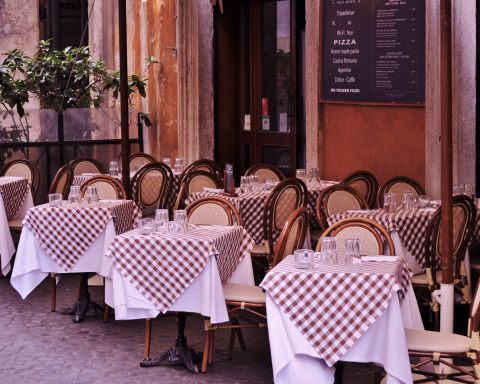
Walk into any Italian bar and go straight to the counter. Al banco. This is where coffee is drunk. It is also, practically speaking, where the coffee is cheapest, the service is fastest, and the conversation is best. Sitting down at a table means a different price (mostly in very touristy places and never in small towns), a different pace, and often a waiter you did not need.
Italians drink espresso standing up. Two sips, sometimes three, then they are gone. Finito! The counter is where the day gets started, where you exchange quattro chiacchiere with whoever is next to you, where the barista knows your name or learns it by the third visit. It is a social standing, not just a physical one. Take it. When they know you, they say il solito, calling you by name, or simply Dottore, a sign of respect and flattery. Dottore in Italian does not mean you have a PhD or that you are a surgeon. It means you have a bachelor’s degree.
Two: Know What You Are Actually Ordering
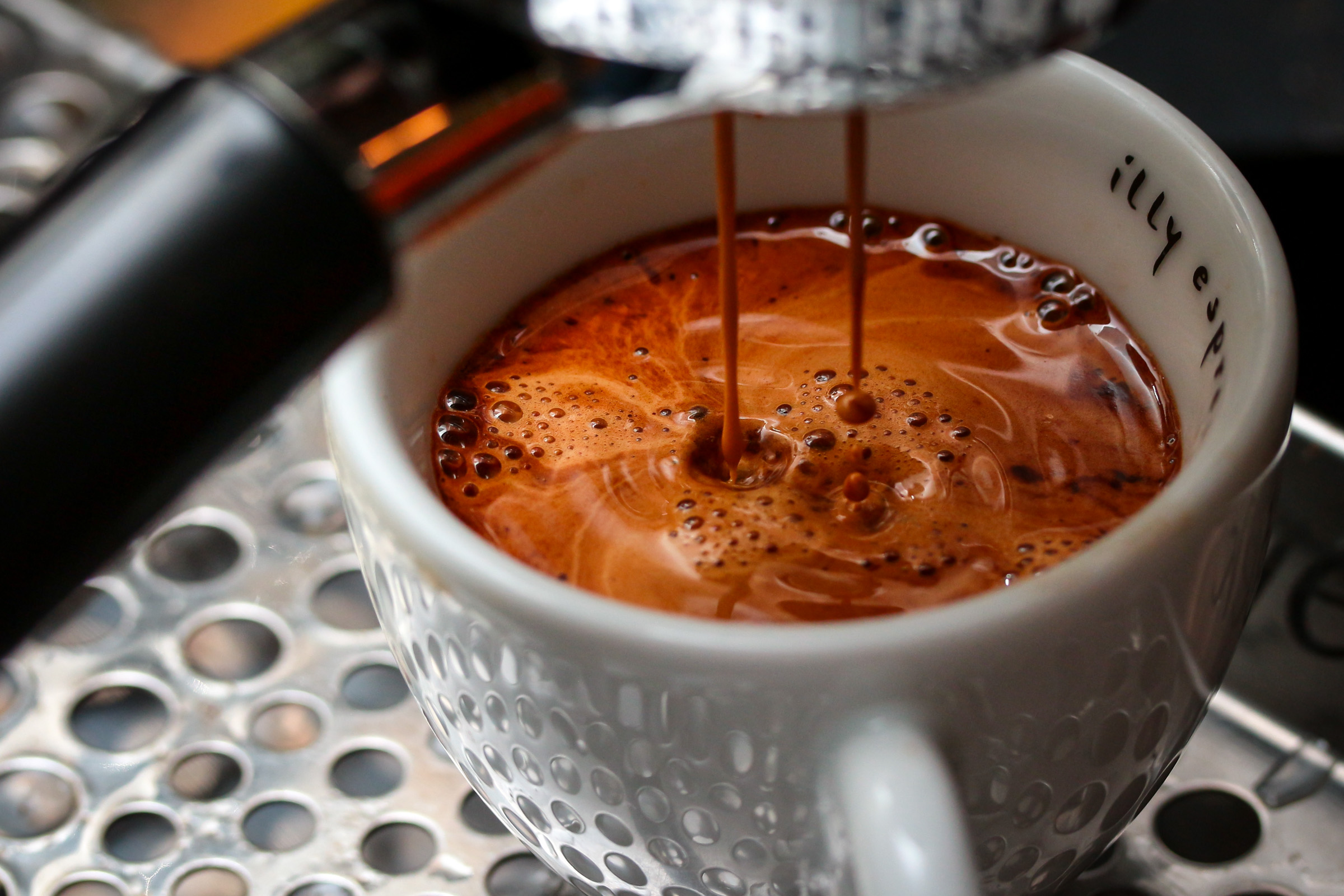
Say caffè and you get an espresso. That is the default and it is perfect. One word. Thirty milliliters (less than an ounce, think of it between as about a third of a shot of tequila). Molto corto. Very short. Done. But the menu is wider than most people realise, and knowing it is part of the pleasure.
If you want something shorter and more concentrated, say ristretto. Do not be scared. It sounds extreme and it looks like almost nothing in the cup, but the flavour is rounder, sweeter, less bitter. It is what happens when you stop the extraction early and keep only the best part. Many serious coffee drinkers consider it the superior drink. Try it once. È buonissimo.
If you want something longer, you say caffè lungo. Same dose of coffee, more water pushed through, a bigger result, and same cup unless you specify in tazza grande. If you genuinely want a large cup, you say caffè americano. Be clear in your mind about what it is: espresso with hot water added. It is not a Grande. It is not a Venti. There is no size to specify and no name to spell out. It is simply what it is, and it is good.
If you want a drop of milk, you say caffè macchiato. Macchiato means marked, stained, dirty. The milk is just a touch of color. No decoration like in the US. Nobody cares. If you want something with more body but less milk than a cappuccino and more coffee underneath, try a macchiatone. Two shots, a proper pour of steamed milk, served in a cappuccino cup, a drink that sits confidently between worlds. Not everyone knows the name. Order it and the barista will know you have been paying attention. This is the Italian advantage elegance.
Can you say espresso? Yes, of course. Italians understand it perfectly. You can also say liscio, which means straight, plain, neat. That is what I say. It is a touch old school, a little more local, the kind of word a regular uses. If you say it and mean it, something small but real shifts in how the barista looks at you.
One word of warning. Do not order un latte unless you want a glass of milk. That is exactly what you will get. Caffè latte will be understood. Latte alone will not get you coffee.
Three: The Cappuccino Has a Schedule
Cappuccino is a morning drink for Italians. Before eleven, ideally before ten. Niente cappuccino dopo pranzo. No cappuccino after lunch. This is not a rule anyone enforces with hostility. It is simply what Italians believe. Milk after a meal is considered heavy. The digestion does not thank you. Yes, we are obsessed with digestion and almost paranoid about it.
Order one at three in the afternoon and nobody will turn it down. The barista will make it well because that is his job. But he will also make a very small face that says everything. You will see it if you are looking.
If you want something with milk, a latte macchiato is another version, often served in a glass. Here the milk is what gets stained by the coffee, not the other way around. Less coffee, more milk, a gentler drink. This is also a morning ritual.
Four: When It Is Hot, Order a Shakerato
Summer in Italy, midday, the heat coming off the stone. This is the moment for a caffè shakerato. Espresso, ice, sometimes a small amount of sugar, shaken in a cocktail shaker and poured into a chilled beautiful glass. It comes out cold and slightly frothy, and it looks like a cocktail. It is one of the more elegant things you can drink standing at a counter. Divino is not too strong a word.
The shakerato is a warm-weather every day ritual and proof that the Italian coffee culture, which can sometimes appear rigid, is actually just precise. When the conditions change, the drink changes with them. The ritual adapts. The pleasure remains the point. People will understand if you order caffè con ghiaccio, but they will probably serve you a shakerato anyway.
Five: Naples Has Its Own Rules
Naples is not a different country, but it is a different school. The espresso is pulled tighter, the cup is smaller, and the bar experience has an intensity that is particular to the city. Neapolitans describe the perfect coffee cup with three Cs, words in dialect, untranslatable without losing most of the meaning. What they point toward is a cup that is hot, prepared correctly, and produced by a machine that is maintained correctly. The precision is darn important, as the second C makes very clear.
Naples also gave the world the caffè sospeso, the suspended coffee. You order your espresso, you pay for two, and the second one stays in credit at the bar for whoever walks in next and cannot afford it. It is a form of social safety net built into the daily ritual of coffee drinking. No paperwork, no sign-up, no bureaucracy. Someone pays forward, someone else claims it, the bar keeps count. The idea is that good coffee should be available to everyone, and that the community is responsible for making that happen. It is one of the most elegant things a city has ever done with a thirty-milliliter drink.
Six: Coffee Is Not Takeaway
You will occasionally see caffè da portar via on a sign, coffee to take away. It exists. But it is not how Italians drink coffee, and it is worth understanding why.
The bar is not a fuel stop. It is a pause built into the day. You go there not just to ingest caffeine but to stop, to be in a room with other people, to exchange a word, to face the counter and have ninety seconds of something that is yours. Quattro chiacchiere with a colleague at nine in the morning. A moment alone at the counter at three. The coffee is the occasion. The occasion is the point.
A paper cup walking down the street is not wrong, exactly. It is just a different thing. Italians drink coffee standing still, and they do it that way because the stillness is part of what they came for.
How do Italians have coffee to go? The bar comes to them. If you have a store, a hair salon, or an office, the barista will often arrive mid-morning with a tray of espressos, delivered without being asked. That is the Italian Advantage at work.
La Grammatica del Bar
All of this adds up to something simple. The Italian bar is a place with a logic, and the logic is not complicated once you see it. Stand at the counter. Know what you want. Match the drink to the hour. Accept what the bar offers you with grace. Come back.
You are at the counter. You order your ristretto without explaining yourself. The barista pulls it and slides it across. You drink it in two sips. You say grazie and you mean it. He nods. You are no longer someone passing through.
How do I order coffe?? Un liscio grazie!!
That is the Italian Advantage.
THE WORDS
Caffè al banco Espresso drunk standing at the counter, the default and correct position
Ristretto Short extraction, concentrated, sweeter than standard espresso. Try it.
Caffè lungo Longer extraction, more water, bigger result
In tazza grande In a large cup. Add it to lungo if you want more volume.
Caffè americano Espresso with added hot water. A large cup. Not a Grande.
Macchiatone Two shots, a proper pour of milk, served in a cappuccino cup. More coffee than a cappuccino.
Liscio Straight, plain, neat. Old school. Very local.
Caffè latte Coffee with milk. Say the full phrase. Latte alone gets you a glass of milk.
Niente cappuccino dopo pranzo No cappuccino after lunch. A rule Italians follow faithfully.
Caffè shakerato Espresso shaken with ice, chilled, served like a cocktail. A summer essential.
Caffè con ghiaccio Iced coffee. They may serve you a shakerato anyway.
Caffè sospeso A suspended coffee, paid forward by one customer for the next person who needs it. A Naples invention.
Caffè da portar via Coffee to take away. It exists. Not how Italians prefer to drink it.
Quattro chiacchiere Four chats. The small exchange that makes the bar more than a fuel stop.
Il solito The usual. What the barista says when he already knows.
Dottore A term of respect and mild flattery. In Italy, anyone with a bachelor’s degree qualifies.
Discover more from The Ambassador
Subscribe to get the latest posts sent to your email.