
A working wool mill in Calabria, a couture atelier inside a frescoed palace in Lucca, a former quarry transformed into a performance space near Vicenza: some of Italy’s most revealing places lie beyond its familiar museum routes. For one October weekend, visitors will have an opportunity to step inside them.
On Saturday 10 and Sunday 11 October 2026, the Giornate FAI d’Autunno, or FAI Autumn Days, return for their 15th edition. The programme encompasses more than 700 sites across 350 Italian cities and towns, including private residences, institutional buildings, workshops, gardens and places of research. Many are normally inaccessible or little known.
This year, more than 75 openings and special itineraries focus on craftsmanship and Made in Italy. The emphasis broadens the idea of cultural heritage to include the people, tools and knowledge behind the country’s manufacturing traditions. A visit may lead through a palace, but it may also follow wool from fibre to finished fabric or reveal how a centuries-old craft enters the classroom.
What Is FAI (and Why Does It Open These Doors)?
FAI, short for Fondo per l’Ambiente Italiano, is an independent nonprofit foundation dedicated to protecting Italy’s historical, artistic and landscape heritage. Often described as the National Trust for Italy, it was established in 1975 using the British National Trust as a model. Its work brings together restoration, conservation, public access and education.
The autumn weekend is both a cultural event and a fundraiser. Visitors are invited to support the foundation through a voluntary donation, while local volunteers and participating owners make the exceptional openings possible. The sites in the weekend programme should be distinguished from the properties FAI cares for throughout the year: the event reaches far beyond the foundation’s own estate.
According to the October campaign materials, FAI has saved and restored 75 properties, of which 60 regularly welcome visitors and 15 are undergoing restoration. Its publicly accessible properties received approximately 1.2 million visitors in 2025. More than 320,000 members and 18,000 volunteers support its wider mission.

Made in Italy: The Heritage of Making
For international audiences, Made in Italy often evokes fashion, furniture, food and design. The 2026 programme looks behind the finished products to explore the workshops, families and technical traditions that make them possible.
In Naples, the Caselli-Palizzi arts education complex offers a particularly strong connection between past and future. The Caselli institute occupies the historic Royal Porcelain Factory founded in 1743 within the grounds of Capodimonte. Its teaching combines practical ceramic and porcelain work with contemporary design, materials research and digital technologies.
The programme includes the educational museum and activities exploring techniques from traditional making to digital modelling and 3D printing. It also extends to the Church of San Gennaro, reopened in 2021 with a porcelain intervention by architect Santiago Calatrava. Together, the school, museum and church show how a historic manufacturing tradition can continue to generate new work.
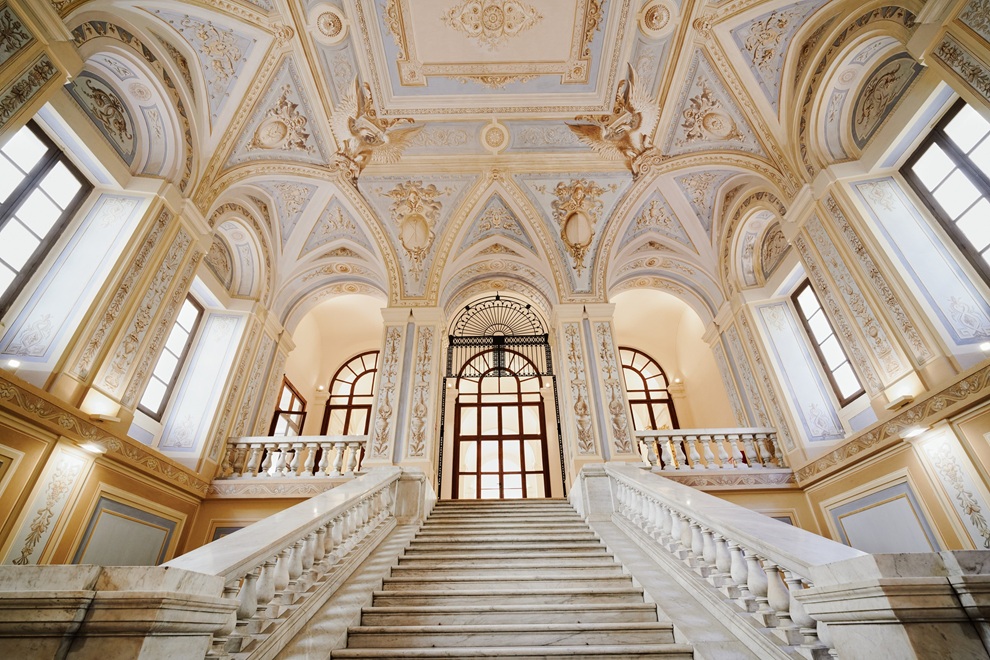
In Lucca, Atelier Ricci will open on Sunday 11 October only. Located in a seventeenth-century palace, its frescoed rooms connect architecture with the history of Italian couture. The visit traces the atelier’s development and the creative world surrounding its founder, Piero Ricci.
Further south, Lanificio Leo in Soveria Mannelli offers access to a factory that remains in production. Founded in 1873, the Calabrian wool mill preserves historic machinery alongside contemporary equipment. Visitors will follow the manufacturing process through spinning, weaving and finishing, encountering industrial heritage through the work it still performs.
Rome and Milan: Unexpected Views of Familiar Cities
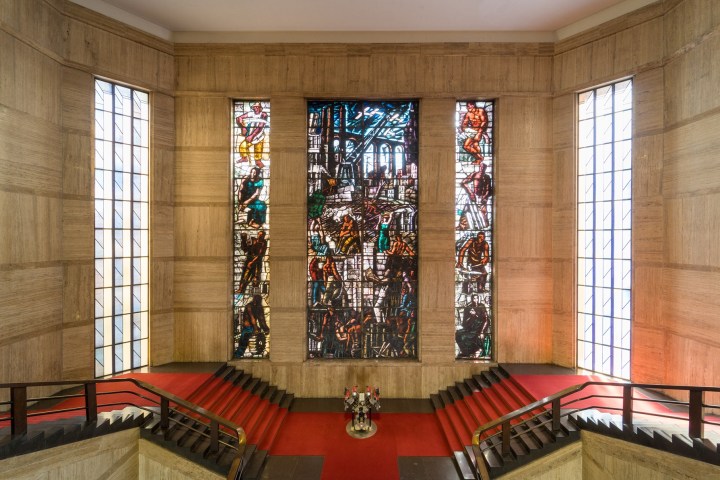
In Rome, Palazzo Piacentini, the headquarters of Italy’s Ministry of Enterprises and Made in Italy, will open for the weekend. Designed by Marcello Piacentini and Giuseppe Vaccaro and built between 1928 and 1932 as the Ministry of Corporations, it offers an encounter with the architecture and decorative arts of the Fascist period.
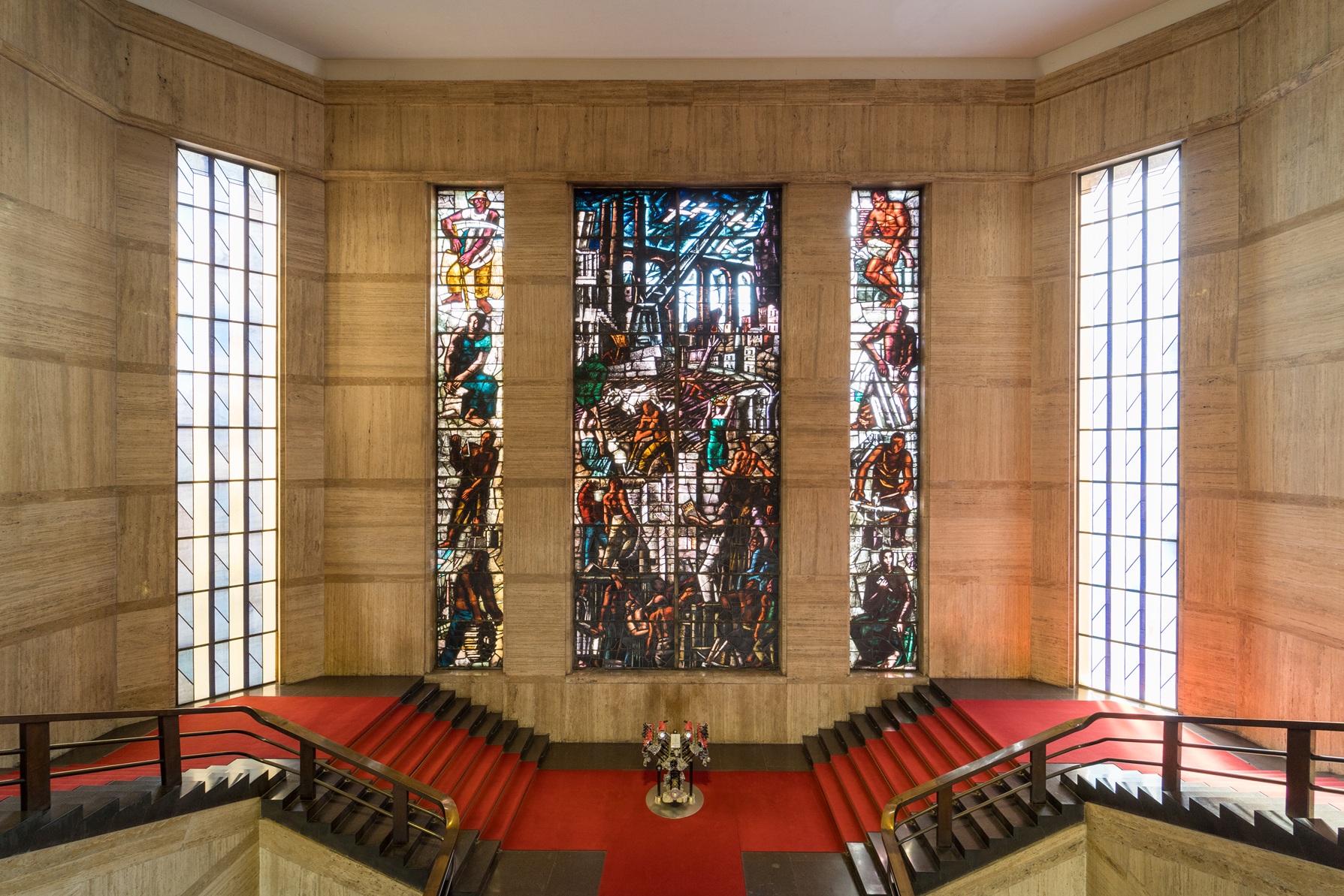
The route includes Mario Sironi’s monumental stained-glass window, Carta del Lavoro, alongside tapestries, original furnishings and institutional rooms. Its value as a visit lies partly in the opportunity to read a public building through the political and artistic history embedded in its spaces.
Milan presents a different architectural moment. CityWave, designed by BIG–Bjarke Ingels Group within the CityLife redevelopment, will welcome visitors while approaching completion. The planned route passes beneath its sweeping canopy and through the eastern building to a fifth-floor terrace.
The canopy spans more than 200 metres and is designed to carry over 11,000 square metres of solar panels. The visit offers an unusual chance to see contemporary architecture during its construction, when the relationship between engineering, public space and the surrounding city remains especially visible.
Elsewhere in Milan, Palazzo Dugnani will reopen exceptionally after a decade of closure, revealing an eighteenth-century residence with frescoes by Giambattista Tiepolo. The two openings allow visitors to move between very different chapters of the city’s architectural history.
Beneath the Hills of Veneto, a Quarry Becomes a Stage
One of the programme’s most distinctive destinations is the former Arcari quarry at Zovencedo, near Vicenza, open on Saturday 10 October only.
Decades of stone extraction left cavernous chambers supported by enormous piers beneath a wooded hillside. David Chipperfield Architects subsequently designed a performance space within this setting, working with the Morseletto family, whose business specialises in traditional stone and marble craftsmanship.
Terraced steps made from local Vicenza stone create places for performers and spectators within the excavated landscape. The intervention draws its character from the material and dimensions of the quarry itself. The architect’s project account describes a space shaped by 60 years of extraction and partly filled with water.
Normally accessible only for occasional concerts or private events, the quarry’s autumn opening offers a rare opportunity to explore the meeting point between manual labour, landscape and contemporary design.
From Glass Research to the Languages of Childhood
The programme also brings visitors into places where knowledge is produced and shared.
On Murano, Venice’s historic glassmaking island, the Stazione Sperimentale del Vetro will open its laboratories. Active since 1956, the centre provides scientific and technical support to the glass industry, including materials analysis, testing and quality certification. Its inclusion adds another dimension to Murano’s story: behind the island’s celebrated craft lies an extensive field of research.
In Reggio Emilia, visits to the Loris Malaguzzi International Centre introduce a different Italian contribution with worldwide influence. The Reggio Emilia Approach to early childhood education treats children as active participants in learning, with multiple ways of exploring and expressing ideas.
Its celebrated “hundred languages” are a metaphor for these possibilities, encompassing verbal and nonverbal expression. Relationships, creative exploration, family participation and the learning environment are central to the approach. For visitors unfamiliar with its origins, the centre provides a route into an educational philosophy that has travelled far beyond the city.
Making Heritage Accessible
At Palazzo Sclafani in Palermo, accessibility is a central feature of the planned opening.
The fourteenth-century building has served as an aristocratic residence, a hospital and military premises. The programme includes tactile representations, three-dimensional models and descriptive audio, with an accessible virtual tour also planned.
The visit recalls the palace’s connection with the Triumph of Death, the fifteenth-century fresco originally painted in its courtyard. The original artwork is now held at Palazzo Abatellis; the Sclafani programme uses reproductions and interpretive material to explore that history.
Visitors must bring a valid identity document. The opening illustrates why checking the requirements for each destination matters, particularly when an itinerary includes working institutions or military sites.
What the October Fundraiser Supports
The weekend is the centrepiece of Ottobre del FAI, the foundation’s month-long awareness and fundraising campaign.
According to its campaign materials, FAI expects to invest more than €12 million in restoration, extraordinary maintenance and improvements to its properties in 2026, alongside approximately €20 million for ordinary management. For 2027, it plans to allocate around €1.5 million to environmental measures, including decarbonisation, climate adaptation, sustainable water management and biodiversity protection.
These commitments reflect the practical demands of caring for places where historic buildings, gardens and natural landscapes are closely connected. Preserving them requires continuing work after the visitors have left: maintaining roofs, managing vegetation, conserving artworks and adapting to changing environmental conditions.
The campaign also draws on younger participants. More than 9,000 specially trained students, the Apprendisti Ciceroni, or apprentice guides, will help introduce visitors to the sites. Their involvement makes the weekend an exercise in learning and public participation as well as discovery.
How to Plan a Visit on 10–11 October
The full programme is available at giornatefai.it, where visitors can search by location and consult individual listings for opening hours, meeting points and access conditions.
Some destinations open on only one of the two days. Others require reservations or are restricted to FAI members, including selected visits in Rome, Venice and Turin. Members and people joining during the event receive priority access, subject to the arrangements at each site. Visitors should also check the language of any guided visit rather than assume that English interpretation will be available.
FAI advises checking the programme again before travelling, as arrangements may change.
The reward is an opportunity to encounter Italy at closer range: through a working loom, a laboratory bench, a restored room or the stone walls left by generations of quarry workers. For two days, places usually passed without entering become invitations to understand how the country’s heritage is made, maintained and carried forward.
Discover more from The Ambassador
Subscribe to get the latest posts sent to your email.