

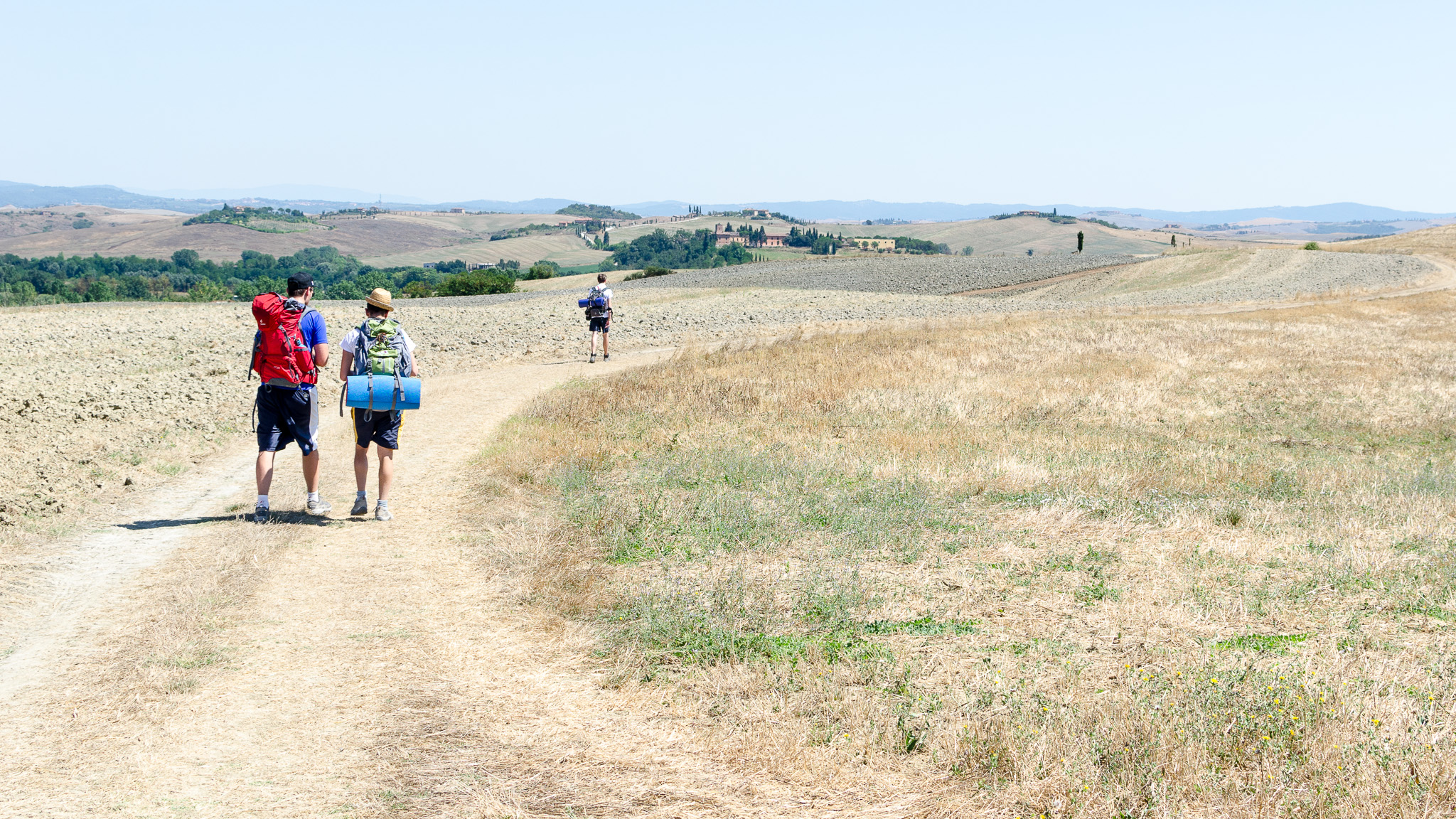
When the first, tentative, and immensely fragile warmth of the Italian spring finally begins to thaw the frozen, unforgiving dirt trails of the high Apennine passes and the vibrant, blood-red poppies suddenly erupt in violent, chaotic splashes of color across the rolling, impossibly perfect emerald-green expanses of the Tuscan Val d’Orcia, a silent, remarkably profound, and deeply subversive human migration begins to unfold across the longitudinal spine of the peninsula, completely invisible to the millions of frantic, stressed tourists who are simultaneously bottlenecking the international airports and swarming the crowded, claustrophobic piazzas of Rome, Florence, and Venice. This quiet revolution is the phenomenon of the cammini, the arduous, exhilarating, and highly philosophical practice of extreme slow tourism, an aggressive, deliberate antithesis to the superficial, carbon-heavy, and spiritually exhausting “hit-and-run” travel model that currently defines the modern globalized vacation industry, where entire countries are aggressively consumed, photographed, and discarded in a matter of mere hours. At the absolute, undisputed epicenter of this geographical and spiritual renaissance is the legendary Via Francigena, the monumental, thousand-year-old pilgrimage artery that was meticulously documented in the late tenth century by Sigeric the Serious, the Archbishop of Canterbury, who recorded his grueling, multi-month return journey from the Vatican, thereby establishing an incredibly detailed, step-by-step physical blueprint that is now being enthusiastically retraced by tens of thousands of contemporary walkers from every conceivable corner of the globe. However, to mistakenly categorize these modern wanderers strictly as devout, traditional religious pilgrims seeking divine absolution is to entirely misunderstand the complex, profoundly secular, and therapeutic nature of this massive contemporary undertaking; the vast majority of the men and women currently tightening the heavy, padded straps of their sixty-liter technical backpacks and adjusting their carbon-fiber trekking poles in the shadow of the Great St. Bernard Pass or the medieval walls of Lucca are secular urbanites—burnt-out corporate executives, exhausted software engineers, and anxious university students—who are utterly desperate to sever the suffocating, invisible digital umbilical cords that bind them to their overflowing email inboxes, their relentless social media algorithms, and the chronic, paralyzing anxiety of twenty-first-century hyper-connectivity. By willingly subjecting themselves to the harsh, unforgiving, and deeply repetitive physical discipline of walking twenty-five or thirty kilometers every single day under the blazing Mediterranean sun or through torrential, freezing springtime downpours, these modern travelers are actively reclaiming absolute sovereignty over their own biological time, violently stripping away the thick, artificial layers of modern ego, status, and convenience to rediscover a terrifying, exhilarating state of primal vulnerability. Out here, on the dusty, white gravel roads of the Chianti region or the dark, ancient basalt paving stones of the Roman Cassia, the complex, overwhelming problems of modern society instantaneously evaporate, ruthlessly replaced by the immediate, microscopic, and incredibly urgent realities of physical survival: the excruciating, fiery friction of a poorly taped blister developing on a heel, the desperate, obsessive calculation of how many milliliters of lukewarm water remain in a plastic canteen before the next isolated public fountain, and the profound, almost religious ecstasy of finally shedding heavy hiking boots at the end of a punishing eight-hour march. This brutal, beautiful physical friction forces a radical psychological recalibration, dropping the walker’s cognitive rhythm down to the slow, steady, hypnotic cadence of three miles per hour, the exact evolutionary speed at which the human brain was originally designed to process passing landscapes, smell the intoxicating, resinous scent of wild fennel and damp earth, and actually engage in deep, meaningful, and uninterrupted introspection. Yet, the staggering impact of the Via Francigena extends far beyond the solitary, internal psychological salvation of the individual walker; it is currently acting as a massive, decentralized, and highly effective economic defibrillator for hundreds of tiny, forgotten, and severely depopulated rural villages scattered across Piedmont, Emilia-Romagna, Tuscany, and Lazio, communities that have been entirely bypassed by the modern high-speed rail networks and the sterile, multi-lane autostrade. A solitary walker traversing these isolated, silent hamlets requires essential, immediate biological sustenance—a warm bed, a hot shower, a carbohydrate-rich meal, and clean drinking water—creating a steady, sustainable, and highly localized micro-economy that is miraculously resurrecting businesses that were on the absolute brink of permanent closure. The small, family-run bakery in a dying town of three hundred elderly residents suddenly finds itself selling out of its dense, heavily salted focaccia by nine o’clock in the morning to a hungry, multilingual army of passing hikers; the abandoned, crumbling parish rectory is enthusiastically converted by the local municipality into a Spartan but impeccably clean ostello run by passionate local volunteers, charging a modest fifteen euros a night and providing a crucial communal space where exhausted strangers from Tokyo, Montreal, and Berlin share cheap bottles of local Sangiovese wine, slice pungent wheels of raw-milk pecorino cheese with pocket knives, and trade invaluable, highly specific intelligence regarding the muddy conditions of the upcoming mountain pass. This deeply intimate, unvarnished, and incredibly authentic daily interaction between the global traveler and the rural Italian citizen entirely bypasses the transactional, artificial hostility that so often plagues the major, over-crowded tourist epicenters, replacing it with a profound, mutual gratitude based on genuine hospitality and shared humanity, proving that the absolute most effective way to truly comprehend the incredibly complex, multifaceted soul of the Italian peninsula is not to fly over it at thirty thousand feet or to blur past it in a high-speed train, but to literally press your boots into its ancient dust, to earn every single, spectacular panoramic view with the sweat of your own brow, and to finally, after weeks of relentless, agonizing, and magnificent physical effort, stand high atop the strategic vantage point of Monte Mario in Rome, staring down at the colossal, floating dome of St. Peter’s Basilica not merely as a passive, pampered tourist snapping a quick digital photograph, but as a triumphant, utterly transformed traveler who has physically conquered the immense, enduring, and heartbreakingly beautiful geography of history itself.
Discover more from The Ambassador
Subscribe to get the latest posts sent to your email.