

When the delicate, piercing light of the Lazian spring finally pierces the crisp air of mid-April, awakening the entire Pontine plain from its long and melancholic winter slumber, a botanical and architectural miracle of absolute, heartbreaking proportions occurs in the shadow of the massive limestone peaks of the Lepini Mountains, a fleeting, precious, and rigorously protected event that marks the annual opening of the majestic wrought-iron gates of the Garden of Ninfa, universally recognized not only as the most romantic and evocative private park on the planet but as a living, breathing, and pulsating entity that literally devours tragic human history to transform it into pure, uncontrollable, and dazzling chromatic beauty, an astonishing testament to the enduring power of organic resurrection over the cold, unyielding finality of architectural decay.
Forget for a moment the rigid, aseptic, rational, and severe geometry of classic Italian gardens, where wild nature is constantly bent, pruned, humiliated, and submitted to the mathematical, dominating will of man through meticulously sculpted boxwood labyrinths, geometric hedges, and perfectly symmetrical water fountains; Ninfa represents the exact, glorious, and liberating opposite, a controlled, lush, and wild anarchy, an English-style garden with a profoundly, unequivocally Mediterranean heart, where the ancient, majestic ruins of a once-thriving fourteenth-century medieval city—ferociously devastated by internecine wars between noble Roman families, progressively abandoned due to the deadly advance of malaria, and finally swallowed silently by ivy and brambles for over six hundred years—have been gently awakened and transformed into an unparalleled theatrical stage by the visionary, stubborn, and brilliant aesthetic sensibility of the women of the Caetani family, who understood that true elegance lies not in domination, but in a respectful, symbiotic collaboration with the relentless forces of the natural world.
It was Marguerite Chapin, followed by her daughter Lelia, a highly refined painter and the fierce, final heir to this incredibly ancient dynasty, who realized with blinding intuition that those silent stones, those crumbling walls of seven ruined churches, the fading frescoes exposed to the harsh elements, and the massive, truncated watchtowers should absolutely not be philologically restored, rebuilt, or erased, but rather fiercely embraced, consoled, and utilized as imposing, dramatic, three-dimensional trellises to support the climbing vines of over three hundred incredibly rare varieties of ancient roses, creating a visual, tactile, and emotional contrast that literally stuns the senses of anyone who crosses the threshold, transporting the bewildered visitor into a realm of pure, unadulterated fantasy that defies all rational expectation.
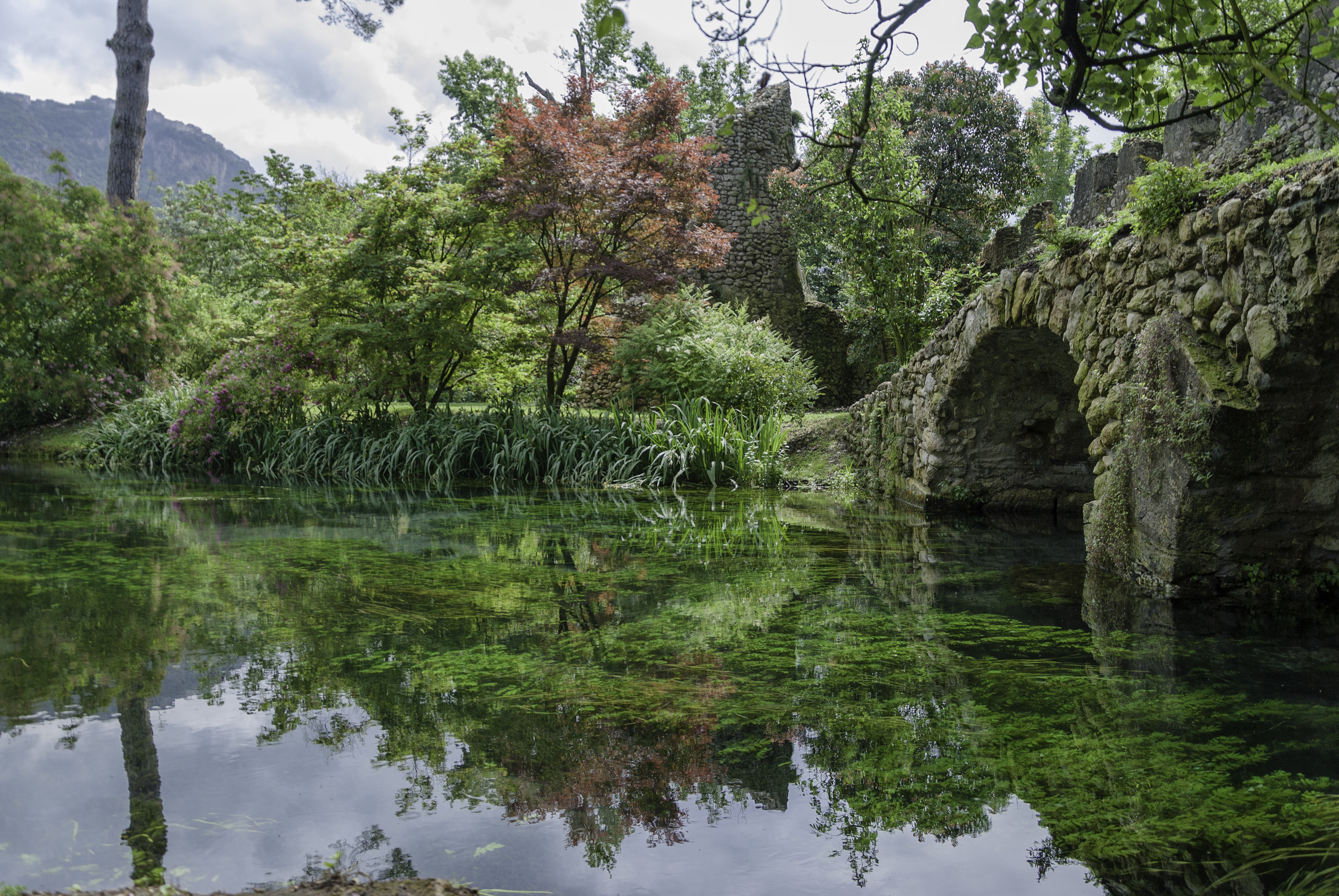
Entering Ninfa in full springtime bloom essentially means being immediately and pleasantly assaulted by an overwhelming sensory explosion, an intoxicating vortex of sweet perfumes, pungent resins, and blinding colors that definitively, almost violently, shatters the monochromatic rigor of winter: the flaming, opulent cascades of deep purple wisteria that desperately cling to the remains of the picturesque Ponte del Macello bridge, reflecting like a perfect mirror in the freezing, transparent, emerald-green, and incredibly fast-moving waters of the eponymous river that aggressively cuts through the entire estate, gurgling continuously like a ribbon of liquid crystal; the pale, fragile, and incredibly delicate pink of the Japanese ornamental cherry trees that blossom in unison, creating ethereal, almost impalpable clouds that contrast violently with the dark gray, rough, solemn, and porous texture of the medieval limestone; and the impossibly dense, infinite, and iridescent carpets of white calla lilies, blue aquatic irises, wild tulips, and anemones that aggressively colonize every single centimeter of damp, fertile earth along the banks of a thousand babbling brooks, resulting in a staggering chromatic triumph that looks as though it stepped directly out of the feverish, highly textured, and obsessive brushstrokes of Claude Monet at Giverny, yet significantly enriched and weighed down by the looming, dramatic, and inimitable fascination of eight centuries of tumultuous Italian history, creating an intoxicating, multisensory tableau that simply cannot be accurately captured by the flat, lifeless lens of a digital camera, but must be physically, intimately inhaled.
The unspeakable secret, the astonishing engineering and biological magic of this oasis suspended entirely outside of conventional time and space, lies fundamentally in its absolutely unrepeatable microclimate, an isolated, deeply protected ecosystem shielded from the biting, freezing northern winds by the imposing rocky barrier of the mountain range at its back, and constantly refreshed, nourished, mitigated, and humidified by the incredibly abundant, hyper-pure spring waters that burst aggressively from the dark depths of the earth, miraculously permitting the absurd, apparently impossible coexistence of botanical species originating from the most remote and climatically incompatible corners of the planet: Japanese maples with their blood-red, deeply serrated leaves, massive, biblical cedars of Lebanon projecting gigantic, cooling shadows onto the emerald lawns, dense forests of exotic bamboo that rustle rhythmically in the gentle afternoon breeze, Nordic silver birches, and even massive, broad-leafed tropical banana trees that grow lushly and audaciously right alongside the traditional, knotty, twisted, and silver-hued olive trees of the Lazio region, creating a magnificently orchestrated botanical chaos that instantaneously annihilates any conventional geographical or temporal coordinates, forcing the disoriented observer to surrender entirely to the overwhelming beauty of this impossible, globalized Eden.
This continuous, fluid transition, this state of perpetual, unstoppable biological mutation, is precisely what makes Ninfa the absolute, triumphant antithesis of the traditional, dusty, and static museum, elevating it instead to the status of a living, breathing masterpiece that is literally never the exact same for two consecutive days, a gigantic, incredibly fragile organism that vehemently demands an absolute spiritual presence from the visitor, a total, unwavering attention to the most microscopic details, and an unconditional emotional willingness to be entirely overwhelmed, deeply moved, and ultimately swallowed whole by pure, unadulterated beauty, a profound, humbling reminder of our own fleeting mortality in the face of nature’s eternal, cyclical rebirth. The visit to Ninfa, rigorously rationed, strictly limited to a few highly selected days a year, guided at a deliberately slow walking pace, and managed with loving, inflexible, and sacrosanct severity by the Roffredo Caetani Foundation precisely to fiercely protect this incredibly fragile biological and aesthetic equilibrium from the devastating, noisy, and corrosive impact of inattentive mass tourism, thus assumes the mystical, silent, and deeply solemn contours of a genuine secular pilgrimage, an initiatory journey into a miraculously rediscovered and fiercely defended Eden, where the crystal-clear water flows incessantly, washing away the toxic, exhausting slag of digital modernity and carrying with it the unstoppable, roaring energy of life, where the deafening, intensely layered, and joyous song of hundreds of species of migratory birds completely drowns out any distant, muffled roar of urban traffic or the melancholic echo of industrial civilization, and where human time, usually measured so anxiously by the illuminated dials of smartwatches and the relentless, buzzing notifications of smartphones, seems to have literally, gently, and miraculously stopped, remaining crystallized forever in a perpetual, magnificent, and utterly invincible spring, offering a desperately needed sanctuary for the exhausted modern soul seeking refuge from the relentless, grinding machinery of the twenty-first century.
As one strolls slowly, almost reverently, along the soft, grassy avenues, deferentially stepping on a thick, vibrant carpet of damp, freshly fallen petals and breathing in deeply an incredibly dense, almost palpable air that is completely saturated with heavy pollen, rare botanical essences, and the intoxicating scent of ancient, damp moss, one finally comprehends the deepest, most poignant, and universally resonant lesson of this enchanted, impossible place: nature, if left entirely free to express its incredibly disruptive, chaotic power but simultaneously guided, accompanied, and meticulously cared for by a human hand filled with boundless respect, profound botanical knowledge, and pure, unadulterated visual poetry, absolutely does not destroy the tragic, crumbling ruins of our violent past, nor does it carelessly crumble them into the dark abyss of oblivion, but rather it nurses them with profound compassion, decorates them sumptuously with life, miraculously transforms them into towering, majestic pedestals for new growth, and definitively, beautifully redeems them from the cold grip of death and silence, offering the entire modern world a living, breathing, endlessly mutable, and truly immortal masterpiece that easily, unquestionably justifies the agonizing, impatient wait of an entire, long, and freezing winter just to be finally, desperately, and hopelessly experienced in all its blinding, wildly colorful, and majestic glory, proving definitively that the most profound and enduring art is not carved from cold marble or painted on static canvas, but is coaxed, with infinite patience and love, from the living, breathing earth itself.
Discover more from The Ambassador
Subscribe to get the latest posts sent to your email.