

At the end of last year, in November 2025, Ornella Vanoni passed away; she had an unmistakable, magical voice, capable of interpreting Italian music with a rare delicacy. Almost as if for a final rendezvous, she was joined in March this year by Gino Paoli, the singer-songwriter who, alongside others, founded the Genoese singer-songwriter school, and who described in clear, direct words what love is, what it feels like to love, and what happens when love is unrequited.
Ornella and Gino met in the 1960s: she had a unique style and was trying to make a name for herself, whilst he was already hugely successful and had already found his way into Italian homes with his singer-songwriter songs. Their partnership, initially artistic and later romantic, began at the ‘Ricordi’ record label in Milan, where they met for the first time. It was there that Gino Paoli developed new feelings for Ornella Vanoni, for whom he would write a song destined to go down in the history of Italian music, just like the bond that still unites them today: ‘Senza fine’.
Senza fine: the song of an eternal bond
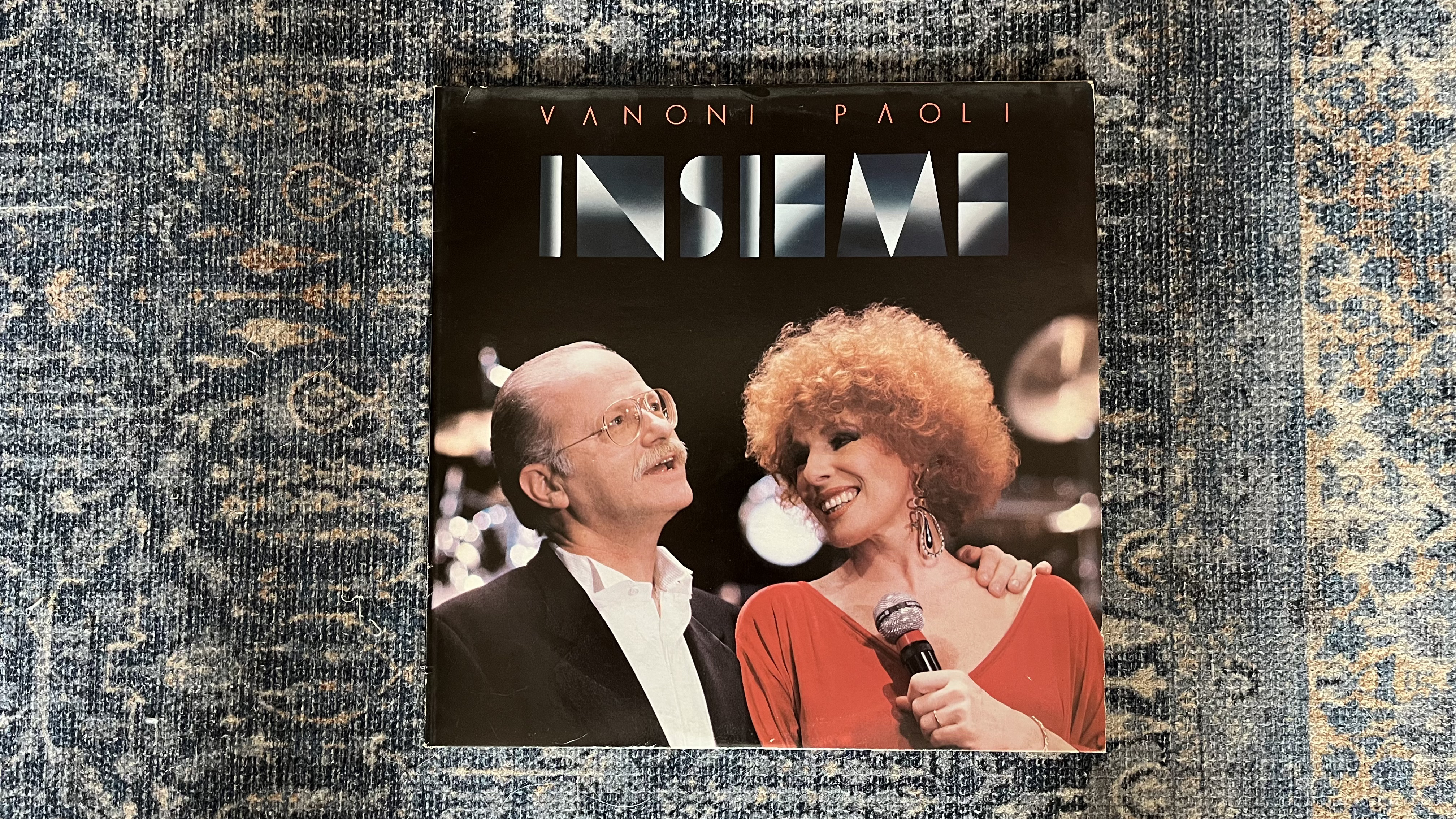
Gino Paoli wrote ‘Senza Fine’ in 1961, a declaration of love from a bygone era, penned with conviction, offering an analytical description of what he felt for Ornella Vanoni from the very first moment he met her. Gino Paoli speaks of “an endless moment” and of “large hands”, the large hands of Ornella Vanoni that immediately struck the singer, just as Ornella’s unexpected beauty, the charm of her voice and her eyes – both cheerful and melancholic at the same time – did. The power of the song lies not in recounting a single love, but in recounting many loves whose sole requirement is to be true, to endure even beyond their end indeed, to be endless. The love described is destined to endure over time, beyond the passing of the years, ageing and even death. The song was released by the record label with Ornella Vanoni singing it, but over the course of these long years it would be sung by both of them, performed as a duet as happened in 1985 for the release of the album ‘Insieme’, or solo in their respective concerts.
A difficult relationship
Many women revolved around Gino Paoli. The most significant among them were undoubtedly his first wife, Anna Fabbri, and his two mistresses, Stefania Sandrelli and Ornella Vanoni. In 1954, Gino met Anna Fabbri. The couple married in 1957 and Anna Fabbri became the quiet wife of the man who would soon become famous. Their marriage took place during a period of tension, with the spotlight on Gino Paoli’s career and his parallel romantic relationships. It is here that the figures of Ornella Vanoni and Stefania Sandrelli emerge. As already mentioned, Gino meets Ornella in their shared recording studio, ‘Ricordi’. Gino is already married to Anna Fabbri, but the relationship develops in parallel and becomes central to his musical career as well. Needless to say, the relationship is extremely complicated, so much so that Anna Fabbri asks Ornella herself to step aside; she reluctantly agreed, throwing herself into a marriage destined to fail from the outset, that with the theatre impresario Lucio Ardenzi. In her biography, Ornella recounts that right up until the day of her wedding, Gino advised her against marrying, even threatening to turn up at the ceremony and sing ‘Senza fine’.
Gino also met another young woman, Stefania Sandrelli, who was just fifteen years old, at the La Bussola club in Viareggio; Stefania Sandrelli was a huge fan of Gino and managed to capture his attention to such an extent that a romantic relationship blossomed, running parallel to Gino’s marriage to Anna Fabbri. It was a new, passionate and all-consuming love affair that scandalised Italy during the economic boom. Gino Paoli’s romantic entanglements can be summarised as follows: in 1963, the singer-songwriter attempted suicide, shooting himself in the chest, but the bullet missed his heart by a few centimetres and remained lodged there for the rest of his life. Anna Fabbri, Stefania Sandrelli and Ornella Vanoni arrived at his hospital bedside: three women in a room for a single man who, through his personality, had managed to make them all fall in love with him – a gruff and prickly man, yet capable of explaining love and life with a disarming simplicity.
‘Che cosa c’è’: The Consequences of Love
The song ‘Che cosa c’è’, released in 1963 – the year Gino Paoli attempted suicide – tells the story of a mature love that is no longer in its infancy, but which has been battered by adversity and hangs in the balance of uncertainty. The lyrics recount a genuine confession by the artist, a feeling that becomes entirely private, almost stifled, yet one that can be understood through the singer-songwriter’s eyes, which become the vehicle for the message of love. The song was also recorded that same year by Ornella Vanoni, a sign of an unbreakable personal and artistic bond so strong that it became, as in the case of ‘Senza fine’, a signature song for both of them.
Both born in September 1934, just one day apart, Ornella Vanoni and Gino Paoli have left us within a few months of each other. Certainly, this bond was never broken, and the music they gave us will remain as a legacy for future generations too.
Discover more from The Ambassador
Subscribe to get the latest posts sent to your email.