


High on the wind-swept, severe ridges of Tuscany, where the ancient Etruscan stone walls of Volterra cast long, dramatic shadows over the surrounding valleys, a profoundly silent and historic industry operates with absolute dedication. This territory does not rely on the massive, roaring machinery of heavy industrial manufacturing, but rather on the intimate, highly focused dialogue between human hands and a remarkably unique mineral. Alabaster, a soft, translucent crystalline form of calcium sulfate born from the evaporation of ancient Miocene seas, rests quietly beneath the clay soil in the form of isolated, irregular nodules known locally as Arnioni. To uncover this material is to engage in a timeless ritual of revelation, where the raw, deceptive exterior of the stone is systematically stripped away to unleash a breathtaking capacity for capturing and diffusing ambient light. Through the sharp, high-contrast perspective of monochrome photography, the alabaster workshops of Volterra reveal themselves as spaces of pure structural drama, where the air itself is thick with a fine, chalky mist that transforms every surface, tool, and artisan into a living monument of sculptural devotion.
Ancestral Stone Architecture
The extraction and selection of these subterranean mineral deposits follow a historical trajectory that has remained unbroken for over two millennia, anchoring the identity of Volterra as an undisputed capital of artistic stone craftsmanship. Unlike traditional marble quarrying, which cuts vast, open amphitheaters into the mountainsides, alabaster harvesting requires an incredibly localized, respectful navigation of the deep clay beds. Specialized excavators must track the underground veins with profound geological intuition, gently extracting the nodules without disrupting their fragile internal crystalline structures. Once brought to the surface, each stone egg presents a rough, gray, and completely opaque crust that betrays absolutely nothing of the luminous luxury hidden deep within its core. It is at this precise moment that the true mastery of the Volterran artisan enters the narrative, bridging the gap between raw geology and elite international design through a sequence of highly deliberate, expert decisions.
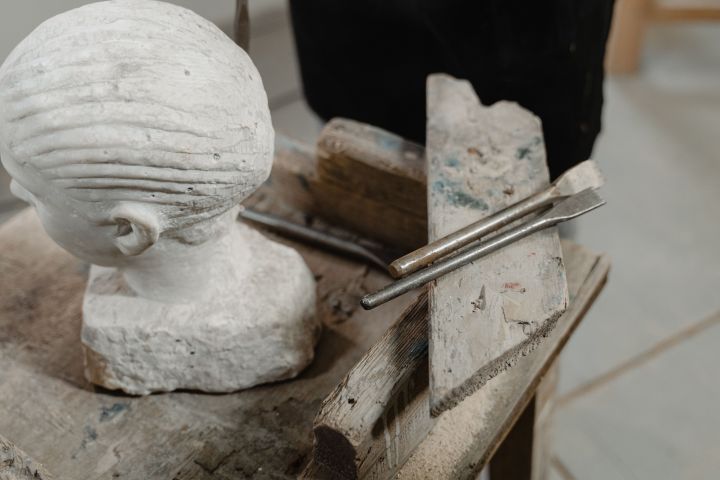
When these rough blocks cross the thresholds of the historical botteghe in the city center, they are subjected to a rigorous acoustic and visual evaluation that determines their ultimate architectural destination. The master craftsman strikes the raw stone with a specialized wooden mallet, listening intensely to the resulting resonance; a clear, high-pitched ring indicates a flawless internal density, completely free of micro-fractures, perfectly suited for high-end, translucent sculptural work. In the dramatic chiaroscuro of the workshop environment, where slanting rays of summer sunlight pierce through high, arched windows to cut through the dense haze of suspended dust, this evaluation process takes on a deeply theatrical quality. The grey, unpolished exterior of the material absorbs the light completely, standing in stark contrast to the gleaming steel saws and razor-sharp chisels lined up across heavily scarred wooden workbenches, creating a visual tension that underscores the imminent transformation of the medium.
Precision Subtractive Mastery
The physical process of shaping alabaster is a masterclass in subtractive precision, requiring an extraordinary balance of physical confidence and hyper-delicate control over the specialized hand tools. Because the stone is uniquely malleable compared to harder silicates, it responds instantly to the slightest variation in pressure, meaning that a single uncalibrated stroke of the mallet can permanently shatter months of meticulous effort. Artisans utilize an extensive array of traditional implements—including heavy steel rasps, delicate curved scrapers, and custom-etched gouges—to gradually coax smooth, organic curves and precise geometric planes out of the block. The movement of the craftsman’s hands is fluid and unceasing, characterized by a deep, tactile engagement with the material that allows them to read the changing grain of the crystal entirely through physical feedback.
As the steel tools aggressively shave away the outer layers of the stone, a dense, snow-white powder cascades continuously onto the artisan’s dark leather apron and calloused hands, coating the workspace in a fine, velvety layer of crystalline residue. This chalky dust functions as a magnificent visual medium under the monochrome lens, clinging to the deep lines of the carver’s focused face and dramatically highlighting the sharp contours of their profile against the dark, shadowed corners of the studio. Every stroke of the rasp generates a soft, rhythmic whispering sound that dominates the quiet atmosphere of the room, punctuated only by the occasional sharp tap of a hammer against a chisel. The material is not forced into submission through brutal, mechanized violence; instead, it is progressively refined through a patient, sophisticated process of subtractive editing, where the human touch carefully eliminates everything that is superficial to expose the pure, underlying architectural form.
High-End Global Capitalization
The elite economic positioning of the Volterran alabaster district relies heavily on its ability to convert a highly localized, ancient heritage into a high-margin, global luxury commodity that commands immense prestige across the international interior design and architectural markets. Modern Italian design studios and high-end lighting manufactures increasingly partner with Volterra’s master carvers to create bespoke, limited-edition lighting fixtures, sculptural furniture components, and monumental installation art for luxury hotels, private mega-yachts, and corporate headquarters from New York to Dubai. Because of alabaster’s natural translucency and unique vein patterns, every finished piece operates as an unrepeatable, highly liquid art asset, insulating the district from the price pressures of mass-produced synthetic alternatives and securing a highly profitable niche within the global creative economy.
From a corporate and financial perspective, this artisanal ecosystem demonstrates remarkable structural resilience by prioritizing value density over sheer volume of production. The specialized workshops function as highly efficient corporate entities that manage the entire supply chain internally, from direct sourcing in the local clay fields to international logistical distribution, ensuring absolute quality control and retaining maximum profit margins within the local territory. International collectors and elite design galleries actively invest in these Volterran creations, recognizing that the severe scarcity of high-grade raw material, combined with the irreplaceable intellectual property of the master carvers, guarantees a steady, long-term appreciation of asset value. The field of traditional stone carving is thus permanently elevated into a sophisticated, forward-looking sector of the contemporary Made in Italy brand, demonstrating how historical dedication can flawlessly interface with the most demanding aesthetic and financial expectations of the global elite.
Illumination of Form
To experience the final completion of an alabaster masterpiece is to witness the absolute transfiguration of matter through the agency of light and human intelligence. The final stages of production involve an exhausting, multi-tiered polishing ritual, where the surface of the carved object is treated with increasingly fine abrasives and specialized natural waxes until all traces of tool marks are completely eradicated. The result is a surface of complete, unadulterated smooth perfection that possesses an almost flesh-like quality, inviting the viewer to touch and experience its cool, dense physical presence.
When a light source is introduced behind or within the finished sculpture, the true, breathtaking magic of the Volterran craft is fully manifested. The monochrome frame captures this illumination with magnificent, heart-stopping intensity: the stone ceases to appear as a solid, opaque mass and instead dissolves into a glowing, translucent vessel of light, revealing the intricate, ghostly patterns of its internal geological veining with absolute clarity. The brilliant, incandescent core of the object radiates outward, casting soft, architectural gradients across the surrounding space and violently pushing back the darkness of the room. This is the enduring luxury that The Ambassador proudly delivers to its sophisticated global audience: a profound celebration of an Italy that takes the hidden, dusty fragments of the earth and, through pure dedication and artisanal genius, transforms them into timeless monuments of light, inviting the international elite to discover a territory where beauty is carved directly out of the deep silence of history.
Discover more from The Ambassador
Subscribe to get the latest posts sent to your email.