


Imagine a dream villa—a masterpiece of design featuring precious marbles, rare woods, and bespoke hand-stitched leather. Now, place that entire villa in the middle of the open ocean, forcing it to withstand crashing waves, relentless storms, corrosive salt, and perpetual vibrations. This is the reality of constructing a modern superyacht. It is an industry where Italy stands as the undisputed global titan of the luxury nautical market.
In a recent episode of the business podcast Challenge, hosted by Matteo Valléro on Amazon Music, Lorenzo Gasperini, founder and CEO of Mobilart Yacht Furniture, shed light on the rigorous and deeply human world behind these floating palaces. Mobilart, a premier shipyard interior specialist, was recently selected by MIMIT and Confapi as one of just four companies to showcase their craft for the national “Made in Italy Day,” presenting their trade to over 3,200 students across the country.
With more than 300 luxury yachts furnished globally, Gasperini’s insights reveal a sector navigating a delicate transition: maintaining ancient artisanal mastery while integrating heavy industrial technology.
Balancing Precision Tech with the Master Artisan’s Soul
Building the interior of a 40-to-50-meter superyacht is an exercise in extreme engineering. It requires roughly 30,000 hours of intensive labor to bring a single vessel to completion. Unlike residential architecture, yacht spaces are completely non-linear, requiring Mobilart to deploy advanced three-dimensional laser scanners directly on board the empty steel hulls. Engineers must map every curve down to the millimeter, routing air conditioning, electrical systems, and plumbing before a single piece of wood is cut.
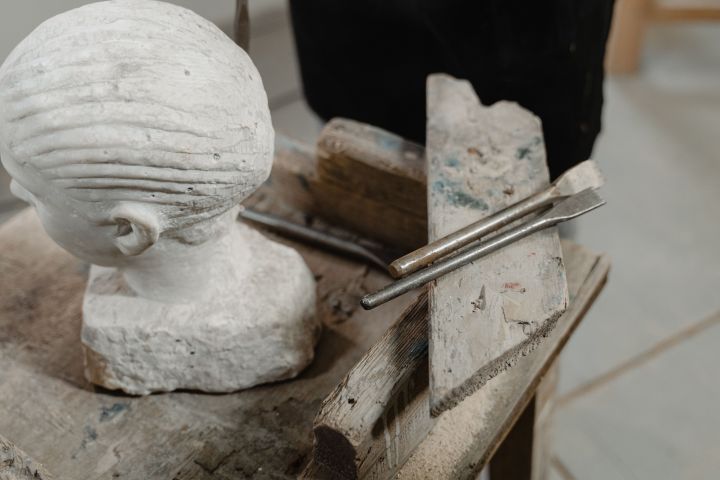
Historically, Italy’s fiercest competition in this market has come from Northern Europe, specifically Germany and the Netherlands, nations famed for their rigid technical execution. Yet, while Italian shipbuilders have caught up entirely on a technological level, their true competitive edge remains human. It lies in a distinct brand of Italian flair and creative problem-solving that rigid automated lines simply cannot replicate. The real magic happens when software meets the hands of a master carpenter who can manipulate wood as if it were silk.
“They can take away everything from me, but never what I know how to do with my own hands. Woodworking is an elite craft that will never leave a young person without a future.”
— Lorenzo Gasperini, Mobilart
Redefining Inclusivity on the Factory Floor
As a global player handling multi-million-dollar international commissions, Mobilart has organically evolved its corporate culture around strict principles of diversity and equity. In an industry traditionally dominated by men, Gasperini highlighted that his company has aggressively pursued gender parity and broad cultural inclusion. Mobilart’s workforce draws talent from Central Europe, Africa, and East Asia, evaluating talent solely on capability.
Out of their highly specialized workforce, nearly 40 employees are women, holding key roles in the technical design offices, administration, and shipping. Most notably, Mobilart’s crucial sanding and finishing department—the final, high-stakes phase before valuable woods receive their mirror-gloss coatings—is staffed exclusively by women. According to the company, women bring an unparalleled level of tactile sensitivity, patience, and meticulous focus that this ultra-delicate stage demands. Furthermore, Mobilart maintains a zero-tolerance policy for corporate pay disparities, enforcing strict equal pay for equal roles across the entire corporate ladder.
Passing the Torch to a Disillusioned Generation
One of the biggest hurdles facing luxury manufacturing today is recruitment. Modern high school and university graduates increasingly skew toward office environments and digital careers, leaving physical trades facing a massive generational gap.
Gasperini addressed this head-on during his presentation to thousands of students, aiming to shift the perspective on luxury manual labor. Woodworking at this echelon is not a compromise; it is an elite artistic calling. To ensure its continuity, Mobilart operates as a hybrid environment—part manufacturing plant, part academy—where veteran master carpenters actively mentor incoming apprentices. It is a philosophy Gasperini practices at home as well, as his own children have spent years working up the ranks to take on pivotal management roles within the company.
Ultimately, luxury manufacturing is far more than a business model; it is a vital hedge against a purely automated, sterile future. While algorithms can optimize cutting parameters and 3D software can map a yacht’s interior hull down to the last millimeter, no machine can replicate the intuitive understanding of raw wood, the history carried in an artisan’s hands, or the creative genius that defines Italian craftsmanship. As the superyacht industry sails further into the digital age, companies like Mobilart prove that true luxury is not found in the speed of production, but in the preservation of the human spirit. By passing this torch to a new generation, the legacy of Made in Italy ensures that even in a world increasingly ruled by cold screens, the majestic vessels conquering the global oceans will always carry a warm, unmistakably human heart.
Discover more from The Ambassador
Subscribe to get the latest posts sent to your email.