

The evolution of consumption, the search for new nutritional balances, the increase in costs, and the need to guarantee distribution continuity are some of the challenges currently running through the agrifood sector.
These are the central themes of the participation of Sara Menin, marketing and communication director of L’Insalata dell’Orto, on the podcast “Challenge”, hosted by Matteo Valléro and available on Amazon Music. During the interview, the company shared its approach to innovation, starting from a key element: the ability to read market changes and transform them into new product proposals.
Protein Enters the Fruit and Vegetable World
One of the most recent projects concerns the development of a high-protein line, designed to bring a trend that has assumed an increasingly transversal role in consumer choices in recent years into the fruit and vegetable department.
The idea stems from the observation of consumption habits and the desire to intercept a broad audience, not limited to vegetarians and vegans. Young people, athletes, and omnivorous consumers attentive to the balance of their diet are increasingly looking for practical, plant-based solutions consistent with a dynamic lifestyle.
Hence the development of ready-to-cook, 100% plant-based items, enriched with pea protein. A proposal that combines service content, nutritional innovation, and ease of use, with the aim of creating new consumption occasions for fruit and vegetables. This is how products such as Tomato-flavored High Protein Vegetable Spaghetti, Traditional-flavored High Protein Diced Pumpkin, Rosemary-flavored High Protein Vegetable Minestrone, and Mediterranean-flavored High Protein Cornelio Peperonata are born.
Edible Flowers, from Decoration to Ingredient
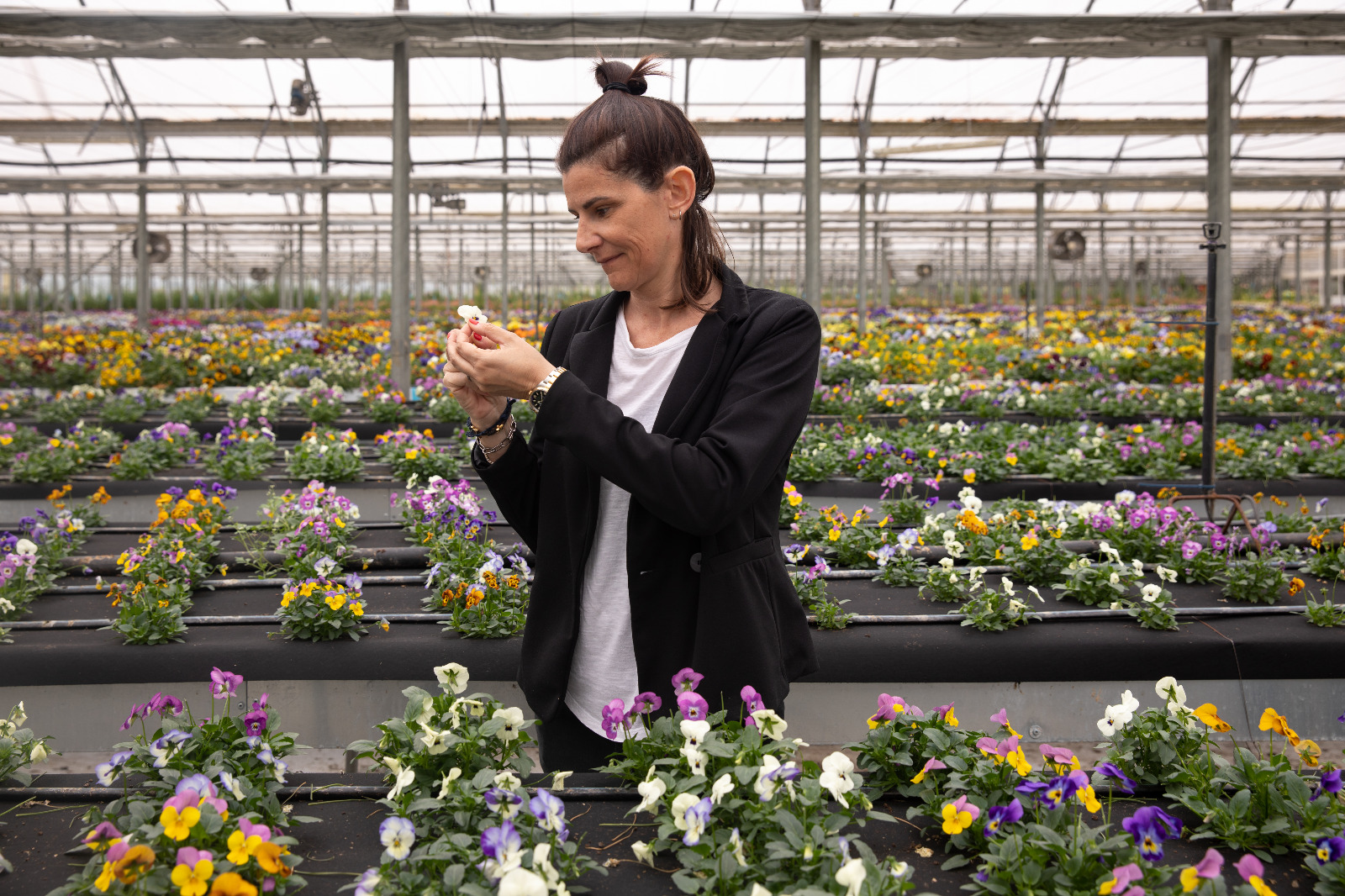
Alongside the fresh-cut (IV Gamma) sector, another distinctive feature of L’Insalata dell’Orto is represented by edible flowers. The company is today the leading European producer of edible flowers, a specialization built over time through agricultural expertise, research, and attention to product quality.
In the podcast, Sara Menin recounted how edible flowers are no longer just a decorative element, but real ingredients used in catering, pastry, ice cream making, and mixology.
The supply chain includes both fresh and dehydrated products, with solutions designed to expand the possibilities of use and improve the shelf life of a naturally delicate raw material. Special projects have also emerged from this path, such as the gin made with the company’s botanicals and flowers, an example of how innovation can open up new languages and new opportunities for storytelling around the product.
The Value of Supply Chain Control
At the base of this journey is a corporate model founded on supply chain control. Through OP La Maggiolina and an organized agricultural network, L’Insalata dell’Orto can count on approximately 450 hectares of greenhouses distributed across Veneto, Lombardy, and Campania.
This structure allows for production programming, safeguarding raw material quality, and guaranteeing continuity to commercial partners, particularly large-scale retail. In a market marked by rising energy, fuel, packaging, and logistics costs, the integrated supply chain represents a concrete tool for tackling complexity.
It does not mean being immune to the difficulties affecting the entire sector, but being able to manage them with greater solidity: through programming, investments, process control, and stable relationships with clients.
Innovating While Remaining True to One’s Identity
From high-protein plant-based products to edible flowers, the path recounted in the podcast highlights a precise direction: innovating without losing the connection to the company’s agricultural identity.
For L’Insalata dell’Orto, product development, sustainability, and supply chain control are three interconnected elements. It is from this integration that the ability to respond to market changes and propose solutions consistent with the needs of consumers, catering, and distribution is born.
Participation in “Challenge” offered the opportunity to share this approach directly, focusing not only on the products but also on the daily work necessary to build value along the entire supply chain.
Discover more from The Ambassador
Subscribe to get the latest posts sent to your email.