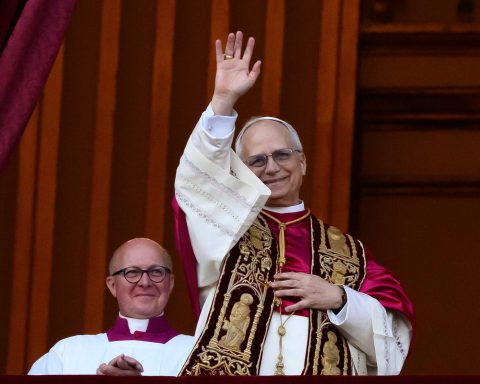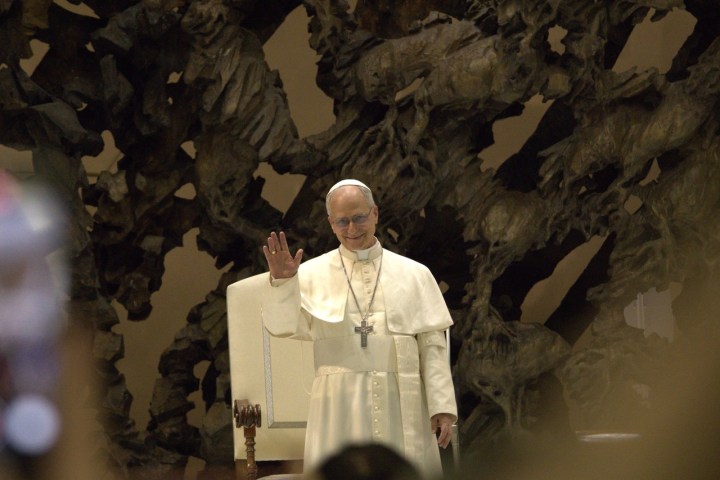


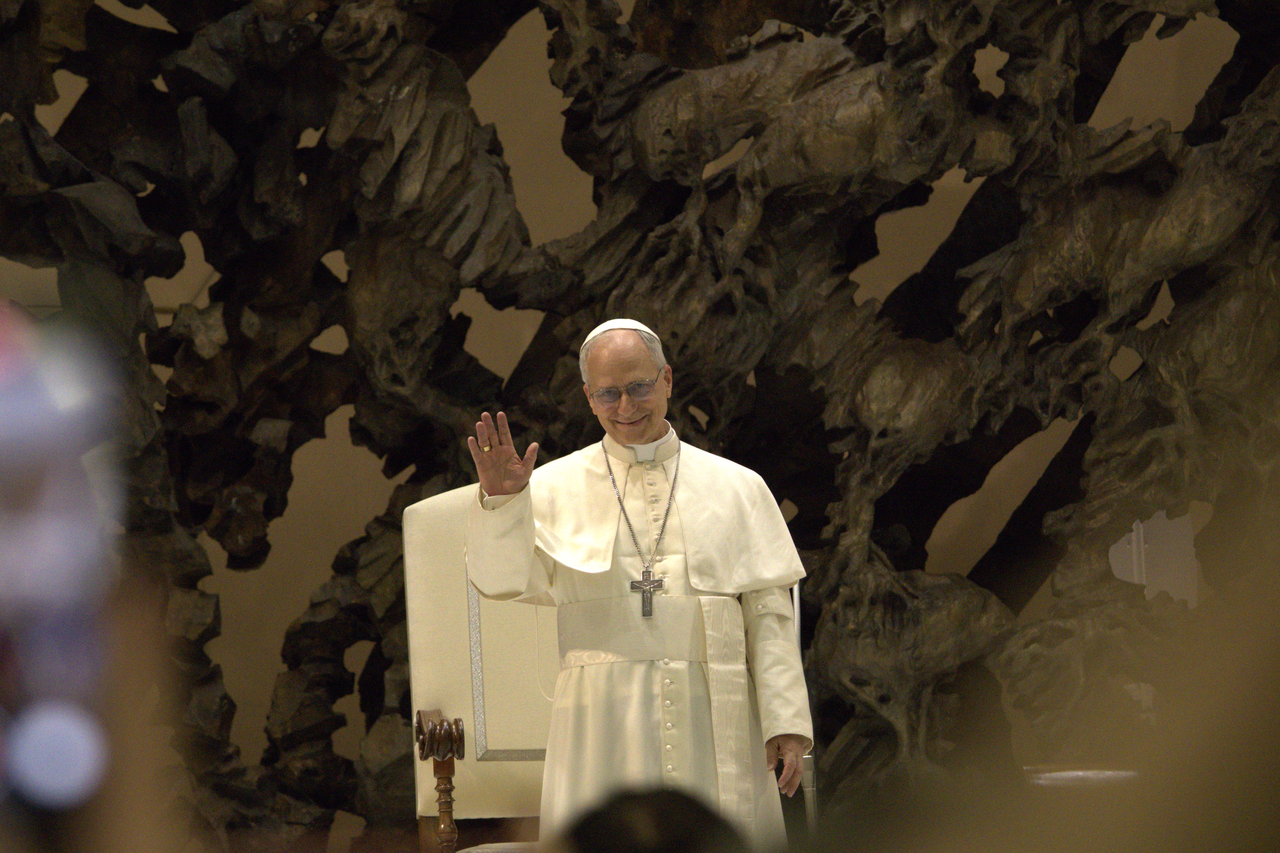
There is a precise moment in history when technology ceases to be a mere tool and becomes a mirror in which humanity is forced to look at its own reflection. That moment has arrived. The publication of Pope Leo XIV’s first Encyclical Letter, Magnifica Humanitas, marks a watershed: the head of the Catholic Church does not merely comment on algorithmic drifts but elevates the issue to a fundamental theological and social question. The document moves between two powerful biblical icons: the technological temptation of Babel, a claim to omnipotence and homogenization that excludes God, and the human toil of Jerusalem, rebuilt brick by brick through shared responsibility.
But beyond its unquestionable spiritual value, the encyclical forces us to face the elephant in the room of our decade. Can everything be replaced by Artificial Intelligence? Technically, the answer is a cold and inescapable “yes.” Perhaps it won’t happen tomorrow morning, but on the horizon of a few years, computational capacity will be able to replicate the vast majority of human intellectual and creative tasks. Is it worth it? Probably not, as the Pontiff himself warns, highlighting the risks of inequality, unemployment, and the concentration of power. And yet, opposing this progress head-on is not only useless, but anachronistic. You don’t stop the tiger by blocking its path; you must ride it, steering its strength to build, for once, an ecosystem that does not turn against us.
The Contradiction of “Handmade”: The True New Luxury
If Artificial Intelligence democratizes perfection, enabling anyone to generate flawless texts, complex code, or breathtaking images, perfection itself will lose much of its market value. We will witness an inevitable inflation of artificial excellence. When everything can be packaged in a few seconds by a machine, that which is made by humans—with all their fatigue, sweat, and limits—will become the scarcest, most precious, and most invaluable commodity. Imperfection and physical effort will become the new “premium.” But in a world saturated with simulations indistinguishable from reality, the crucial problem arises of how to irrefutably prove this human imprint. The answer might not lie in a cold digital stamp, but in a radical return to presence: art, literature, and thought will have to be validated by live performance. A text, a work, or an idea will return to being authentic only if defended in real time, where the absence of latency, the inevitable error, and the fragility of the body become the true author’s signature. This need for authentication inevitably shifts the center of gravity from the product to the producer, imposing a profound reflection on the responsibility and validation of whoever presents, publishes, or distributes content, and it is precisely in this crack that an even deeper doubt creeps in.
The Ghost in the Papal Machine
Reading the encyclical, with its impeccable structure, its perfect historical syntheses, and the fluidity of its prose, a reflection naturally arises, almost like a nagging thought. Magnifica Humanitas reminds us that AI does not possess a body, does not experience joy and pain, does not judge good and evil, and has no moral conscience. The algorithm does not understand what it produces. But what would happen if, absurdly, entire sections or the first draft of this very encyclical had been generated or organized with the help of a Large Language Model?
Would it be a scandal? Would it diminish the power of its message? Not at all. The Church teaches us that it is not the tool that defines the intention. If a Pope (or his theologians) were to use a machine to synthesize two centuries of social Magisterium and translate them into a contemporary language, the truth of the document would not reside in the code that selected the words, but in the pastor who endorsed, blessed, and signed them. AI can line up concepts, but it is human intention, the moral discernment of the one who publishes it, that assumes its weight and its political and spiritual responsibility before the world. The encyclical is not sacred because of how it was typed, but because of what it bears witness to.
Can an AI Wear the Ring of the Fisherman?
Pushing this provocation to its extreme limit, one might wonder: will we ever reach the point where even the Pope could be replaced by an Artificial Intelligence? A supreme algorithm, trained on two millennia of theology, councils, canon law, and Scriptures, could theoretically issue perfect rulings, never fall into contradiction, and administer doctrine with unassailable consistency.
Yet, it is precisely Magnifica Humanitas that provides the definitive and insurmountable answer to this paradox. The encyclical reiterates that human greatness does not lie in the absence of flaws, but in the experience of limits. “The human does not flourish despite the limit, but often through the limit.” An AI knows no rejection, feels no compassion in the face of others’ pain, and has no experience of the darkness of failure.
A Pope is not a doctrinal database. A Pope is a human being who doubts, who ages, who grows tired, who kneels, and, above all, who is able to cry. Synthetic intelligence can simulate empathy or generate a perfect prayer, but it can never offer its own life. A machine does not bleed and does not die. As long as the cross remains the center of human history, the spiritual leader of the world can only be made of flesh, frailty, and dust. The very dust of which our magnificent humanity is made.
Discover more from The Ambassador
Subscribe to get the latest posts sent to your email.