

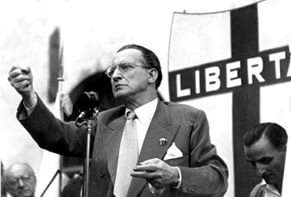
Born on April 3, 1881, in the alpine town of Pieve Tesino, Alcide De Gasperi emerged from a complex borderland environment that profoundly shaped his worldview. Coming of age within the Austro-Hungarian Empire before becoming an Italian citizen, he developed an early, acute understanding of the necessity for dialogue among different cultures and nationalities. This intrinsic cosmopolitanism, combined with a deep moral compass rooted in Catholic social teaching, forged a leader uniquely equipped to guide Italy through its darkest hour and toward its most prosperous era. Today, his intellectual and political legacy remains a vital compass for navigating the complexities of contemporary governance.
Guiding Italy from Ruins to the Economic Miracle
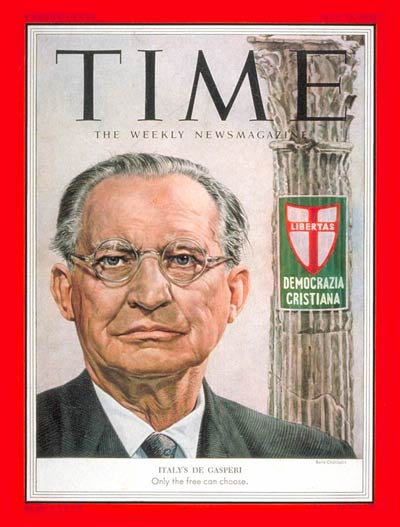
The immediate aftermath of the Second World War presented a landscape of unimaginable devastation, both physical and institutional. Entrusted with the leadership of a fractured nation, De Gasperi demonstrated an extraordinary capacity for political synthesis. He navigated the delicate transition from a monarchy to a republic with steady pragmatism, ensuring social cohesion in a fiercely divided country. More importantly, his strategic geopolitical choices definitively anchored Italy to the Western democratic sphere. By actively securing the financial support of the Marshall Plan, De Gasperi did not merely rebuild bridges and factories; he laid down the essential macroeconomic infrastructure that would soon fuel the celebrated Italian Economic Miracle. His policies stabilized the currency, fostered free enterprise, and created a fertile, internationally integrated environment where the ingenuity of Italian entrepreneurs could finally flourish, ultimately giving rise to the global triumph of the ‘Made in Italy’ brand.
The Pioneer of Continental Integration

Perhaps the most universally celebrated aspect of De Gasperi’s legacy is his unwavering commitment to the European dream. Standing alongside fellow visionary statesmen such as Konrad Adenauer and Robert Schuman, he recognized that the only permanent antidote to the centuries of devastating continental warfare was a radical integration of economic and political interests. He was instrumental in the creation of the European Coal and Steel Community, the foundational precursor to the modern European Union. De Gasperi understood that true sovereignty in the modern age could only be preserved through shared responsibility and mutual cooperation. His vision extended far beyond mere trade agreements; he advocated for a deeply unified political community bound by common democratic values, a concept that continues to underpin the highest aspirations of European diplomacy today.
An Unfading Intellectual Heritage and Political Pragmatism
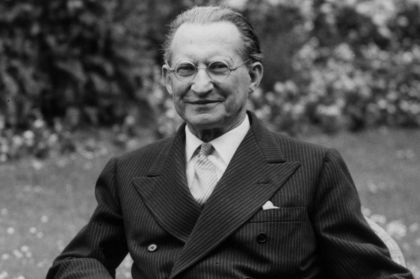
De Gasperi’s intellectual heritage is defined by a rigorous commitment to moderation, institutional respect, and the relentless pursuit of the common good over partisan interests. As the principal architect of Christian Democracy in Italy, he championed an ideology that harmoniously balanced the principles of free-market economics with a profound dedication to social justice and the welfare of the working class. In an era increasingly defined by ideological polarization and political performativity, De Gasperi’s methodical, deeply ethical approach to statecraft offers a powerful counter-narrative. He viewed politics not as a theatre of conflict, but as a severe, demanding vocation requiring patience, compromise, and an unwavering focus on long-term national interest. His foresight, his quiet authority, and his unwavering belief in the resilience of democratic institutions remain highly relevant, serving as an eternal masterclass in the true art of statesmanship.
Preserving the Vision: The Role of the De Gasperi Foundation Today

The intellectual and moral legacy of this great statesman is not merely confined to history books; it is actively cultivated and projected into the future by the Fondazione De Gasperi. Guided by its President, Angelino Alfano, and directed by Martina Bacigalupi, the Foundation serves as a vital cultural and research hub. Today, its primary mission is to translate De Gasperi’s foundational values—such as European integration, international cooperation, and democratic solidarity—into actionable insights for contemporary geopolitical and economic challenges. Through high-level seminars, international conferences, and educational initiatives dedicated to younger generations, the Foundation ensures that De Gasperi’s pragmatic approach to statecraft and his unwavering commitment to the common good continue to inspire modern policymakers and citizens alike. Under this leadership, the institution actively fosters dialogue between government bodies, academia, and civil society, proving that the vision of the ‘Architect of Democracy’ remains an indispensable guide for navigating the profound complexities of the twenty-first century.
Discover more from The Ambassador
Subscribe to get the latest posts sent to your email.