

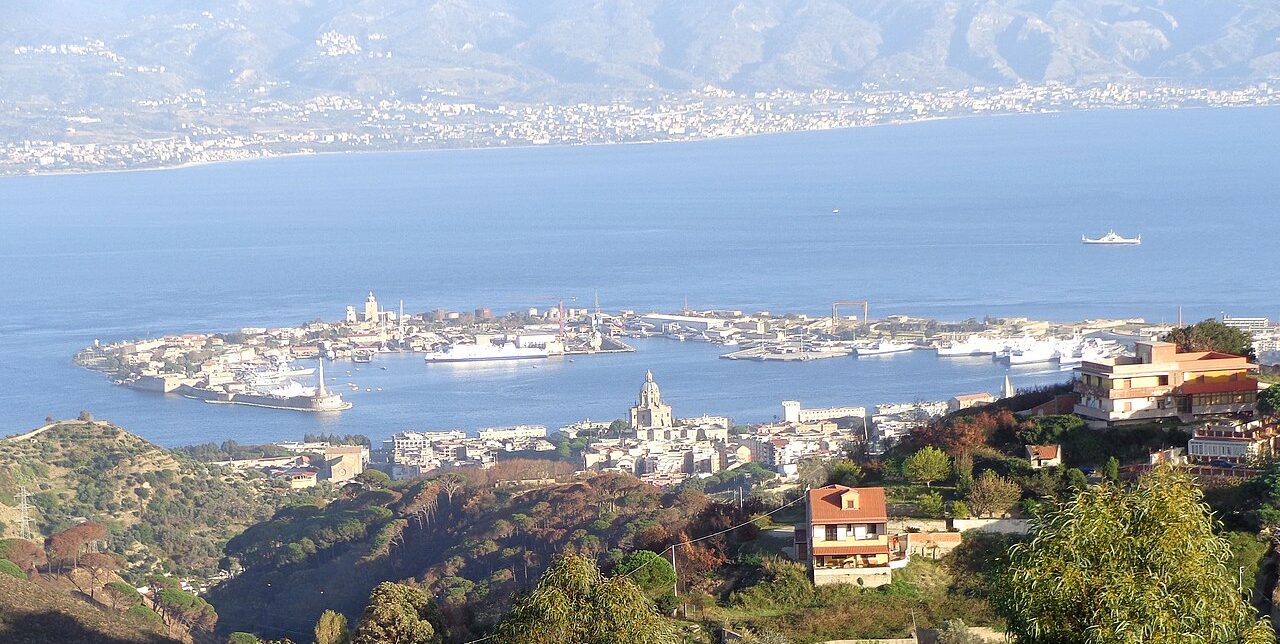
Messina and Reggio Calabria — The Italian Ministry of Culture has officially inaugurated the Mediterranean Institute for Research and Arts (MIRA) alongside a dual-city contemporary art installation crossing the Strait of Messina. Minister of Culture Alessandro Giuli traveled to both Messina and Reggio Calabria to present the strategic cultural project and oversee the unveiling of “La Fontana Ferma” (The Still Fountain), a major artwork by celebrated painter and sculptor Piero Pizzi Cannella.
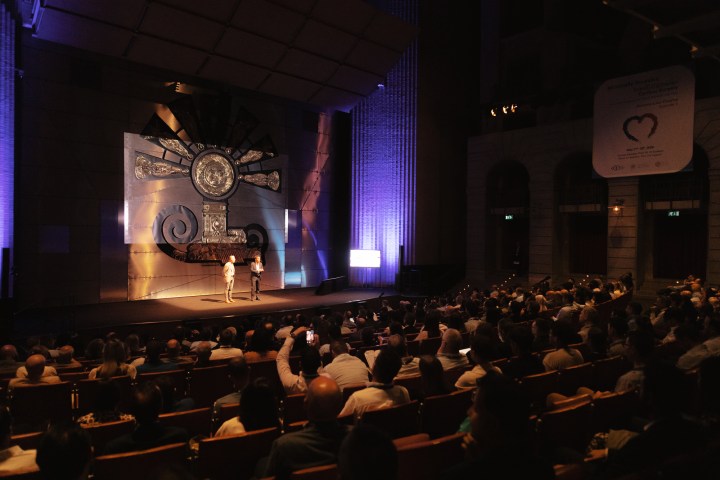
The day’s itinerary bridged the two coastal cities, beginning with an institutional presentation at Palazzo Zanca in Messina, followed by the artwork’s unveiling at the former Messina Fair grounds. In the afternoon, the delegation traveled to the National Archaeological Museum of Reggio Calabria to present the exhibition catalogue and open a secondary installation of the sculpture, creating an intentional cultural dialogue across the water.
A Cultural Crossroads in the Mediterranean
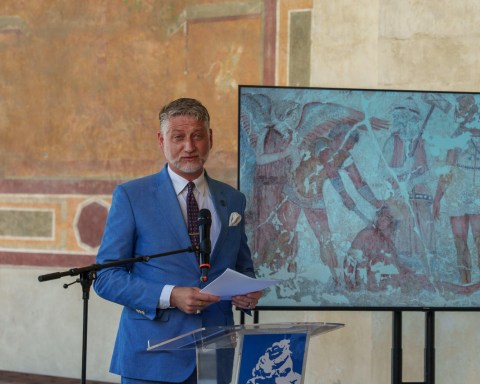
During the morning presentation in Messina, Minister Giuli outlined a vision that repositions the region as a central anchor for international artistic development. He asserted that the MIRA project naturally belongs in Sicily, describing the island as a historical meeting point for distinct peoples and civilizations.
“MIRA could only be born in Sicily, the natural meeting point between cultures, peoples, and civilizations. From Messina, a project takes shape that considers the Mediterranean not just as a geographical space, but as a place of origin and common destiny. We have a duty to invest in culture as an instrument of knowledge, cooperation, and peace, especially in a time marked by tensions and conflicts, because culture remains the strongest language for building relations between peoples.”
According to the Ministry, MIRA will operate as an open repository where contemporary creative practices interact directly with the region’s rich historical and archaeological legacy. The institute aims to become a stable international reference point for visiting scholars, artists, and institutional partnerships.
Interinstitutional Collaboration and Unveiling
The morning event drew significant local and national leadership. Key speakers alongside Minister Giuli included the Mayor of Messina, Federico Basile; the Rector of the University of Messina, Giovanna Spatari; the Director General of the Mission Unit for Cultural Cooperation with Africa and the Wider Mediterranean, Angelo Piero Cappello; and Mission Unit Director Chiara Ianeselli.
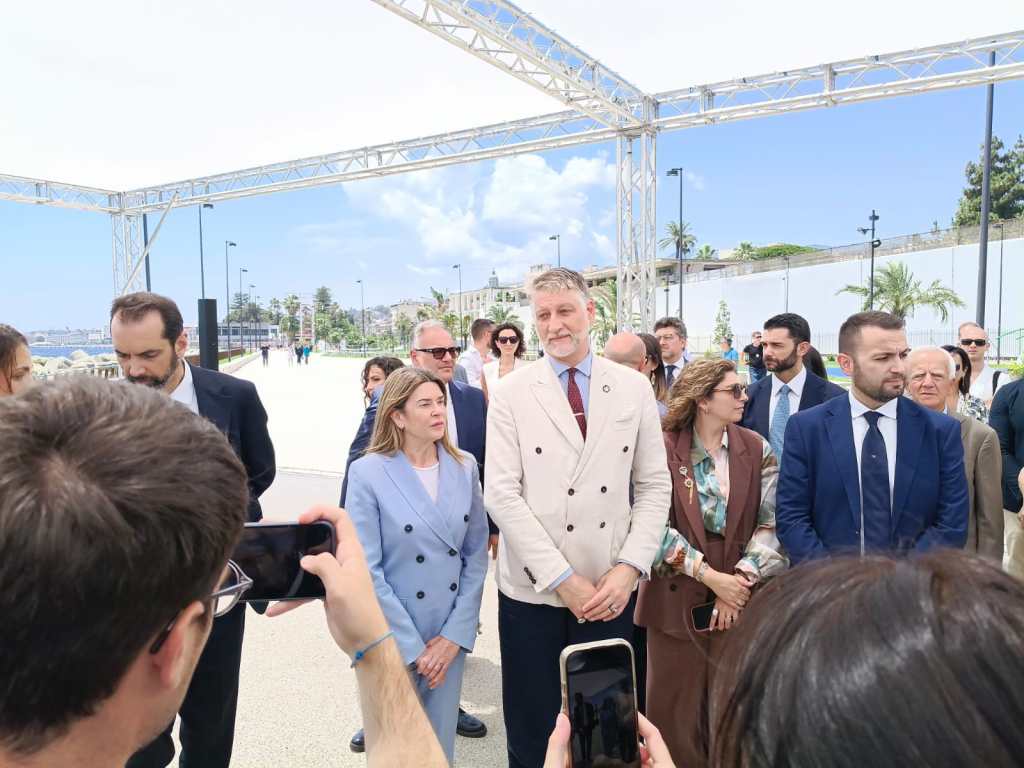
Following the academic framework, the delegation moved to the ex-Fiera di Messina grounds to uncover “La Fontana Ferma”. This physical installation is intended to serve as a permanent landmark of the Mediterranean cultural framework. The ceremony was attended by Francesco Rizzo, President of the Port System Authority of the Strait; the artist’s son; and Fabrizio Sudano, Director of the National Archaeological Museum of Reggio Calabria.
Connecting the Strait of Messina
The strategic purpose behind splitting the artwork’s presentation between Messina and Reggio Calabria is to build a symbolic bridge that binds the two shorelines together. By hosting corresponding elements of Pizzi Cannella’s work, both the former fairgrounds and the National Archaeological Museum establish an active network of collaboration.
Through this synchronized initiative, the Ministry of Culture aims to connect historical roots with contemporary creative expressions, using international art cooperation as a foundational platform for regional unity.
Source: Ministry of Culture Press Office
Discover more from The Ambassador
Subscribe to get the latest posts sent to your email.