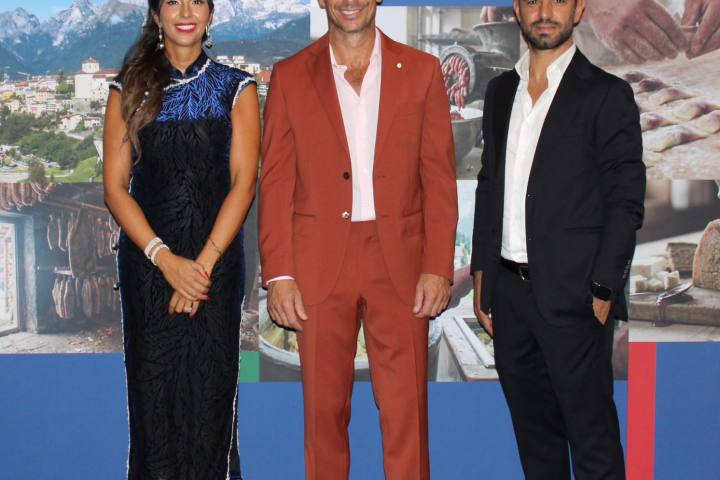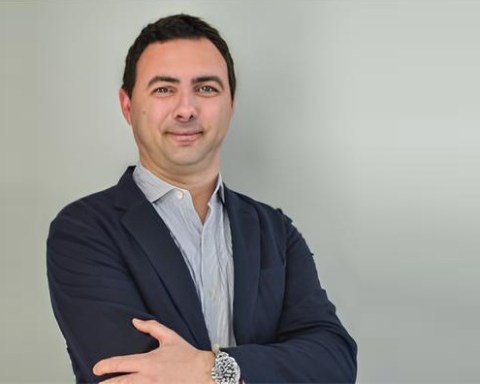


There is a staggering, almost celestial distance between a billion euros written on a spreadsheet in a London or New York skyscraper and a single kilometer of freshly laid asphalt on the ground. International investment funds possess massive digital capital looking for real assets, yet in Italy, between the signature on the check and the opening of a construction site, a silent monster looms: bureaucracy. Capital travels at the speed of light, while authorizations travel at a snail’s pace. In the latest episode of my podcast, Challenge, I sat down with Alessio Parolari, the CEO of Vitali S.p.A.—a leading Italian infrastructure and urban regeneration firm—to dissect how modern enterprise is forcing its way through this rubber wall.
The Ten-Year Highway and the Genoa Model
Our conversation opened on a paradox. Parolari explained that global capital is highly eager to invest in infrastructure, even accepting modest returns, but is repeatedly paralyzed by temporal risk. To illustrate the gravity of Italian red tape to an international audience, Parolari pointed to his company’s current project: an autostrada connection designed to bypass the A4 highway, which is Italy’s most heavily congested economic artery, carrying over one hundred thousand vehicles daily through the industrial heart of Lombardy. Despite its critical importance, the project has been trapped in the state’s Environmental Impact Assessment gridlock for a decade.
Parolari noted that while Vitali can afford to wait due to its nature as a patient, family-owned business, global institutional funds cannot. I raised the example of the “Genoa Model”—the highly successful emergency framework used to rapidly rebuild Genoa’s collapsed Morandi bridge by appointing a special commissioner with extraordinary powers to bypass standard bureaucracy. Parolari agreed that this model proved Italy has the capacity for exceptional speed, but argued that the country must now formalize this efficiency. He advocates for a structural shift toward operational Public-Private Partnerships, establishing highly technical, transparent public bodies capable of taking legal responsibility for project signatures without getting bogged down in endless, paralyzing committees.
From Bossa Nova to the Circular Airport
As we paused to listen to “Tarde em Itapoã” by Toquinho and Vinícius de Moraes, Parolari reflected on his younger years living in Rio de Janeiro and Bahia. This musical interlude served as a perfect metaphor for the agility and vision required in modern business. It reminded us that infrastructure is not just cold concrete; it changes the living texture of a society.
When the music faded, we shifted to how this vision applies to green criteria. Parolari dismantled the common myth that sustainability is merely a marketing expense, arguing instead that eco-consciousness is now the ultimate driver of profitability. He proved this by highlighting the 2019 modernization of Milan’s Linate Airport runway. Instead of conventional demolition and disposal, Vitali treated and recycled one hundred thousand cubic meters of old concrete aggregate directly on-site. This circular approach saved nearly two hundred thousand liters of diesel fuel by eliminating transport trucks.
“We realized that sustainability essentially rhymes with cost-effectiveness and competitiveness.”
— Alessio Parolari, Vitali S.p.A. CEO
Furthermore, Parolari discussed how Vitali has leaned into its status as a Società Benefit—the Italian legal equivalent of a B-Corporation, which legally binds a company to pursue public good alongside profit. The company has invested over seven million euros into new eco-friendly concrete and bitumen plants that slash energy consumption by half, partially utilizing funds from the PNRR, which is Italy’s post-pandemic National Recovery and Resilience Plan backed by the European Union. Commenting on this dual victory of ethics and economics, I reminded him of a cynical yet accurate line from Paolo Sorrentino’s film Loro, where a character remarks that altruism is simply the highest form of egoism, because doing good ultimately yields the greatest returns.
Feeding the Digital Beast and Tracing the Trenches
The infrastructure landscape is rapidly evolving from asphalt to data. Parolari revealed that Vitali is currently driving five major data center developments in Lombardy, including the transformation of a massive, legacy IBM site north of Milan in partnership with global players like Blackstone and QScale. However, these data factories require astronomical amounts of electricity, pulling as much power as tens of thousands of homes. Parolari stressed that this digital boom will inevitably force Italy to re-examine its energy matrix, pointing out that if the country wants true, uninterrupted clean energy to power the future of artificial intelligence, it must eventually embrace next-generation nuclear power.
We concluded our discussion on the most critical asset of all: human capital. Parolari lamented a widespread corporate trend where senior managers act merely as “task distributors” rather than deep analytical thinkers. To combat this shortage of a genuine problem-solving mindset, Parolari explained that Vitali bypasses traditional market hiring in favor of throwing young talent, aged twenty-eight to thirty, directly into the trenches of complex projects. By exposing them to real responsibility early on, they learn to navigate multi-layered urbanistic and legal challenges. Parolari’s ultimate advice for the next generation of entrepreneurs is to embrace unconventional paths, study global execution models, and cultivate an insatiable appetite for solving complex problems. As Bob Dylan’s “The Times They Are A-Changin'” closed out the episode, it was clear that in the world of infrastructure, those who do not adapt to these changing times are bound to sink like a stone.
Discover more from The Ambassador
Subscribe to get the latest posts sent to your email.