

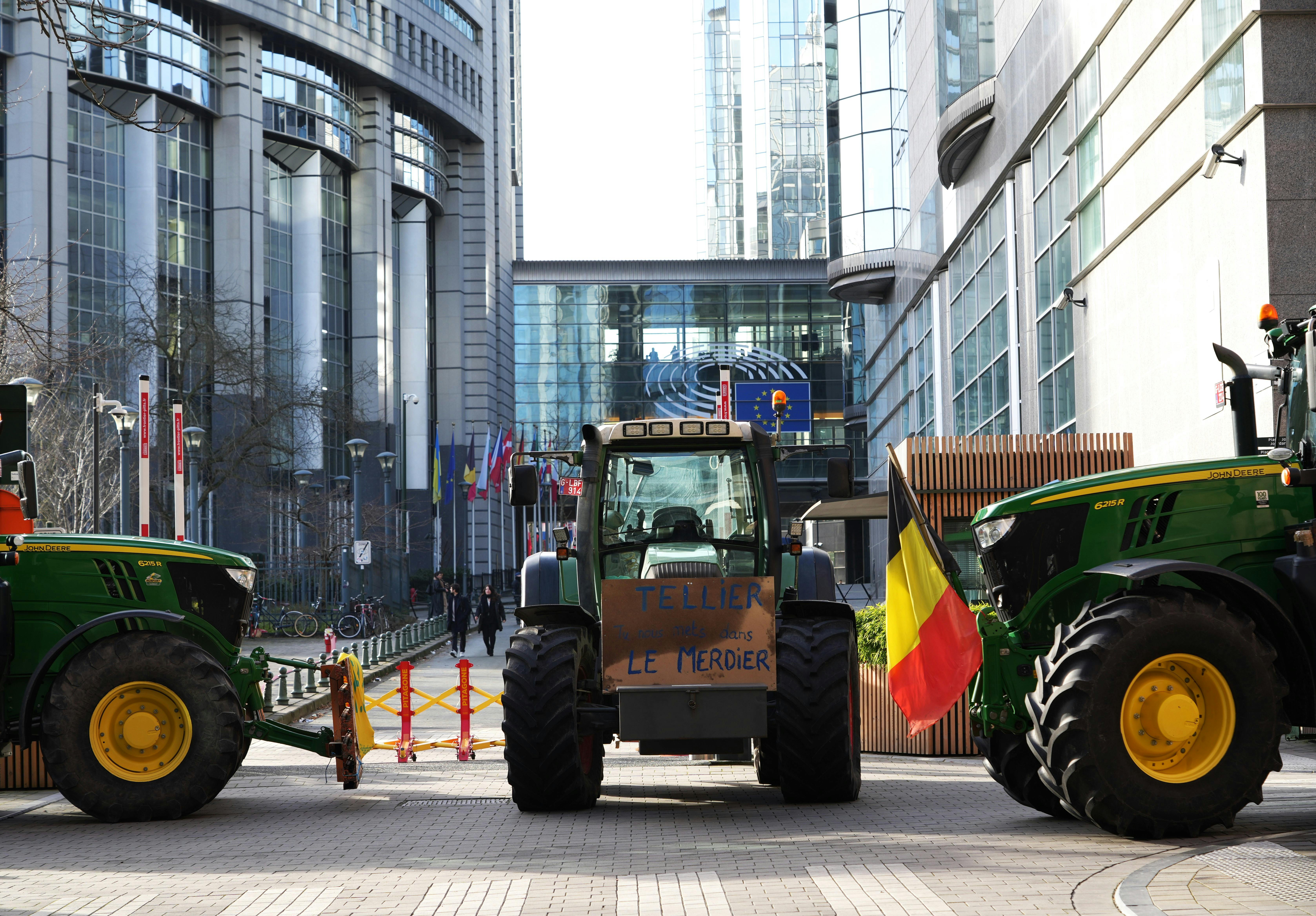
While the diplomatic spotlight illuminated the handshakes in Asunción, the atmosphere in the Italian countryside has grown heavy, charged with a resentment that the roar of agricultural engines cannot entirely drown out. January 2026 will be remembered as the month of reckoning for European agriculture. Exactly two years after the first massive mobilizations that brought the Old Continent’s capitals to a standstill, tractors have returned to blockade highway interchanges and city squares, from Orte to the Brenner Pass. This is no longer just a request for subsidies: it is an existential battle against a treaty—the EU-Mercosur agreement—perceived as a mortal threat to the Italian agri-food model.
The Geopolitical Price of a Twenty-Year Agreement
To understand the farmers’ rage, one must look beyond the furrow of the plow. The negotiation with the Mercosur countries (Brazil, Argentina, Paraguay, Uruguay, and the recent accession of Bolivia) is a marathon that began in 1999. For Brussels, closing this deal today is not merely a commercial matter, but a geopolitical imperative. Europe has a desperate thirst for critical raw materials essential for the energy transition, such as lithium and copper, in which South America is rich. The EU is frantically seeking to diversify its supply chains to reduce dependence on China. On this global chessboard, European agriculture risks becoming the expendable bargaining chip: opening the gates to South American food commodities to guarantee German and European industry access to mineral resources and an export market for cars and machinery.
The “Decoupling” Deception: How Brussels Bypasses National Vetoes
One aspect that has most inflamed protests in Italy and France is the procedural strategy adopted by the European Commission. Aware of the impossibility of achieving unanimity among the twenty-seven Member States—with Paris and Rome ready to erect barricades—Brussels has opted for a technical maneuver known as “splitting” or decoupling. By separating the trade portion of the agreement from the political and cooperation chapters, the Union can proceed to a provisional application of the trade chapters with only the approval of the Council and the European Parliament, effectively bypassing ratification by national parliaments. This move has been experienced as a democratic tear, depriving nations of sovereign decision-making power over issues that directly impact the social and economic fabric of their territories.
Unfair Competition and the Myth of “Mirror Clauses”
The economic heart of the dispute lies in regulatory asymmetry. Italian farmers operate within the rigid framework of the European Green Deal, adhering to some of the highest environmental, sanitary, and labor standards in the world. Across the Atlantic, South American “food factories” benefit from significantly lower production costs, enabled by the use of pesticides and growth hormones that have been banned in Europe for decades. Politicians have tried to reassure the sector by speaking of “mirror clauses” and reciprocity, promising that imported products must meet the same European standards. However, the feasibility of controlling millions of tons of incoming goods appears, in the eyes of industry experts, to be a chimera. The concrete fear is an invasion of beef, poultry, sugar, and honey at rock-bottom prices, constituting a true act of social and environmental dumping.
The Impact on “Made in Italy” and the Supply Chain of Excellence
For Italy, the risk goes beyond simple price competition. The real danger is the trivialization of food and the attack on quality supply chains. The massive influx of low-cost raw materials could fuel the processing industry to the detriment of PDO (Protected Designation of Origin) and PGI (Protected Geographical Indication) productions, which make the link with the territory their greatest strength. Furthermore, Mercosur is historically one of the areas where the phenomenon of Italian Sounding—the deceptive imitation of Italian products—is most deeply rooted. Although the agreement provides protection for certain geographical indications, protection consortia fear that trade openness could facilitate the entry into Europe of “authorized fakes” or hybrid products, diluting the value of the “Italy” brand in the eyes of global consumers.
An Internal Rift: Industry vs. Agriculture
The situation places the Italian government in an extremely delicate position, caught between two fires. On one side, there is the push from the manufacturing and precision mechanics industries—pillars of national exports—which view South America as an indispensable opportunity to recover growth margins. On the other, there is the cry of pain from a primary sector that feels betrayed. The challenge for the executive will not only be to negotiate economic compensation or safeguard funds for farmers but to decide which vision of the future to embrace: one of a purely mercantile and globalized economy, or one that recognizes agriculture as a strategic garrison of sovereignty, culture, and biodiversity. The tractor protests of 2026 remind us that, without farmers, “Made in Italy” risks becoming nothing more than an empty label.
Article written with help of AI
Discover more from The Ambassador
Subscribe to get the latest posts sent to your email.