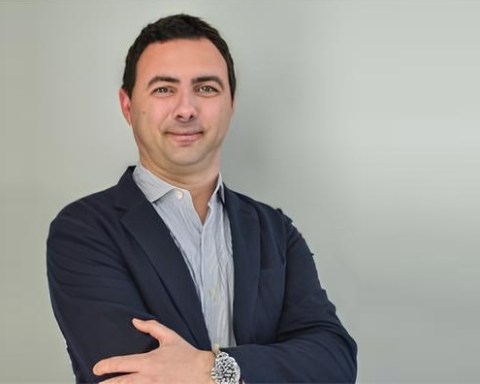

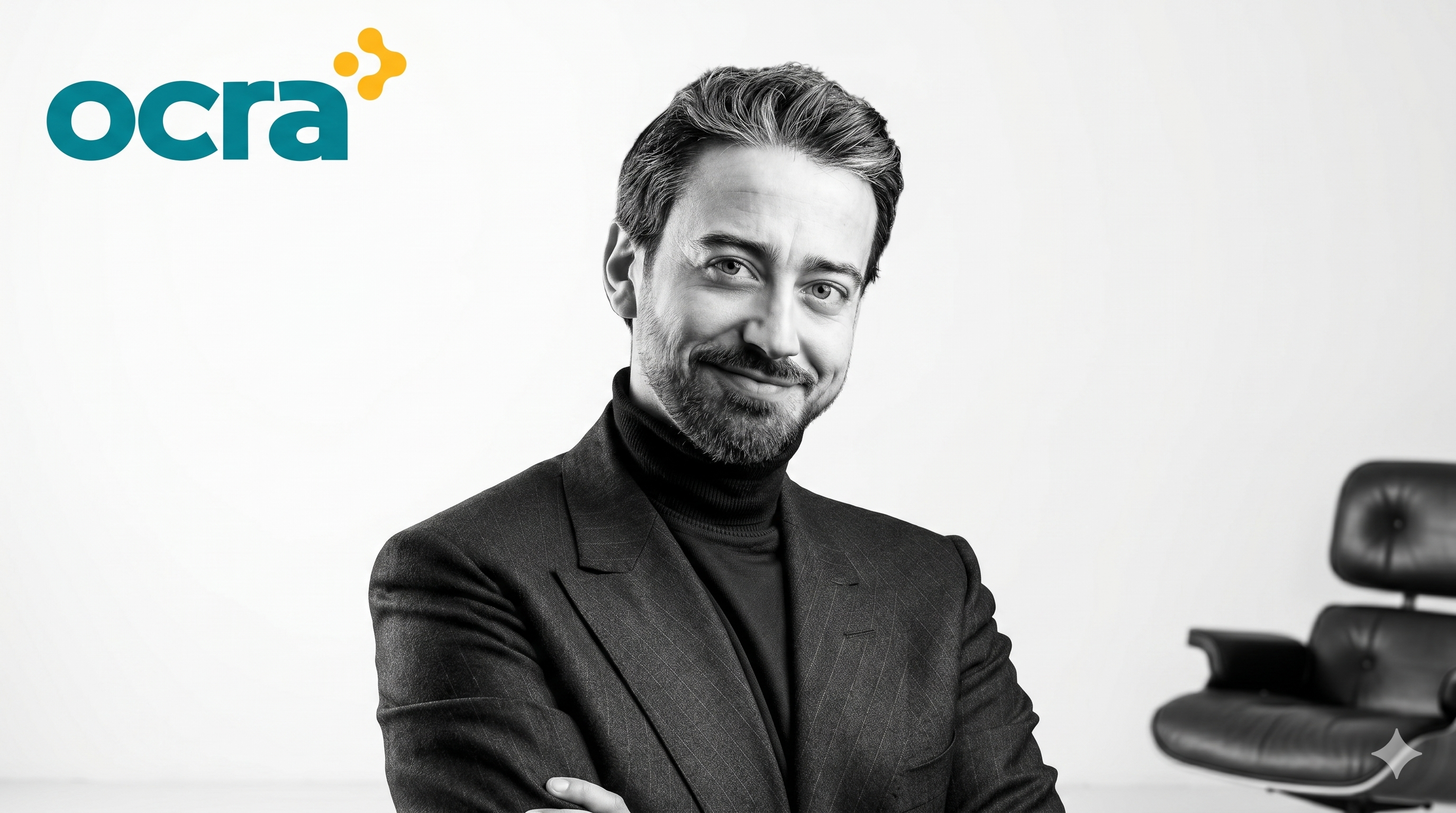
There are moments in professional life when you find yourself at a crossroads that is only apparently simple: follow a marked, linear, and secure path, or risk everything to build your own. When Pietro Nardella founded OCRA at just 29 years old, the most natural path would undoubtedly have been the first. Armed with a solid academic background and skills heavily oriented toward the world of SAP and ERP systems, his destiny seemed to be that of a highly specialized professional bound for the upper echelons of a large organization. But his vision was different. And the spark of that idea was recently explored in episode 96 of the podcast Challenge, exclusively on Amazon Music, revealing the dynamics of a company that has become a benchmark in Italy.
The name itself, OCRA, carries a romantic and tangible heritage: the family workshop of one of the partners, where the first car repaired was a Fiat 500 in an ochre color. A symbol of a job well done, solidity, and constant evolution. From the very beginning, OCRA was not born to be just another consulting firm ready to change its identity based on the vendor of the day or the client sitting on the other side of the table. It was born from a precise conviction: technology alone is not enough. You can configure a management software perfectly and know every single flow, but if you do not understand the “heartbeat” of the business using it, you are simply installing software.
Mr. Nardella, you founded OCRA at 29, stepping out of the “comfort zone” of a SAP professional to build a company with a very specific DNA. In an IT market often obsessed with adding technologies and chasing trends, how difficult was it to impose a vision where the actual understanding of business processes comes before the IT platform?
«The hardest part was not convincing the clients. It was convincing the sector. Because studying an industrial process takes years. It requires investment. It requires humility. It is much easier to learn a new software feature than to truly understand how a billion-dollar fashion industry or a retail network with hundreds of stores works. We chose the slower path. We decided to become experts in a market before becoming experts in a technology. Today, however, I believe that choice is more relevant than ever.»
This determination to move beyond pure technology supply drove the company toward a radical choice: verticalization. Instead of accumulating generic clients across various fields, OCRA decided to build a deep, almost tailored expertise in the Fashion & Retail sector. It is a fascinating yet fierce industry, dominated by speed, where creative intuition must coexist daily with the precision of numbers, constantly changing collections, and highly volatile purchasing behavior. The ambition was never to be mere generalist technicians, but credible industrial partners capable of sitting at the strategic decision-making table to interpret needs and solve complex problems.
Fashion & Retail is an ecosystem made of frantic rhythms and continuous variables. Choosing such a distinct verticalization means investing years of study into very specific dynamics. How does the competitive advantage of intimately knowing the fashion industry translate on the ground compared to those offering generic IT consulting?
«For our clients, the advantage is very simple: less time spent discussing software and more time spent solving real problems. When you truly know an industry, you can make better decisions, reduce design errors, and accelerate the achievement of results. AI is making technical knowledge increasingly accessible and less of a differentiator. Because of this, business knowledge becomes far more valuable.»
Today, that vision has translated into clear figures: over 15 million euros in turnover, four operational offices in Italy, and a team exceeding 100 professionals. However, for the management, these milestones are not the ultimate goal, but the natural consequence of a deeply rooted corporate culture. OCRA’s true asset is not the successful implementations or the large clients acquired, but its people. The company pursues a very concrete objective: to improve the professional growth and quality of life of its talents. The idea is not simply to create a workplace, but a community driven by shared responsibilities, ambitions, and pride.
The IT sector is notoriously known for high turnover and ruthless headhunting. You, on the other hand, have invested heavily in the concept of community. From your perspective, how do you turn a group of highly specialized consultants and analysts into a cohesive team that feels the pride of saying: “We are building something together”?
«A cohesive team is not born because everyone gets along or because you fill the walls with corporate values. It is born when very different people share a clear direction and feel they are contributing to something worth building. People stay united when they see their impact grow, not when they hear slogans about corporate culture repeated. My job is not to convince them to be happy. It is to create a context in which they can become more competent, more autonomous, and prouder of what they achieve. In the end, people don’t follow a company. They follow a challenge. And they stay when they feel that challenge is changing them too.»
Such a solid culture is the ideal ground to plant the seeds of innovation. And today, innovation wears the face of Artificial Intelligence. Even when facing this revolution, the group’s approach remains faithful to its DNA: do not chase technology as a passing fad, but understand its real meaning. From this idea, OCRA Lab was born—the new division dedicated to AI. The goal is not simply to implement generative models, but to know how to teach those algorithms how the client’s business actually works.
With the launch of OCRA Lab, you are fully entering the new era of Artificial Intelligence. How are you applying your historic philosophy—”technology alone is not enough”—to a disruptive force like AI, to ensure it becomes a real business tool rather than just a technical showpiece?
«I see many companies getting impressed by what AI can do and very few focusing on what AI needs to improve. At OCRA Lab, we start from the problem, not from the algorithm. We can do this because we have been working in Fashion & Retail for years and deeply understand the processes, decision-making dynamics, data, and complexities that characterize these industries. We wouldn’t have the presumption to do this everywhere; context matters. Before talking about AI models, we analyze how a company makes decisions, what information it uses, and where inefficiencies or opportunities are generated. Only then do we introduce the technology. If there is no measurable impact on the business, it is not innovation to us. It is simply technology looking for a problem to solve.»
Perhaps this has always been the greatest, most silent idea behind the genesis of OCRA. In a world where everyone scrambles to talk about machines, algorithms, and automation, the real difference is made by those who still know how to interpret the soul of a company. Because the future will not belong to those who command the greatest computing power, but to those who possess the human and industrial sensitivity to teach technology how to create true value.
Discover more from The Ambassador
Subscribe to get the latest posts sent to your email.