


There is a “Made in Italy” that does not strut down the runways and is not tasted at the dinner table, but operates silently behind the scenes of the most ambitious human explorations. It is the excellence of the Italian aerospace sector, a top-tier industrial and technological ecosystem that major international players look upon with profound respect. When we think of space, the collective imagination immediately runs to satellites in orbit or astronauts, forgetting that no mission could ever lift off the ground without a perfect ground infrastructure and infallible telemetry systems.
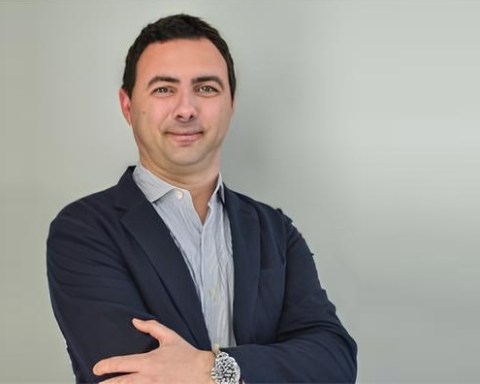
To explore this crucial sector, a recent episode of the Challenge podcast raised its gaze to the sky, hosting Lucrezia Murrali, CEO of Telematic Solutions.
The company, headquartered in Milan with strong operational branches (including a strategic outpost in French Guiana, home to the European spaceport), specializes in the management of complex aerospace projects. Her testimony offers a fascinating perspective on how our country manages to export critical engineering skills in a global market where the margin for error is exactly zero.
Dr. Murrali, the Italian aerospace industry boasts a first-rate supply chain, often unknown to the general public but fundamental to international agencies. For a foreign investor or observer fascinated by our technological ecosystem, what truly distinguishes the Italian engineering and design approach in the creation of ground infrastructures and such complex systems?
«At the beginning, at least in our personal experience at Telematic Solutions, but also in other Italian companies in the sector, we always enter new markets “on tiptoe”. We are not the type to immediately boast about our exceptional expertise or our know-how. What really strikes people on an international level, and is perhaps a deep characteristic of Italian culture, is our flexibility, the ability to react to problems. Abroad, they see us arrive in this sector, perhaps without knowing us thoroughly, and over time they realize that not only do we know how to adapt and achieve goals on schedule, but we do so with a competence and specialization that they themselves did not expect. Sometimes, during negotiations or when exploring new markets even with long-standing clients, we have been told: “I didn’t think you were so competent in this field!”. Well, this combination of flexibility, pragmatism, and the ability to find effective solutions even in the most complex situations is, in my opinion, one of the characteristics that best represents the value of Italian engineering in the world.»

Working in space means operating in an inherently borderless context, where collaborations between nations are not an exception, but the rule of engagement. Designing and managing fluidic networks, telemetry, or special air conditioning for launch bases—as happens in the Kourou space center in South America—requires an adaptability that goes well beyond pure technical competence. It means making different work cultures dialogue under the aegis of maximum security.
Operating globally, managing critical infrastructures in places like the European spaceport in French Guiana, imposes massive logistical and cultural challenges. How do you manage to keep the exceptional quality and the proverbial flexibility of the Italian “know-how” intact when integrating your systems within space missions of international scope?
«It’s not easy. We must apply that same Italian flexibility in adapting to standardized international procedures as well. It is a long and, frankly, often arduous path. Not only for us, but also for our European partners. In some cases, the need to find quick solutions can come into tension with the rigorous application of procedures. This has led us to develop a greater focus on balancing operational effectiveness and process compliance, always looking for the right middle ground. Today, with the growing threats of cybersecurity and attacks that can cause enormous damage both to the spaceport and to the international community, even we Italians are forced to admit that being highly procedural, rigid, and respectful of government guidelines is absolutely necessary and important.»

In a sector where Earth’s gravity is challenged daily, reliability is the only currency that matters. Telemetry systems, for example, represent the central nervous system of every launch: if the data on the ground is not perfect, the entire mission is at risk. And yet, this absolute need for stability must coexist with a frantic technological race, driven today by the entry of private entities into the “New Space Economy” and the constant evolution of new digital technologies.
Telemetry and ground operations do not allow for the slightest margin of error, imposing extremely rigid reliability protocols. In an era dominated by the speed of innovation, how does a highly specialized company manage to balance the absolute security required by the space sector with the urgency of constantly implementing new technologies?
«To date, there is still no definitive solution. We are in the midst of developing the New Space Economy and, together with our partners and suppliers, we are trying to figure out the best path forward. Over the last 4 or 5 years, we have seen that the entry of private players into this sector has led to a decline in corporate results, but simultaneously to a much heavier workload. It is necessary to find a middle ground. Both we industrialists and the state entities are immersed in this New Space Economy and we must adapt. The only certainty, for all of us in the sector, is that the solution will only be found by collaborating, without fighting each other.»

Beyond technology and orbits to calculate, there is a human and managerial element that cannot be ignored. Aerospace engineering, even more than other heavy industrial sectors, historically suffers from a very strong gender disparity. Leading such a complex reality requires not only an impeccable technical background, but also the strength and vision to assert a leadership that dismantles old stereotypes, demonstrating that excellence has no limits.
The aerospace sector and complex systems engineering is still today a strongly male-dominated ecosystem. As a female CEO, what is the essential “mindset” that has forged your leadership in this environment? What advice would you give to a young foreign professional or manager who looks to the Italian model to make her way in STEM disciplines and the space industry?
«For the first question, although I am considered a “workaholic”, a true Stakhanovite, I believe I succeeded through empathy. Companies are made of people, not technologies or clients. In the last five years, I have tried to convey to my collaborators that if they are doing well, the company is doing well, and this well-being reflects on the clients. It is a positive posture towards work. Regarding the advice: I would tell young female professionals not to set limits for themselves and to continuously invest in their skills. The diversity of perspectives is a wealth for organizations, and the space sector needs talents capable of bringing different visions.»
The trajectory traced by this engineering reality unequivocally demonstrates that Italy’s international prestige does not stop at the beauty of its past, but is powerfully projected towards the future. The new paradigm of Made in Italy is made of data, millimeter precision, and critical infrastructures that allow humanity to explore the infinite. Because before touching the stars, it is necessary to have deep roots firmly planted in the ground.
Discover more from The Ambassador
Subscribe to get the latest posts sent to your email.