

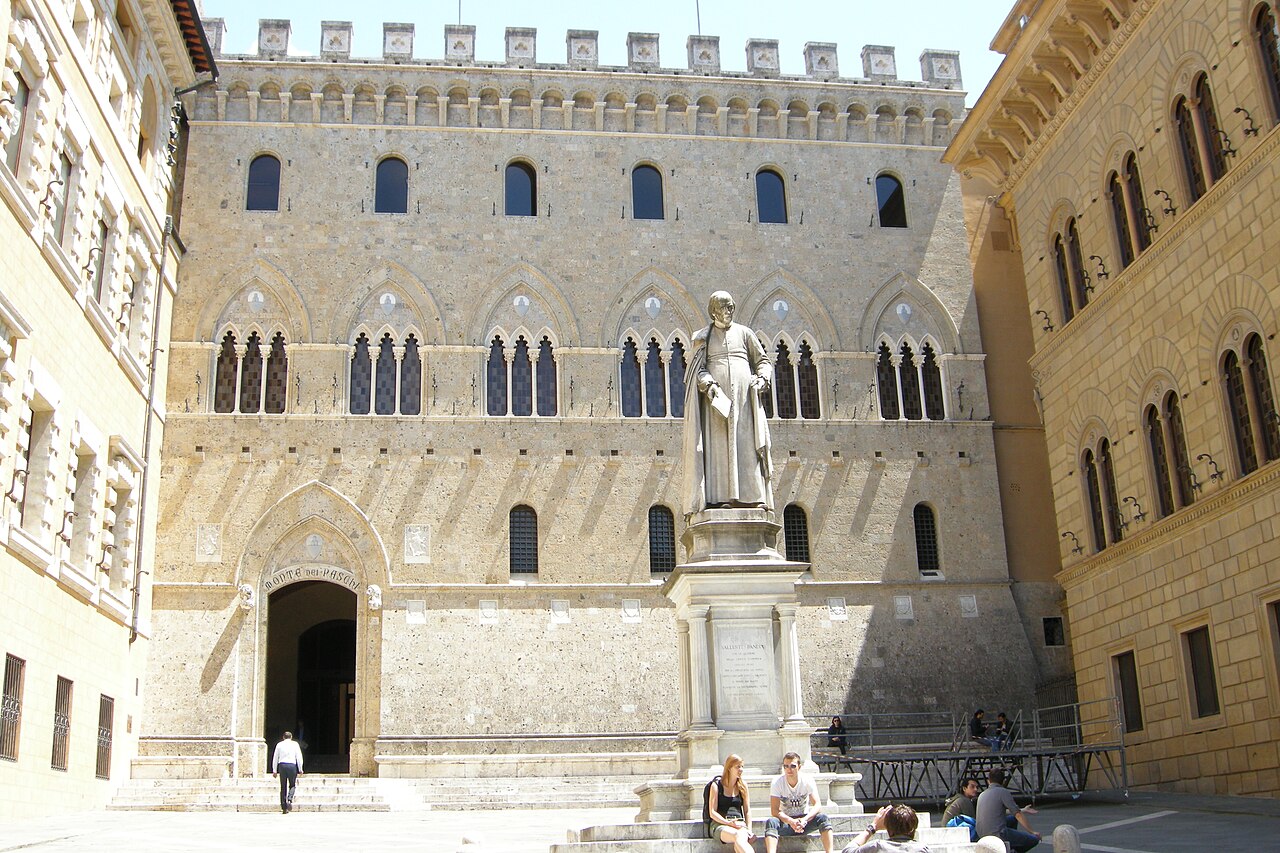
The voluntary Public Exchange Offer launched by Intesa Sanpaolo for Monte dei Paschi di Siena represents much more than a massive banking consolidation operation. With a total value reaching 30.6 billion euros, the initiative led by CEO Carlo Messina takes the shape of a true systemic restructuring of Italian financial capitalism. The nature of this operation, in terms of size and political and economic relevance, is destined to produce shockwaves that reach far beyond the borders of Siena and Ca’ de Bossi itself, redefining the balance of power and historical alliances among the main nodes of national finance. This includes insurance giants like Unipol and Generali, as well as pivotal institutions like Mediobanca and Banco BPM. The stated industrial objective is the creation of the second-largest banking group on a European scale, an integrated hub capable of combining a formidable territorial presence with unprecedented critical mass in high-value-added services.
The Systemic Maneuver and the International Endorsement of the Financial Times
An operation of such magnitude immediately catalyzed the attention of international financial circles, finding an authoritative sounding board in the analyses of the Financial Times. The British newspaper promoted the initiative as a genuine and rare market operation, a virtuous exception within an Italian credit system historically conditioned by state bailout logics, political balances, and rigid power structures. According to the international press’s reading, Intesa Sanpaolo’s decision to move on Rocca Salimbeni responds to a precise and far-sighted industrial rationality. Monte dei Paschi di Siena, despite the significant recovery path undertaken in recent years, still suffers from structural frailties in terms of governance and, if evaluated as a strictly independent entity, inevitably presents limited organic growth prospects in the long term.
Making MPS the ideal target for Intesa Sanpaolo’s expansion strategy is also a marked valuation asymmetry. The market quotations of the Sienese institution were, in fact, still largely contained compared to the standards and multiples of the European banking sector. This relative undervaluation guaranteed Intesa the possibility of structuring an economically generous and attractive offer for shareholders, while simultaneously remaining sustainable for its own balance sheets. This financial margin also represents a formidable defensive barrier to secure the operation, offering Intesa the necessary maneuvering room to neutralize the potential insertion of competing entities or the emergence of hostile counter-offers from other national or European institutions.
The Operation’s Numbers and the Uncertainty of the Lovaglio Plan with Mediobanca
The economic impact of the integration between Intesa and MPS promises to be of historic proportions for the financial markets. The strategic plans of the new group estimate reaching a net profit of over 16 billion euros by 2029, a net increase compared to the 11.5 billion expected from Intesa Sanpaolo’s original business plan, with a return on equity projected beyond the twenty percent threshold. This increase in profitability will translate into massive remuneration for shareholders, with an estimated distribution of approximately 61 billion euros over the five-year period, supplemented by an extraordinary cash distribution of 2.7 billion between 2026 and 2027. The entire financial architecture relies on steady-state pre-tax annual synergies valued at nearly three billion euros, equally divided between efficiency gains, structural cost cuts, and increased cross-selling revenues. Against these benefits, the institution has budgeted one-off pre-tax integration costs of 2.1 billion euros. The merger will also bring overall asset management to touch the unprecedented ceiling of two trillion euros, consolidating absolute leadership in the wealth management sector and asset advisory services for high-net-worth clients.
This sudden thrust has, however, reshuffled the entire chessboard of Milanese banking combinations, introducing an element of strong uncertainty regarding the future of the partnership between MPS and Mediobanca. Until the eve of the Exchange Offer’s announcement, the strategic planning of MPS CEO Luigi Lovaglio was oriented towards a progressive and tight integration with Piazzetta Cuccia. The original plan envisioned the birth and consolidation of Mediobanca Premier by the end of the current year, a wide-ranging industrial project that also included the full valorization of Compass’s assets. Although the official press releases issued in recent hours strive to reassure the markets, stating that preliminary activities and operational synergies with Mediobanca are proceeding perfectly in line with the announced timelines, the financial community views the MPS-Mediobanca merger as a decidedly less certain path now. The pressure exerted by Intesa Sanpaolo’s offer forces the respective boards of directors into a profound period of reflection to evaluate the convenience of the new options on the table and reconsider their competitive positioning.
The Governance Triangle: Unipol’s Role and the Balance with Generali
To overcome the strict constraints imposed by regulatory authorities and prevent objections from the Competition and Market Authority related to excessive branch concentration, Intesa Sanpaolo integrated a preventive agreement with Unipol Assicurazioni into the operation. This step proves crucial for the sustainability of the entire architecture: a significant portion of Monte dei Paschi branches and the historic brand of the Sienese bank itself will in fact be sold to the Bologna-based insurance group, destined to subsequently merge into the perimeter of BPER Banca. This scheme allows Intesa to focus on absorbing MPS’s premium assets and high-profile clientele, offloading territorial overlaps and simultaneously ensuring a competitive strengthening of the Emilian banking hub.
The complexity of the acquisition is also reflected in the delicate network of cross-shareholdings that defines the financial heart of the country. The structure of the offer was in fact designed to preserve intact the accounting treatment currently applied to the historic stake held by Mediobanca in Assicurazioni Generali. This technical caution highlights Intesa Sanpaolo’s desire not to destabilize the ownership structure of the Lion of Trieste, reassuring the markets that the equity investment will remain configured as a mere portfolio investment, devoid of hostile intentions.
In this climate of expectation and speculation regarding possible countermeasures, Carlo Messina wanted to nip any hypothesis of a price war in the bud, peremptorily declaring that there will be no economic raise for the Exchange Offer, considering the premium offered already fair and definitive. The bank stated it is ready to pursue its industrial design even in the event of potential counter-moves by competitors, now shifting the game to the table of national and European supervisory authorities and the Government, called to express itself on the Golden Power front for the protection of banking assets of national strategic importance.
Discover more from The Ambassador
Subscribe to get the latest posts sent to your email.