

The image is etched in the collective memory. The final ball hits the floor, a roar tears through the arena, and two teams, mirroring each other in their triumph, raise the championship trophy to the sky. 2025 is not just another year for Italy; it is the year of its hegemony. Italian volleyball has authored an achievement that transcends sports, capturing the gold medal in both the Men’s and Women’s World Championships.
It is a historic double, an absolute domination that rewrites the geography of international volleyball. This dual triumph was not a lightning strike but the culmination of an extraordinary season, one foreshadowed by the results in the Volleyball Nations League (VNL). There, the women’s team’s determination had already secured a glittering gold, while the men’s team solidified their place at the world’s apex with a strong, confident silver.
The World Championship accomplishment, however, carries a different weight. It is the chronicle of a superiority that was built, desired, and finally imposed on the world’s most important stage. It is the story of how one nation succeeded in reigning supreme in both the men’s and women’s categories simultaneously—a feat that defines an era and demands a deeper analysis of its foundations.
The Architects and Interpreters
A triumph of this magnitude is never accidental; it is the result of strategic vision and impeccable leadership. For this undertaking, Italy deployed two true masters to the bench, figures who represent the perfect union of innovation and victorious history. On one side, Ferdinando “Fefè” De Giorgi, the architect of the men’s renaissance, a man who transformed a group of immense talent into an implacable victory machine. On the other, the strategic return of Julio Velasco to helm the women’s national team, a master whose tactical wisdom allowed a stellar team to take the final, decisive step toward gold.
But a coach’s vision requires exceptional interpreters. The men’s success bore the face of Alessandro Michieletto, named MVP of the World Championship, a symbol of a generation that unites power with technical intelligence. Orchestrating the team was the lucid mind of captain Simone Giannelli, awarded as the Best Setter in the world and supported when needed by the dynamism of Riccardo Sbertoli. The triumph was a choral work, proven by the other individual awards: the power of Yuri Romanò as Best Opposite and the defensive perfection of Fabio Balaso, the Best Libero, supported by pillars at the net like Gianluca Galassi.
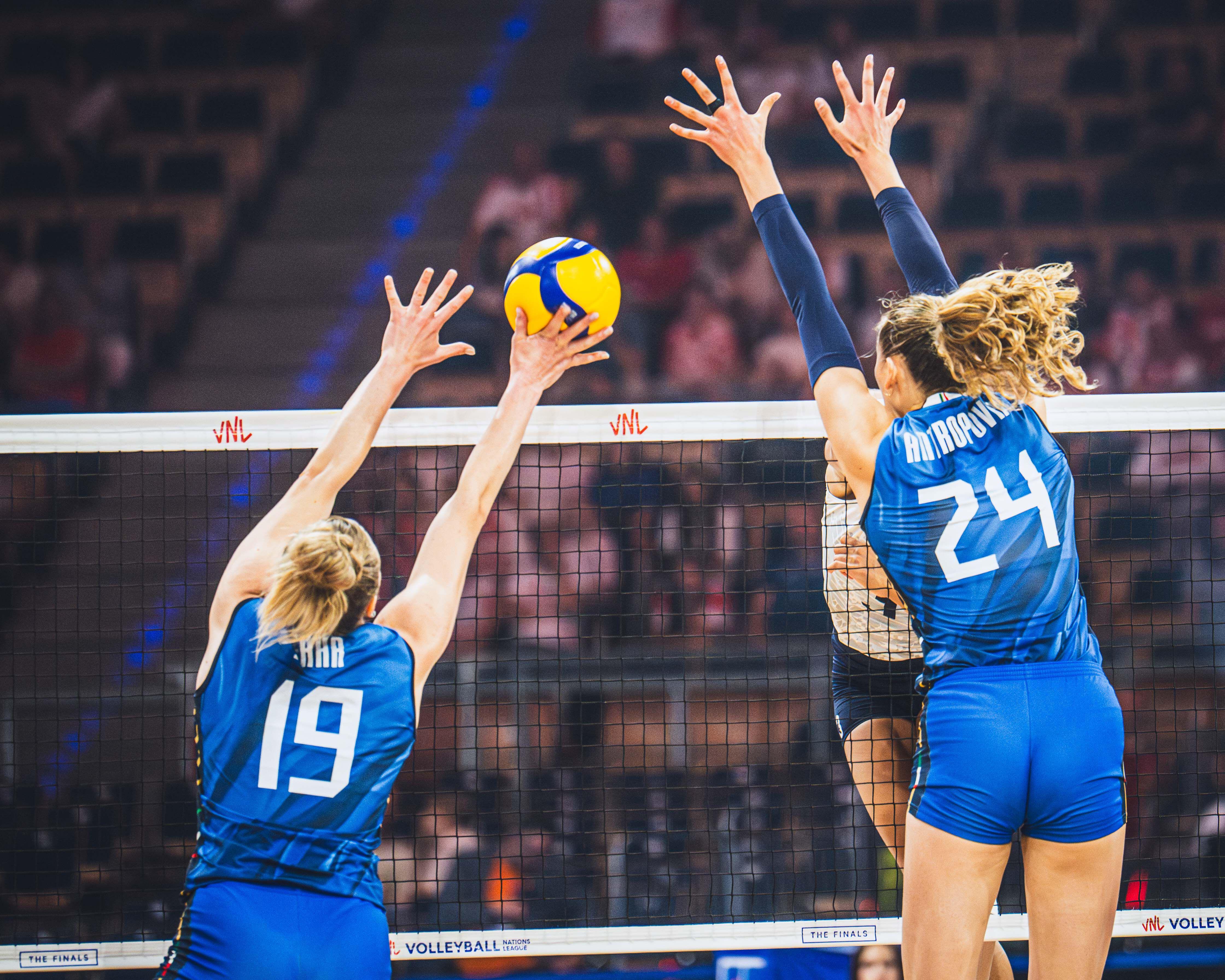
No less impressive was the women’s performance, a masterpiece of strategy and widespread talent. The World Championship MVP award went to Alessia Orro, the setter who masterfully orchestrated a multifaceted attack, distributing the play with wisdom and courage. Her vision enhanced the central solidity of captain Anna Danesi, also named Best Middle Blocker, and the incredible defensive excellence of Monica De Gennaro, the tournament’s Best Libero. In attack, Italy fielded an unparalleled arsenal: the explosive power of Paola Egonu and Ekaterina Antropova, and the essential grit of Myriam Sylla, the team’s emotional leader and key reference point on the court.
The Talent Forge
How is such success constructed? The answer lies in a structural excellence known in Italy as the SuperLega (men’s) and the Serie A1 (women’s). These are not merely domestic championships; they are, unequivocally, the most competitive and formative professional leagues on the planet. They function as true “laboratories” for talent, a top-tier volleyball industry that represents the essence of “Made in Italy” applied to sport.
The technical level is so high that these leagues have, for decades, attracted the best players from every corner of the globe. A foreign athlete who comes to Italy knows they are measuring themselves against the highest possible standard. This influx of international talent only serves to elevate the competition further, costringendo i giocatori italiani a un confronto quotidiano con l’élite mondiale.
In this environment, Italian talents like Giannelli, Michieletto, Orro, or Antropova do not just grow—they “learn to win.” They become accustomed to playing matches where the pressure is absolute and error is not an option. It is this culture of performance, forged in the arenas of the SuperLega and A1, that we then see intact when these athletes wear the “Azzurro” jersey, transforming the pressure of a world final into a manageable, almost familiar, challenge.
The Men’s Legacy
To fully comprehend the men’s modern triumph, one must look back at the impact of those who charted the course. In the 1990s, Italy was swept up by a cultural and sporting movement known as the “Generazione dei Fenomeni” (Generation of Phenomena). Led on the bench by Julio Velasco himself, athletes like Andrea Zorzi, Lorenzo Bernardi, Andrea Gardini, and Andrea Giani (to name but a few) forever changed the perception of volleyball in Italy and the world.
They did not just win; they dominated. They conquered three consecutive World Championships (1990, 1994, 1998), multiple European Championships, and an impressive number of World Leagues. They became media icons, bringing volleyball into the national spotlight. Only Olympic gold eluded them, a prize they came close to many times and which remained almost a curse, with silver medals in Atlanta 1996 and Athens 2004 (and later Rio 2016) testifying to a relentless pursuit of the summit.
De Giorgi’s team is not just the heir to that legendary group; it is its evolution. It has inherited that same winning mentality, that “culture of victory” that the “Phenomena” had instilled in the movement. The 2022 World triumph and the current 2025 reconfirmation are not just the end of a long fast, but proof that the golden thread started in the 90s never broke; it simply awaited a new generation of champions to shine once more.
The Women’s Ascent
If the men’s dominance is rooted in the 1990s, the epic of the women’s national team has followed a different trajectory: a constant, inexorable rise that has taken it into the world’s elite. The milestone, the moment Italy understood it could compete with the best, was undoubtedly the historic World Championship won in Germany in 2002, led by the generation of Eleonora Lo Bianco and Francesca Piccinini.
Since that triumph, the team has patiently built its record of achievements, adding successes in the European Championships. But the definitive consecration, the moment that shattered every taboo and projected the team into Olympus, was the conquest of the first, historic Olympic gold in Italian volleyball. That triumph marked the completion of the journey. The subsequent successes, such as the victories in the VNL (culminating in the 2022 and 2024 golds) and the incredible VNL and World Championship double of 2025, were but the logical consequence: a demonstration of maturity achieved and the affirmation of a new, undisputed global hegemony.
The Talent Industry: The “Italian School” and the Nurseries
Such marked dominance, in both categories, cannot be the result of a single lucky generation. It is, on the contrary, proof of a superior “system.” Italy, in fact, excels not only in training players but also in creating the strategic minds that guide them. The “Italian School” of volleyball coaching is a globally recognized excellence, an intellectual “export” comparable to that of design.
Our coaches are sought after worldwide: figures like Daniele Santarelli, who leads the Turkish women’s national team after his world-title success with Serbia, or Giovanni Guidetti, for years his rival on that same bench and now at the helm of the prestigious VakifBank club, are examples of this strategic hegemony. But the influence is widespread: from Gianlorenzo Blengini on the Bulgarian bench to coaches who bring the Italian method to every corner of the globe, such as Marco Musso, Alberto Bigarelli, and Stefano Saja in Romania, Alessandro Orefice in France, Lorenzo Pintus in Brazil, and even Federico Faggiani in Japan.
This “diaspora” of strategic talent rests on solid foundations: the youth academies (vivai). The constant success of the senior national teams is fueled by a capillary system of youth sectors. It is no coincidence that while the senior teams triumph, the youth national teams (Under-19, Under-21) regularly dominate their category competitions, demonstrating that the generational change is already planned and that the legacy of today’s champions is ready to be taken up by the phenomena of tomorrow.
The “Brand Azzurro”: Economy and Culture of a National Sport
The 2025 world triumphs are not just a sporting event; they are a phenomenon with profound cultural and economic implications. In Italy, volleyball is not a niche sport; it is an integral part of the social fabric. The data from the Italian Volleyball Federation (FIPAV) is clear: with over 350,000 registered athletes and thousands of affiliated clubs throughout the territory, volleyball is the most practiced sport at the scholastic and amateur levels, especially in the female sector. This grassroots foundation creates a deep emotional connection between the country and its national teams.
From a financial and economic perspective, this popularity translates into a strategic asset. The volleyball “Brand Azzurro” (Blue Brand) is stronger today than ever. This is proven by high-profile partnerships: the national leagues attract premier sponsors, such as Credem Banca for the men’s SuperLega and Tigotà for the women’s Serie A1, flanked by global brands like Del Monte® and financial institutions like Fineco. The economic impact generated by related activities, such as the European Championships, is measured in hundreds of millions of euros for the nation’s economy.
This value is not just commercial, but also institutional and social. The national teams have become ambassadors for “Made in Italy” in the broadest sense. A striking example is the “Pasta, integrator of happiness” campaign, promoted by the Ministry of Agriculture (MASAF) and ISMEA, which saw the women’s national team promote pasta as a symbol of Italian nutrition, culture, and performance.
At the same time, the athletes lend their faces to causes of great social relevance. Myriam Sylla was an incisive testimonial for the Ministry of Health in an awareness campaign on endometriosis, while during the COVID-19 pandemic, the authoritative figure of Simone Giannelli was chosen by the Municipality of Trento to promote civic responsibility and social distancing. These athletes are no longer just champions: they are symbols of excellence, integrity, and social commitment—the perfect ambassadors of the best face of Italy to the world.
The Dynasty: Looking to the Future
We are thus faced with an inevitable conclusion: the “Double Triumph” of 2025 is not an episode, but the logical consequence of a system. It is not luck, but the result of a project that masterfully unites past, present, and future.
It is the fruit of a historic legacy, that of the “Generation of Phenomena,” which instilled a culture of victory. It is the result of a structured present, built on the “Talent Forge” of the world’s most competitive leagues and the superior strategic intelligence of the “Italian School” of coaching. And it is, above all, a promise for the future, guaranteed by a system of youth academies that ensures continuous generational change.
Italy is no longer just one of the strongest nations in volleyball. It is the benchmark nation, a model of planning, talent, and strategy that the rest of the world observes and seeks to emulate. While the 2025 trophies shine in the display cases, the Italian system is already at work forging the champions who will lift those of tomorrow. The era of Italian dominance has not just begun; with these successes, it has been definitively confirmed.
The Institutional Seal: The Quirinale’s Homage

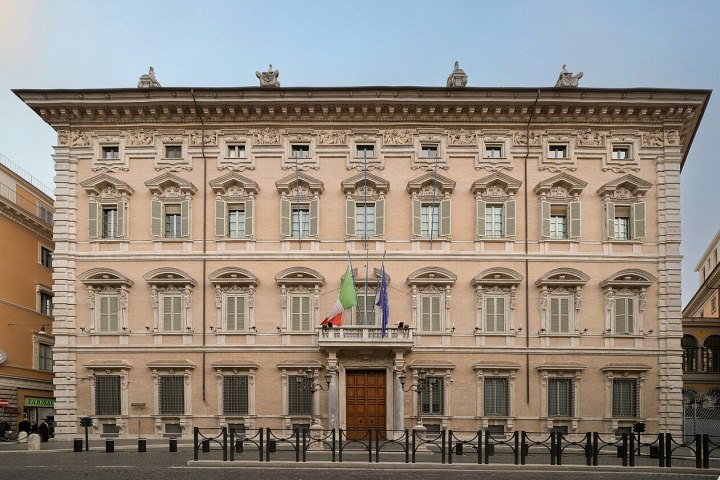
Crowning an achievement that rightfully enters the history of the Republic, the Italian men’s and women’s national volleyball teams were jointly received at the Quirinale Palace on October 8th. Welcoming them was the President of the Republic, Sergio Mattarella, who wished to personally celebrate the exceptional nature of the result.
The meeting, more than a welcome, was a “welcome back,” as the Head of State emphasized, acknowledging the continuity of the Azzurri’s successes.
“You have been formidable, congratulations and thank you,” declared President Mattarella. He then stressed the social value of the achievement, which went far beyond sporting merit: “There is another reward for the sacrifices and the commitments you make, alongside that of successes and medals: that of having pushed, solicited, and encouraged so many girls and boys, so many young women and men, to dedicate themselves to volleyball or in any case to a sport. And this,” he concluded, “is a great contribution to the life of our country.”
An institutional seal that consecrates volleyball not only as a sporting excellence, but as an engine of social cohesion and an educational model for Italy.
The Future Challenge: The Stage for Domination

The technical and strategic dominance of Italian volleyball is now an established fact. The excellence of the “software” – athletes, coaches, leagues, and academies – is the best in the world. The challenge for the nation’s system, now, is to ensure that the “hardware” is also worthy of this primacy.
To fully capitalize on the value of the “Brand Azzurro” and transform sporting hegemony into a lasting economic advantage, Italy must urgently address the issue of infrastructure. The successes of the national teams and the high level of the leagues attract global media and commercial interest; however, to maximize international television rights, attract sponsors of even greater caliber, and guarantee the hosting of top world events (like World Championships and VNL Finals), a modernization of the sports arenas is necessary.
These triumphs must act as a flywheel for a national investment plan in modern, multi-functional, and sustainable arenas that are, in themselves, a symbol of ‘Made in Italy’ in terms of design and technology. The stage where excellence performs must, itself, be excellent.
Discover more from The Ambassador
Subscribe to get the latest posts sent to your email.