

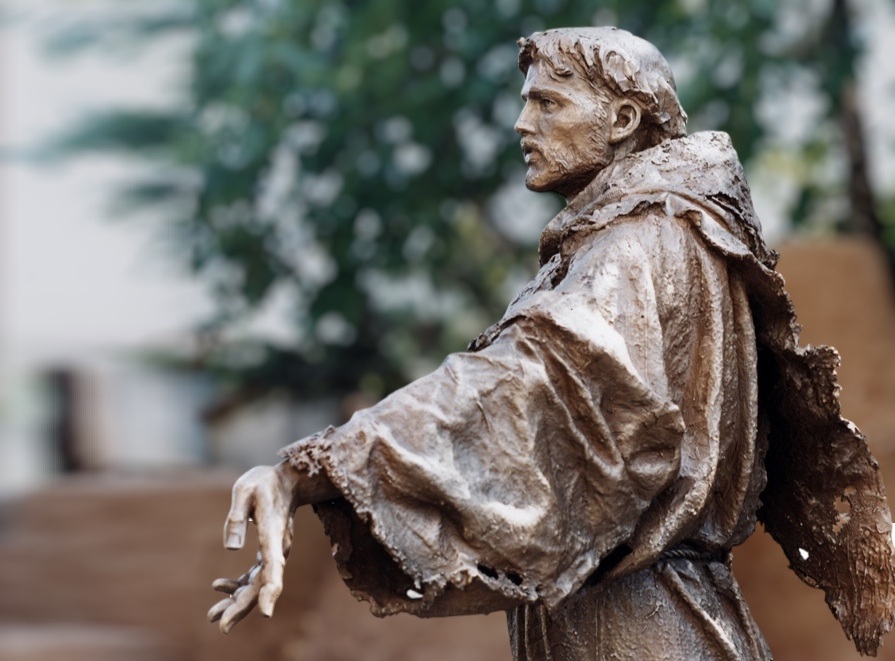
In a move of profound cultural and symbolic significance, Italy has officially elevated October 4th, the feast day of Saint Francis of Assisi, to the status of a full national holiday. This decision is far more than a simple addition to the civic calendar; it represents a conscious national embrace of the enduring values embodied by one of history’s most beloved and revolutionary figures. In an age marked by geopolitical conflict, ecological anxiety, and social fragmentation, the teachings of the humble friar from Umbria—peace, dialogue, care for creation, and radical simplicity—have never been more relevant. This national celebration is an invitation, both for Italians and the world, to rediscover a spiritual and ethical heritage that has quietly shaped not only Italy’s identity but also global consciousness. Francis is not merely a saint for the religious; he is a universal icon, a cornerstone of Italian culture, a proto-environmentalist, and a guide for a more humane future. This act legislates a moment of reflection, urging a nation to look to its spiritual roots to find the moral compass for its path forward.
The Rebel from Assisi: The Man Behind the Habit
To understand the weight of this new national holiday, one must first look beyond the serene, bird-friendly image of the saint and see the man: Giovanni di Pietro di Bernardone, a radical disruptor of his time. Born around 1181 into the upwardly mobile class of merchants in Assisi, the young Francis was no ascetic. His father, a wealthy cloth merchant, provided him with a life of privilege. Francis became the charismatic leader of the town’s youth, known for his love of fine clothes, lavish parties, and troubadour songs. His ultimate ambition was worldly: to earn the title of knight. This dream led him to join the war between Assisi and the rival city of Perugia. The adventure ended in disaster. Francis was captured and spent a year in a grim prison, an experience that, coupled with a subsequent long and severe illness, began to dismantle the foundations of his materialistic worldview.
The true turning point, however, was a spiritual process. One day, while praying in the derelict countryside chapel of San Damiano, he heard a voice from the crucifix commanding him: “Francis, go and repair my house, which, as you see, is falling into ruin.” Initially interpreting the message literally, he took expensive cloth from his father’s shop, sold it, and tried to give the money to the priest of San Damiano. This act precipitated a furious conflict with his father, culminating in one of the most dramatic scenes of the Middle Ages. Dragged before the bishop in Assisi’s main piazza to answer for his theft, Francis performed an act of breathtaking renunciation. He stripped himself of all his clothes, handed them back to his father, and declared that he no longer recognized any father but “Our Father who art in Heaven.” Standing naked in the public square, he broke ties not only with his family and its wealth, but with the entire social and economic order of his time. It was a declaration of a new kind of freedom, one based on absolute poverty and dependence on divine providence. This was the birth of his mission, embracing the lepers society cast out and preaching a simple, powerful message of love and penance.
A Cultural and Spiritual Cornerstone of Italy
Francis’s impact on Italian culture is immeasurable, extending far beyond the purely religious sphere. His most famous literary work, the “Cantico delle Creature” (Canticle of the Sun), is widely considered the very first masterpiece of Italian literature. Composed in the Umbrian dialect near the end of his life, it was a revolutionary departure from Latin, the exclusive language of high culture and the Church. In praising God through “frate Sole” (Brother Sun), “soror Luna” (Sister Moon), “frate Vento” (Brother Wind), and “soror Aqua” (Sister Water), Francis not only gave voice to a deeply personal and ecological spirituality but also bestowed literary dignity upon the vernacular, the language of the common people. This act effectively “baptized” the Italian language, proving its capacity for sublime artistic and spiritual expression. He laid a linguistic foundation upon which giants like Dante Alighieri, who deeply admired Francis, would later build the entire edifice of the Italian language and its literature.
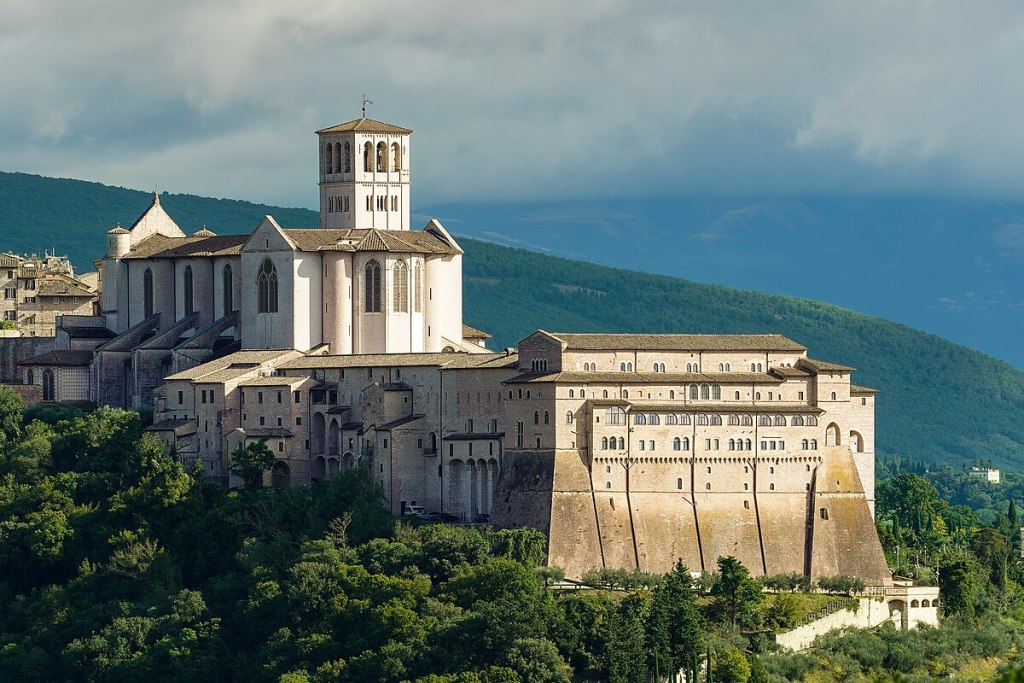
Declared Patron Saint of Italy in 1939, Francis represents a specific facet of the national character: a synthesis of profound spirituality and an intimate connection to the landscape. His vision has permeated Italian art for centuries, most famously in the revolutionary fresco cycle in the Upper Basilica of Assisi, attributed to Giotto. Here, for the first time, a saint was depicted with unprecedented human emotion, realism, and narrative clarity. In scenes like the “Sermon to the Birds,” Francis is not a remote, ethereal figure but a man whose gentle authority commands the attention of nature itself. Giotto’s break from the rigid, two-dimensional Byzantine style to embrace perspective, emotion, and naturalism was the spark that ignited the Italian Renaissance. The Basilica of Assisi thus became a pilgrimage site not only for the faithful but for every student of art history, a testament to how Francis’s life inspired a new way of seeing the world.
A Universal Message: The Global Influence of a Humble Friar
While deeply Italian, the appeal of Francis is profoundly universal. The Franciscan Order, built on his simple rule of life, rapidly spread across the globe and remains one of the largest and most respected religious orders. His message of peace has consistently transcended cultural and religious divides. The most striking example is his audacious journey to Damietta, Egypt, in 1219, during the height of the Fifth Crusade. While a crusader army laid siege to the city, Francis, armed only with his faith, crossed enemy lines to seek an audience with the Sultan Al-Kamil. In an age of intense religious warfare, this was an almost suicidal act. Yet, the Sultan received him with curiosity and respect. For several days, the Christian friar and the Muslim ruler engaged in courteous dialogue about faith. Francis did not achieve the Sultan’s conversion, but he returned with a deep respect for Islamic piety, an act of interfaith encounter that stands as a powerful rebuke to centuries of conflict.
This universalism has found potent new life in the modern era. In 1979, Pope John Paul II declared him the Patron Saint of Ecology, recognizing him as a visionary whose reverence for creation offered a spiritual antidote to the modern ethos of exploitation. This designation has gained extraordinary traction. The current pontiff, Pope Francis, not only chose his name in a direct homage to the saint of Assisi but also framed his landmark 2015 encyclical on the environment, “Laudato Si’,” around the Canticle of the Sun. The encyclical’s very title, “Praise be to you,” is a direct quote from the Canticle. This has cemented Francis’s position as a global figurehead for the ecological movement, inspiring activists, policymakers, and citizens of all backgrounds who see in his “fraternal” relationship with nature a blueprint for a sustainable future.
Rituals, Traditions, and the Paths of the Spirit

The annual celebration on October 4th in Assisi is a vibrant tapestry of tradition that reflects national unity. A central ritual involves the lighting of a votive lamp that burns year-round at the saint’s tomb. Each year, one of Italy’s twenty regions is chosen to make a symbolic offering of oil for the lamp, a powerful gesture of the nation’s diverse parts coming together in homage to their shared patron. The evening before, on October 3rd, the solemn “Transito” ceremony commemorates the moment of Francis’s death, a moving reenactment of his passing from earthly life to what he affectionately called “Sister Bodily Death.”
In recent years, this veneration has taken a new, dynamic form: the exponential growth of pilgrimage walks, or cammini. Following the immense success of Spain’s Camino de Santiago, Italy has rediscovered its own historic trails. The “Vie di Francesco” (Ways of St. Francis) are now at the forefront of this movement. These paths trace the saint’s life through the green heart of Italy, connecting sacred sites from La Verna in Tuscany, to Assisi, and the Rieti Valley. This trend represents a major evolution in the tourism sector, championing a “slow travel” philosophy. From an economic perspective, this is a vital lifeline for Italy’s inland areas (aree interne), many of which suffer from depopulation. The modern pilgrim, whether motivated by faith, a search for wellness, or a desire for cultural immersion, brings sustainable revenue to small towns and ancient borghi. This has spurred the growth of a new hospitality economy built on B&Bs, agriturismi, and trattorias serving local food, creating jobs and incentivizing the preservation of both the natural landscape and architectural heritage—a truly Franciscan economic model.
A Holiday for the Future: Reaffirming Timeless Values
The establishment of October 4th as a national holiday is, ultimately, a forward-looking act. It is a statement that the values of Francis of Assisi are not historical relics but vital necessities for navigating the complexities of the 21st century. It serves as an annual, national reminder of the power of gentleness in a world often governed by aggression; a call for ecological responsibility in the face of an undeniable climate crisis; an appeal for simplicity and sufficiency in a global culture of hyper-consumerism; and a testament to the supreme importance of dialogue and universal brotherhood in an era of resurgent nationalism. By celebrating Saint Francis, Italy is not just honouring its patron saint; it is holding up a mirror to its best self and offering his timeless, revolutionary message of hope and profound humanity to the world. The holiday is a collective pause, a day to reflect on how the legacy of a poor man from Assisi can still, and indeed must, repair our common home.
Article written with help of AI
Discover more from The Ambassador
Subscribe to get the latest posts sent to your email.