

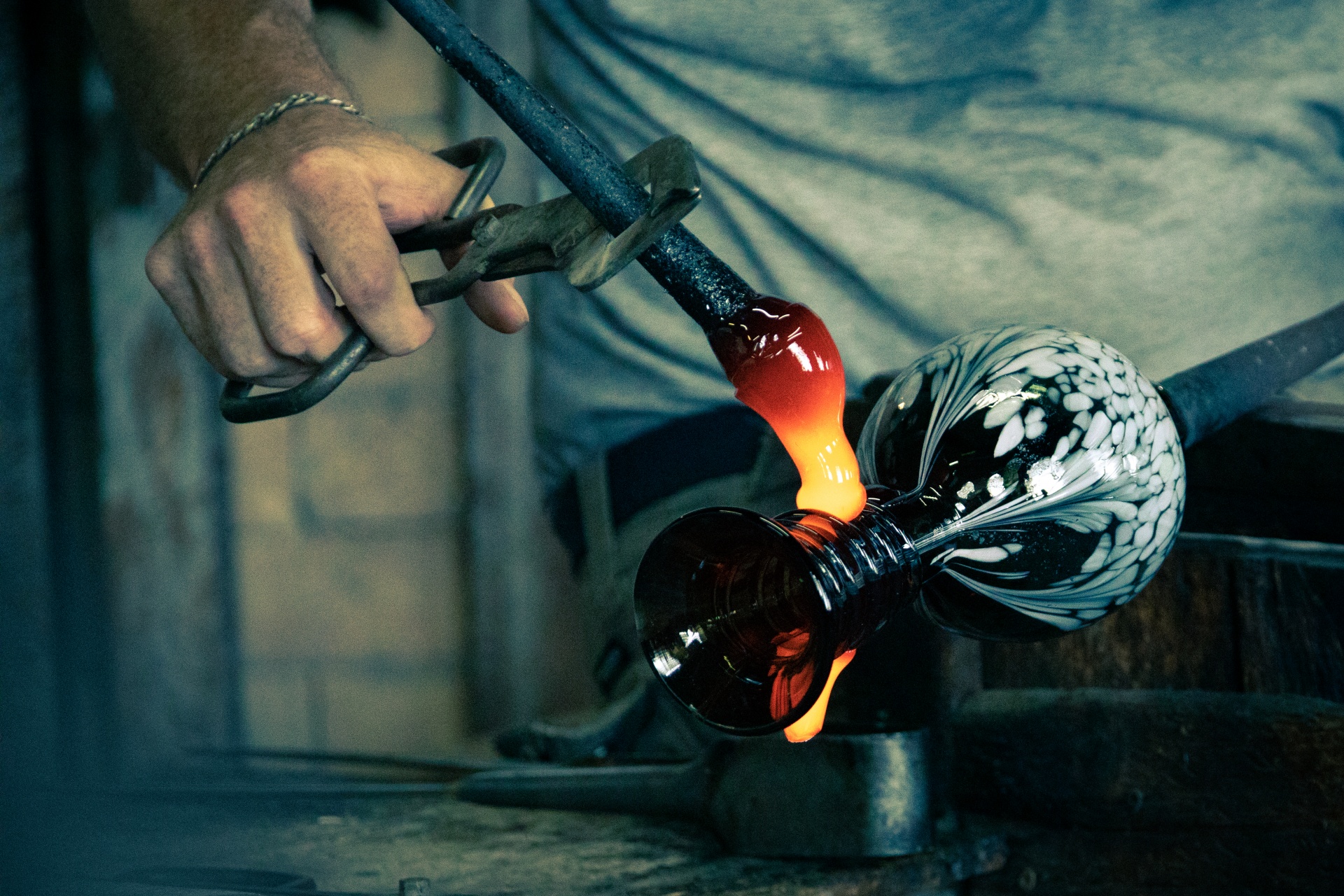
On the small island of Murano, just a short vaporetto ride from the heart of Venice, time is measured not by clocks, but by fire. Inside the unassuming brick buildings that line its canals, the fornaci (furnaces) burn at a relentless 1,400 degrees Celsius, turning sand into liquid light. Here, in the searing heat, the ancient art of Venetian glassblowing unfolds in a silent, mesmerizing ballet. A maestro (master) gathers a glowing orb of molten glass on the end of a long blowpipe, his movements swift and precise, honed by decades of experience. It is an almost alchemical process, a tradition protected on this island for over 700 years. But today, the fires of Murano are under threat. This priceless artisanal heritage is facing a perfect storm of modern crises—soaring energy costs, fierce global competition, and a looming succession crisis—that threatens to extinguish its legendary flame.
The story of Murano began in 1291, when the Venetian Republic decreed that all glassmakers must move their foundries to this isolated island. The official reason was to prevent fires in the densely built city, but the unspoken motive was control. By concentrating the artisans in one place, the Republic could jealously guard the secrets of its world-renowned glass, a luxury commodity as valuable as spices or silks. This created a unique, closed ecosystem where techniques were passed down in secrecy from father to son, and the maestri were a revered, privileged class. This legacy of secrecy and mastery is still palpable in the workshops today, where a team, or piazza, works in fluid, unspoken coordination around the central figure of the master.
This fragile ecosystem is now facing its most severe challenge in generations: the crippling cost of energy. The massive furnaces are the lifeblood of Murano, and they must burn 24 hours a day, seven days a week; allowing them to cool would cause the crucible inside to crack, a disastrous and expensive outcome. The recent volatility and sharp increases in the price of natural gas have pushed these small, energy-intensive family businesses to the brink. Many have been forced to temporarily halt production or operate at a loss, a situation that is economically unsustainable. While some are exploring more efficient furnace technologies, the capital investment required is often beyond the reach of these small artisanal enterprises.
Compounding this internal crisis is the external pressure of global competition and counterfeiting. The market is flooded with cheap, mass-produced glass from Asia and Eastern Europe that is deceptively marketed as “Murano.” Tourists in Venice are often sold trinkets that have never been near the island’s fires. To combat this, the official Vetro Artistico® Murano trademark was established, a seal of origin that guarantees a product was made on the island using traditional techniques. Yet, the battle to educate consumers and police a global market of fakes is a constant, uphill struggle for the island’s consortium.
Perhaps the most insidious threat, however, is the demographic one. The path to becoming a maestro is long and arduous. An apprentice must spend years, often a decade or more, learning the punishing, physically demanding craft in the intense heat of the furnace before they can even begin to master the art. In a world of easier, more lucrative career paths, fewer young people are willing to make this profound commitment. The result is an aging population of masters, with the very real risk that their unique, unwritten knowledge—the feel for the glass, the secrets of creating specific colours, the muscle memory of a perfect gesture—could die with them.
Yet, despite this perfect storm, the fire of Murano has not been extinguished. The island is fighting for its future with the same resilience that has defined it for centuries. Schools like the renowned Abate Zanetti are working to attract and train a new generation, while collaborations with international artists and designers are injecting new creative energy into the tradition. These collaborations are vital, pushing the maestri to apply their ancient skills to new, contemporary forms and proving that Murano is not a museum, but a living centre of artistic creation. The challenge is to find a sustainable model where this priceless heritage can be both preserved and profitable. The future of Murano lies in a delicate balance: honouring the past while innovating for the future, and convincing the world that an object shaped by human breath and centuries of tradition is a luxury worth protecting.
Discover more from The Ambassador
Subscribe to get the latest posts sent to your email.