

If you look at a map of the globe, focusing not on political borders but on the flow of matter and information, the Italian peninsula changes shape. It ceases to be the familiar boot that kicks Sicily; it becomes a massive pier, a concrete and granite jetty thrusting nearly a thousand kilometers into the center of the world’s most critical maritime basin. For decades, this geographical privilege was interpreted largely through the lens of tourism or migration. However, as we settle into 2026, a profound shift in strategic thinking has occurred. The Mediterranean is no longer just a sea; it is a “medium”—a connector. It is the liquid interface between the manufacturing giants of Asia, the demographic explosion of Africa, and the consumer markets of Europe. And Italy is the keystone of this architecture.
We have entered what analysts are calling the “Blue Century.” In this era, sovereignty is measured less by the height of mountain borders and more by the depth of seabed influence. The control of logistics, the security of energy pipelines, and, crucially, the dominion over the fiber-optic cables that carry 98% of the world’s internet traffic constitute the new triad of power. Italy, by virtue of geography and a renewed industrial policy, finds itself at the helm of this transformation, pivoting from a peripheral southern border of Europe to its central engine of connectivity.
The Return of the Port Cities
The first layer of this geopolitical strategy is visible on the surface: the renaissance of the port system. For too long, the “Northern Range”—the ports of Rotterdam, Antwerp, and Hamburg—dominated European logistics, forcing goods destined for Milan or Munich to take a paradoxical detour through the North Sea. The winds have changed. The disruption of supply chains and the need for shorter, more resilient routes have brought the focus back to the “Southern Gateway.”
Trieste and Genoa are the protagonists of this revival. Trieste, with its deep Austrian-Hungarian roots and extraterritorial free port status, has cemented its role as the natural outlet for Central and Eastern Europe. It is the terminus of the “New Silk Road” (in whatever form it takes in the shifting sands of 2026 diplomacy) and a crucial energy hub. Genoa, on the Tyrrhenian side, has overcome the trauma of the past decade to reinvent itself through massive infrastructure projects like the new breakwater, allowing it to welcome the ultra-large container vessels that define modern trade.
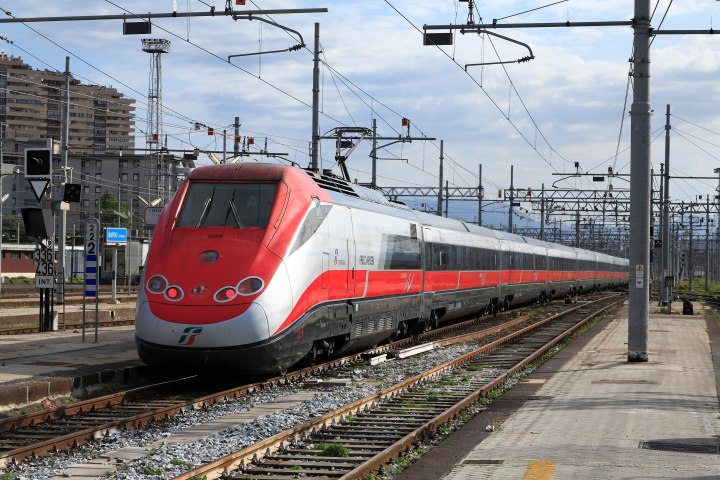
But the true strategic anomaly is Gioia Tauro in Calabria. Located ideally at the center of the Mediterranean, it is the transshipment heartbeat of the basin. Here, the “mother ships” from Suez offload containers to smaller “feeders” that distribute goods across the Mediterranean. The efficiency of Gioia Tauro is a barometer of the Italian economy’s integration into global trade flows. It represents the physical connection between the booming economies of the Indo-Pacific and the European Single Market. The challenge for 2026 is the “last mile”—ensuring that the speed of the sea is matched by the speed of the rail networks taking these goods north, piercing the barrier of the Alps.
The Internet flows Underwater
Beneath the keel of these container ships lies a second, invisible network that is perhaps even more valuable: the submarine cable infrastructure. In the digital age, data is the new oil, and the Mediterranean is the new Persian Gulf. Italy has strategically positioned itself as the “digital hub” of the Mediterranean. If you trace the lines of the world’s major fiber-optic cables—SeaMeWe, Blue Raman, 2Africa—they all converge on the Italian coast, particularly in Sicily.
Palermo and Catania are becoming the “Marseille of the South.” They are the landing points where the internet from Asia and Africa touches European soil. This is not merely a technical detail; it is a geopolitical asset. Sparkle, the international services arm of the TIM Group, operates a global network that makes Italy a mandatory passage for data. In 2026, the strategic autonomy of Europe’s cloud and digital sovereignty depends on the security of these landing stations.
This underwater dominance offers Italy immense “soft power.” By connecting the booming digital ecosystems of North Africa with the data centers of Milan and Frankfurt, Italy fosters a digital integration that precedes political integration. It is a modern form of the Roman road network, paved not with stone, but with light pulses traveling through glass threads on the seabed.
The Energy Bridge and the Hydrogen Horizon
The third dimension of the Blue Century is energy. The decoupling from Russian gas has forced Europe to look South, turning Italy into the continent’s energy bridge. The pipelines that snake across the Mediterranean floor—the Transmed from Algeria, the TAP from Azerbaijan via Puglia, and the Greenstream from Libya—are the lifelines of European industry. Italy manages the valves.
However, in 2026, the conversation has evolved beyond fossil gas. The focus is now on the “SoutH2 Corridor.” This ambitious project aims to repurpose existing pipelines and build new infrastructure to transport green hydrogen produced by the relentless sun of North Africa to the heavy industries of Austria and Germany. Italy is the transit country, the physical guarantor of this new green alliance. The “Mattei Plan,” launched years prior, is finding its concrete realization here: a partnership of equals where African nations export high-value energy, and Italy provides the technology and the route. It is a symbiotic relationship designed to stabilize the region through economic interdependence.
Seabed Warfare: The New Front
With such critical assets lying on the seafloor—pipelines and data cables—the issue of security has become paramount. The concept of “Seabed Warfare” has moved from naval theory to operational reality. The sabotage of the Nord Stream years ago was a wake-up call that Italy heard loud and clear.
The Italian Navy (Marina Militare) has undergone a significant doctrinal shift. It is no longer just a coastal defense force or a peacekeeping entity; it is the guardian of the underwater dimension. The deployment of advanced assets, such as the Polo Nazionale della Dimensione Subacquea (National Center for the Underwater Dimension) in La Spezia, highlights this focus. Italy is developing autonomous underwater vehicles (AUVs) and sophisticated surveillance systems to monitor the integrity of these vital arteries. Protecting a cable lying at a depth of 3,000 meters is an incredibly complex engineering and military challenge, one where Italy is developing niche capabilities that are envied by NATO allies.
The Center of Gravity
The “Blue Century” is not a passive era for Italy; it is a time of active construction. The sea is no longer a barrier, but a liquid continent that unites rather than divides. By leveraging its geography, Italy is carving out a role that is indispensable to the global order. It is the gatekeeper of the physical goods entering Europe, the router of the digital data connecting civilizations, and the conduit for the energy that powers the future.
In the grand chessboard of 2026, Italy has realized that its greatest resource has always been its position. The “Azure Pivot” is in full swing, and for the first time in centuries, the Mediterranean is once again the center of the world, with Italy standing firm as its beating heart.
Discover more from The Ambassador
Subscribe to get the latest posts sent to your email.