

There is a specific kind of magic that occurs when one steps across the threshold of a historic greenhouse in January. The door closes, shutting out the biting Tramontana wind and the grey, leafless world of winter. Instantly, the senses are overwhelmed. The air is heavy, warm, and scented with wet earth and blooming orchids. The light, filtered through panes of antique glass, turns soft and milky. This is the “Architecture of Illusion,” a uniquely European art form that found some of its highest expressions in Italy. These structures—iron ribs soaring like gothic arches, glass skins protecting precious chlorophyll—are not merely gardening tools. They are statements of power. For the monarchs of the House of Savoy or the Bourbon Kings of Naples, possessing a permanent summer was the ultimate symbol of sovereignty. In 2026, as we seek refuge from an increasingly erratic climate, these “Glass Arks” have transformed from royal follies into sanctuaries of biodiversity, guarding the genetic memory of the planet.
Padua: The Mother of All Gardens
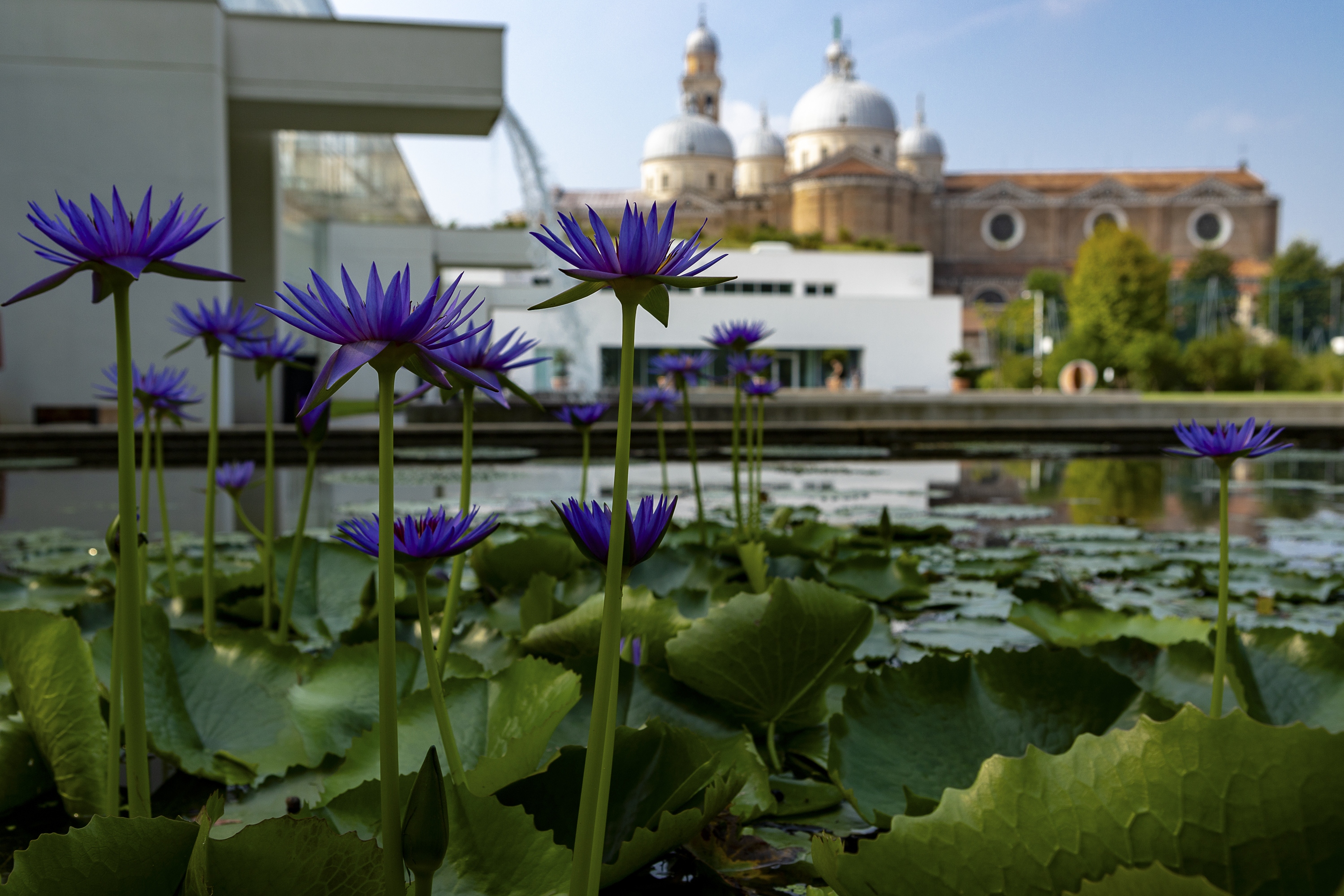
Our journey must begin in Padua, at the Orto Botanico (founded in 1545), the oldest university botanical garden in the world still in its original location and a UNESCO World Heritage site. Here, the concept of the “Winter Garden” is scientific dogma. The “Goethe Palm” (a Chamaerops humilis planted in 1585) is still there, protected within its dedicated glass dodecahedron. Goethe famously visited it in 1786, formulating his theory on the metamorphosis of plants. Walking through the modern “Garden of Biodiversity”—a high-tech solar greenhouse inaugurated a decade ago and now fully matured—one sees the evolution of the concept. It is a dialogue between the Renaissance circular wall (the Hortus Cinctus) and the 21st-century glass facade. In winter, Padua becomes a silent lesson in resilience, teaching us that with enough care, life can flourish even in the fog-bound Venetian plain.
The Medici and the Cult of Citrus
In Tuscany, the winter garden takes a specific, fragrant form: the Limonaia. The Medici family suffered from a delightful obsession with citrus fruits. They collected them like jewels, breeding rare, monstrous, and beautiful varieties (like the Bizzarria, a chimera of citron and orange). But Tuscany is too cold for lemons to survive the winter outdoors. Thus, the Limonaia was born. The Boboli Gardens in Florence house one of the most spectacular examples. In November, in a ritual that has remained unchanged for four centuries, the heavy terracotta pots—each stamped with the Medici crest—are hauled inside these monumental halls. To visit the Limonaia of Villa di Castello in January is to walk into a scented cathedral. The air is sharp with the aroma of bergamot and cedar. It is a living museum of genetics, where the fruit on the trees is identical to that painted by Bartolomeo Bimbi in the 1700s.
Turin: The Savoy Crystal Palaces
Moving north to Piedmont, the tone shifts from the agrarian to the imperial. The Serre Reali (Royal Greenhouses) of the House of Savoy are triumphs of engineering. At the Castle of Racconigi, the “Margaria” complex looks like a gothic novel set in glass. Built in the mid-19th century, it was designed to acclimatize exotic species brought back from global expeditions. The ironwork is intricate, painted in the signature Savoy blue or sage green, framing a world of giant ferns and towering palms. In 2026, after extensive restorations, the greenhouses of the Royal Museums in Turin have reopened their “Sala delle Orchidee.” Here, amidst the snow-covered avenues of the city, one can find the humid intimacy of an Amazonian rainforest. It is a testament to the Victorian-era belief that man could, and should, catalogue and contain the entire natural world.
Lucca: The Liberty Jewel
In the heart of Lucca, atop the medieval walls, stands a smaller but equally enchanting gem: the Botanical Garden of Lucca. Its greenhouse is a masterpiece of Art Nouveau (Liberty style), a delicate cage of wrought iron that seems to float on the misty ramparts. It is intimate, crowded with carnivorous plants and ancient cycads. The atmosphere here is less majestic and more mysterious. It feels like the laboratory of a 19th-century botanist, cluttered with terracotta pots and handwritten labels. It is a reminder that the winter garden was also a place of private study and melancholic reflection, a “room of one’s own” where the scholar could commune with nature while the city slept under the frost.
Naples: The Bourbon Jungle
Travel south, and the scale explodes. The Real Orto Botanico di Napoli, founded by Joseph Bonaparte but cherished by the Bourbons, is a city within a city. Spanning 12 hectares, it is one of the most important in Europe. Its “Merola Greenhouse” (Serra Merola), also known as the Winter Stove (Stufa Temperata), is a temple to the sun. Even in January, the Neapolitan light floods this structure, illuminating a collection of cycads that are living fossils. But the true star is the “Castle Greenhouse” (Serra del Castello), restored to its 17th-century glory. Here, the distinction between indoors and outdoors blurs. The climate of Naples allows for a “soft” winter garden, where the doors can often be left open. It serves as a hub for the research on Mediterranean flora, protecting endangered species from the coastal urbanization.
Palermo: The Colonial Dream
In Sicily, the concept of the “winter garden” becomes almost paradoxical, as winter here is merely a prolonged spring. However, the Orto Botanico di Palermo boasts the magnificent “Winter Garden” (Serra d’Inverno), a gift from Queen Maria Carolina of Austria. It was the Ellis Island of botany. This is where the mandarin orange, the loquat (nespola), and endless species of exotic ficus first touched European soil. The centerpiece is the Great Ficus (Ficus macrophylla), a monstrous, cathedral-like tree with aerial roots that has swallowed the surrounding space. In 2026, the Palermo garden is a focal point for studies on climate change adaptation; the tropical species that once needed glass protection are now beginning to thrive outdoors, a beautiful but terrifying signal of a warming planet.
The Hanbury Legacy: The English Touch
On the border with France, at Ventimiglia, lies the Villa Hanbury. While technically a garden of acclimatization rather than a single greenhouse, it represents the English passion for the “Italian Winter.” Sir Thomas Hanbury created a paradise where plants from the Southern Hemisphere (Australia, South Africa) could survive the European winter. The sensation here is oceanic. The garden tumbles down to the sea, a cascade of aloes, agaves, and eucalyptus. It is a “winter garden” under the open sky, proof of the unique microclimate of the Riviera. It stands as a monument to the cosmopolitan history of Italian gardening, where British wealth and Italian soil collaborated to create a botanical utopia.
The 2026 Perspective: From Collection to Salvation
Why do these places matter today? In the 19th century, they were trophies of colonialism and curiosity. In 2026, they are arks. The Royal Greenhouses have evolved into scientific fortresses. They house “Seed Banks” (Banche del Germoplasma) where the DNA of rare Italian varieties—from the wild orchids of the Apennines to the ancient grains of Sicily—is frozen and stored. The scientists working in the back rooms of Padua and Naples are not just gardeners; they are the guardians of food security and pharmacological future. They are breeding plants that can withstand drought and new pests. The beauty of the glass architecture is now the packaging for a desperate and noble mission: survival.
A Lesson in Patience
Ultimately, entering these winter gardens is a lesson in time. In a world of digital immediacy, a Camellia blooming in January in a greenhouse in Lake Como or a citrus fruit ripening in a Florentine Limonaia demands patience. It speaks of a care that spans generations. The gardeners who stoke the stoves and prune the vines are serving a cycle that cares nothing for human haste. To visit them is to slow down, to breathe in the humid, oxygen-rich air, and to remember that even in the deepest winter, life is not dead; it is merely waiting, protected by glass and human devotion, for the inevitable return of the sun.
Discover more from The Ambassador
Subscribe to get the latest posts sent to your email.