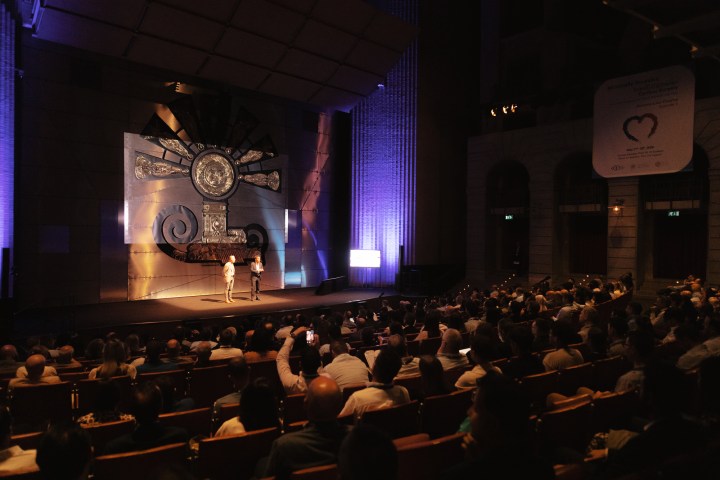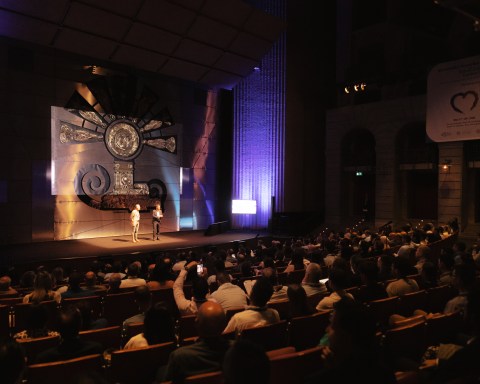


It took exactly three minutes for the tension inside the plenary hall of the Bharat Mandapam in New Delhi to dissolve into a roaring, liberating applause. Three minutes of technical reading by the UNESCO Intergovernmental Committee, followed by the decisive strike of the gavel that officially inscribed “Italian cooking, between sustainability and biocultural diversity” onto the Representative List of the Intangible Cultural Heritage of Humanity. But while the bureaucratic ritual in India lasted only moments, the journey to this podium took centuries. It began in the medieval courts of Palermo, simmered in the Renaissance kitchens of Florence, and was refined in the poverty-stricken, ingenious hearths of the post-war countryside.
On this historic Wednesday, December 10, 2025, Italy did not just win a medal; it won an argument. For decades, the world has consumed Italian food as a commodity—a delicious, marketable, often counterfeited product. Today, the United Nations has certified that it is something far more profound: a “social practice,” a syncretic cultural system that promotes biodiversity, eliminates waste, and binds generations together. Italy becomes the first nation in history to have its cuisine recognized in its entirety as a heritage of humanity. Not a specific dish, not a specific meal structure, but the very act of cooking “all’italiana.”
The Delhi Verdict: Anatomy of a Victory
The dossier that convinced the 24 voting nations was a masterpiece of cultural diplomacy, championed by the Ministry of Agriculture (MASAF) and the Ministry of Culture, with the crucial academic backing of the Accademia Italiana della Cucina and Casa Artusi. The committee in New Delhi was reportedly struck by the “biocultural” pillar of the Italian proposal. Unlike other gastronomic traditions that rely on exclusivity or rare ingredients, the Italian model was praised for its democratic nature and its inherent sustainability.
“Italian cuisine serves as a model of nutritional balance and respect for the ecosystem,” read the final evaluation. The UNESCO experts explicitly cited the culture of “zero waste”—the ability of the Italian cook to transform stale bread into Pappa al Pomodoro, or meat scraps into noble ragù—as a vital lesson for a planet grappling with food security crises. The victory was unanimous. In the corridors of New Delhi, diplomats from Africa and South America were seen congratulating the Italian delegation, acknowledging that the Italian table has become a universal language, a form of soft power that transcends political barriers.
Prime Minister Giorgia Meloni, commenting immediately after the vote, defined the recognition as “a gesture of love” and a vindication of national identity. “We are the first in the world to receive this recognition which honors who we are,” she stated, underscoring how food is the most immediate vector of the Italian lifestyle. But beyond the rhetoric, the atmosphere in the Italian delegation was one of profound relief. The path had been fraught with challenges, from the skepticism of Northern European countries regarding labeling systems (like the Nutriscore debate) to the sheer complexity of codifying a cuisine that changes every ten kilometers.
The “Biocultural” Revolution
What exactly has been protected? This is the crucial question. UNESCO has not frozen a recipe book. You will not find the “legal” recipe for Carbonara in the UNESCO archives. Instead, the organization has protected the process and the relationship between the human and the land. The definition “Biocultural Diversity” acknowledges that Italian food is the result of a unique micro-climate combined with millennia of human selection. The Artichoke of Rome, the Red Onion of Tropea, the Pistachio of Bronte are not just crops; they are cultural artifacts shaped by the communities that grow them.
The recognition places a massive emphasis on the “Ritual.” The Italian meal is codified as a moment of social cohesion. In an era of solitary, screen-based eating, the Italian insistence on the convivium—eating together, sharing platters, talking over food—is now a protected human asset. It is a defense of slowness in a fast world. The “transmission of knowledge” was another winning point: UNESCO recognized that in Italy, cooking is rarely taught in schools; it is learned by osmosis, watching grandmothers and parents, a “non-formal education” that builds family bonds and collective memory.
The Economic Shield: A 100 Billion Euro Impact
While the cultural victory is poetic, the economic implications are prosaic and colossal. Analysts estimate that the “UNESCO Effect” could boost the value of the Italian agri-food export by a further 15-20% over the next five years. We are coming off a record-breaking 2024, with exports hitting 68 billion euros, and the first eight months of 2025 already showed a 6% growth. This new seal of quality acts as a turbocharger.
The primary enemy is “Italian Sounding”—the global industry of fake Italian products, from “Parmesan” made in Wisconsin to “Chianti” made in California, a market worth over 100 billion euros annually. Until yesterday, Italy could only fight this with trade tariffs and legal battles over trademarks. From today, the fight shifts to the moral and cultural high ground. An authentic Italian product is now a piece of World Heritage; a fake is a corruption of a UNESCO-protected asset. This gives Italian consortia a powerful narrative tool in emerging markets like India, China, and Brazil. Consumers in these regions are highly sensitive to “prestige” markers. The UNESCO logo is the ultimate luxury tag, transforming a bottle of olive oil from a condiment into a cultural experience.
Furthermore, this status provides Italy with significant leverage in Brussels. In the ongoing battles over food labeling and health warnings (such as the Irish alcohol labels), Italy can now argue that its dietary model is UN-sanctioned. You cannot put a warning label on a Heritage of Humanity without facing diplomatic absurdity.
Tourism: The Era of the “Gastronomic Pilgrim”
The most immediate impact will be felt on the ground, in the Borghi and countryside of the peninsula. We are witnessing the birth of the “Gastronomic Pilgrim.” Tourism in Italy is evolving. The visitor of 2026 is less interested in the Colosseum as a stone monument and more interested in the culture that surrounds it. The UNESCO recognition validates “Roots Tourism” (Turismo delle Radici), encouraging the 80 million descendants of Italians abroad to come home not just to see, but to taste their heritage.
The “Internal Areas”—the Apennines, the rural South—stand to gain the most. Since the UNESCO motivation cites biodiversity, the traveler will be compelled to seek out the source. We expect a boom in “experience tourism”: harvesting olives in Puglia, hunting truffles in Piedmont (already recognized in 2021, but now boosted by the general umbrella), and making pasta in Bologna. The hospitality sector is already preparing packages that link art cities with agricultural production zones, creating a seamless narrative between the fresco and the plate.
Voices from the Kitchen
The reaction from the culinary world has been ecstatic. Massimo Bottura, the visionary behind Osteria Francescana, called it “An act of love. Every dish tells a story, and now the world has promised to listen to these stories.” For chefs like Bottura, who have spent decades modernizing tradition without betraying it, this is the ultimate validation. It bridges the gap between the Michelin-starred avant-garde and the domestic cook. They are now both recognized as custodians of the same flame.
Even the industrial giants of the food sector have welcomed the news. For companies like Barilla or Ferrero, the UNESCO status is a marketing multiplier, reinforcing the idea that “Made in Italy” is synonymous with quality of life.
A Responsibility to the Future
However, the UNESCO seal is not a finish line; it is a starting line. It comes with stringent obligations. Italy must now report periodically to the UN on how it is safeguarding this heritage. This implies a duty to protect the agricultural landscape from cementing and climate change. You cannot have “biocultural diversity” if the land is dying. It requires a commitment to ethical labor practices in agriculture; the “caporalato” (illegal labor exploitation) is now a stain on a UNESCO heritage, making its eradication a matter of national honor.
Moreover, Italy must guard against the “museumification” of its food. Cuisine is a living language, not a dead Latin. It must continue to evolve, to integrate new influences (as it did with the tomato from the Americas or spices from the East), while maintaining its soul. The challenge for 2026 and beyond will be to use this recognition not just to sell more cheese, but to teach the world a better way to live.
As the delegates leave New Delhi and the celebrations begin in the piazze of Italy, one thing is clear: the table is set, the world is invited, and the menu has never looked this important.
The Five Pillars of Victory: Why UNESCO said “Yes”
The winning dossier was built on five strategic pillars that distinguish Italian cuisine from any other food culture previously recognized.
- Biocultural Diversity: Italy has the highest number of plant and animal varieties used in cooking in the world. The connection between the micro-territory and the ingredient is unique.
- Sustainability & Zero Waste: The tradition of “Cucina Povera” (peasant cooking) is inherently circular. Nothing is thrown away. This aligns perfectly with the UN’s 2030 Agenda.
- The Ritual of Conviviality: The focus is on the sharing of the meal, not just the preparation. The social value of the table as a peacemaking and community-building space.
- Oral Transmission: Recipes are passed down through families, creating a living archive of memory that strengthens intergenerational bonds.
- Syncretism: The acknowledgment that Italian cuisine is a “mosaic” of influences (Arab, Greek, Norman, Spanish) that proves culture thrives on exchange, not isolation.
The Hall of Fame: Italy’s UNESCO Intangible Treasures
With this historic inclusion, the Italian “Food & Heritage” list becomes unrivaled globally. The national cuisine joins a prestigious family of recognized Italian practices, an ecosystem of recognitions that confirms Italy as the world’s undisputed superpower of “Living Heritage”:
- The Mediterranean Diet (2010): The nutritional and lifestyle foundation, shared with other nations, but anchored in Italy.
- The Art of Neapolitan Pizzaiuolo (2017): Recognizing the specific acrobatic and artisanal skill of Naples’ pizza makers.
- Truffle Hunting and Extraction (2021): The secret knowledge of the Trifolau and their dogs.
- Vine Pruning of Pantelleria (2014): The heroic agriculture of the Zibibbo grapes.
- Transhumance (2019): The seasonal migration of livestock, shaping the landscapes of the South.
Discover more from The Ambassador
Subscribe to get the latest posts sent to your email.