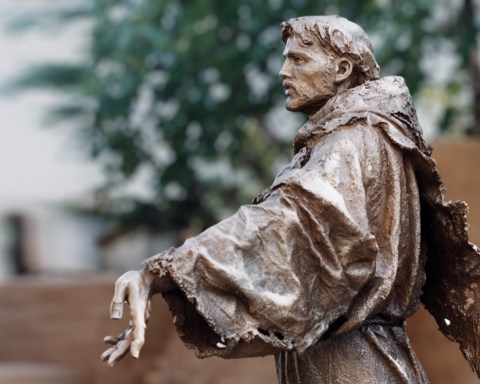


To understand the magnitude of the seismic shift that occurred eight hundred years ago, one must first strip away the layers of saccharine sentimentality that have accumulated over the centuries like dust on a fresco. We must forget, for a moment, the ceramic statues in garden centers, the docile birds perching on shoulders, and the sanitized image of a gentle hippy in a brown habit. The man who died on the bare earth of the Porziuncola in October 1226 was not a gentle mascot for peace; he was a radical, a disruptor, a scandal to the social order of his time, and arguably the single most influential human being in the second millennium of Christianity. As Italy and the world mark the eighth centenary of his Transitus—his passing from this life—the figure of Francis of Assisi does not recede into the mist of medieval folklore. Instead, he emerges with a startling, almost uncomfortable sharpness against the backdrop of our own troubled 2026. In an era defined by the frantic accumulation of digital assets and the looming threat of ecological collapse, the son of the rich merchant Pietro di Bernardone, who stood naked in the public square to wed “Lady Poverty,” offers a counter-narrative so powerful it still has the capacity to shake the foundations of our economic and spiritual certainties.
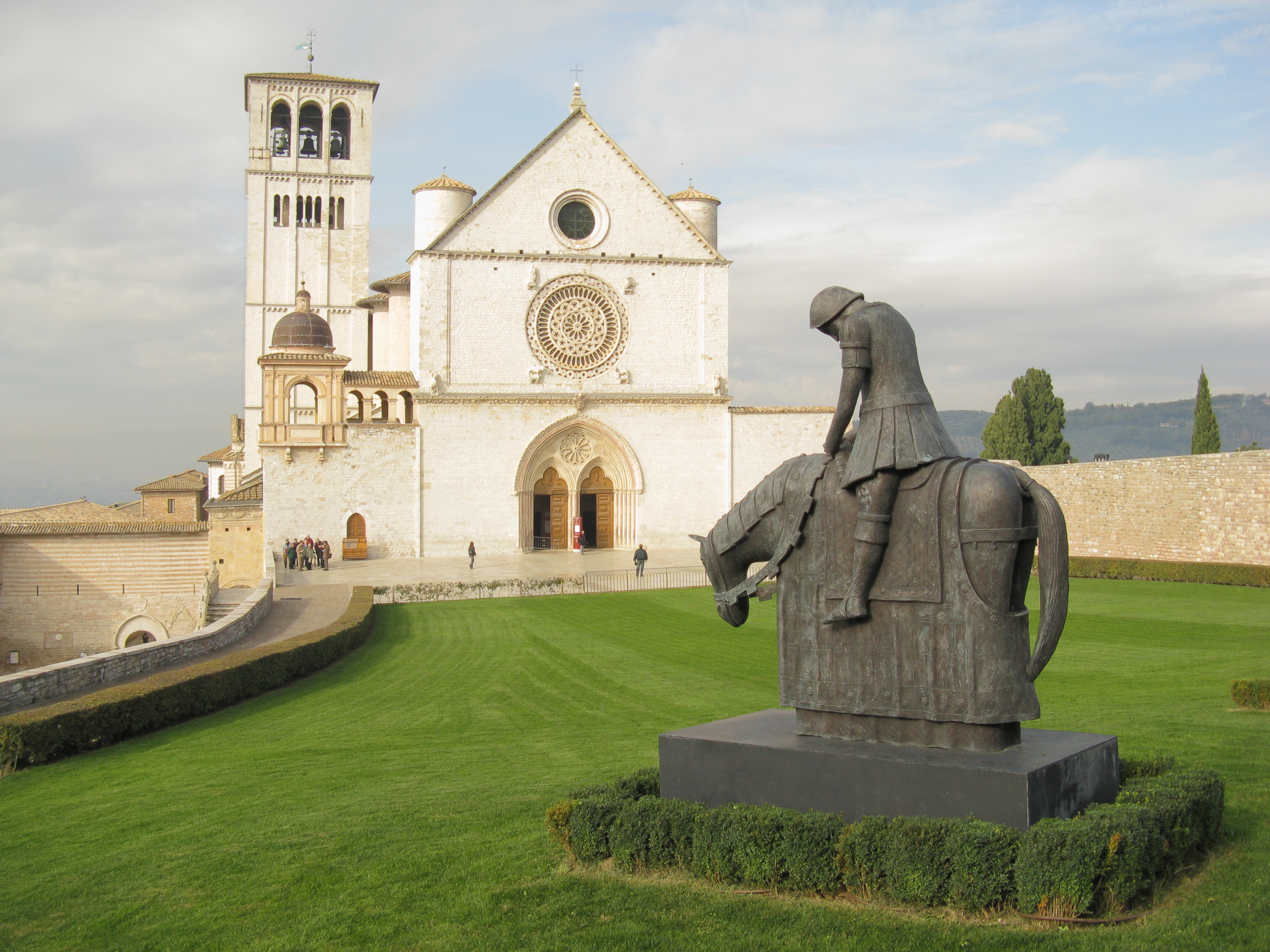
The celebrations of this centenary are not merely a liturgical observance; they are a global cultural phenomenon that draws millions to the Umbrian hills. But what are they seeking? Assisi, in this winter of 2026, presents itself as the beating heart of a spiritual geography that transcends the boundaries of the Catholic Church. The Basilica of San Francesco, perched on the Mount of Paradise, is not just a tomb; it is the cradle of Western humanism. It is here, in the physical space of the Upper and Lower Basilicas, that one can witness the exact moment the Middle Ages cracked open to let in the light of the modern world. This revolution is codified in the pigment of Giotto’s frescoes. Before Francis, art was Byzantine, hieratic, suspended in a golden ether that separated the divine from the human. The saints were distant, terrifying judges. Francis changed the theology, and consequently, he changed the art. He preached that God was not found in the abstract, but in the mud, in the leper, in the wolf, and in the sun. When Giotto was commissioned to paint the Legend of St. Francis, he had to invent a new visual language to match this new spiritual reality. He painted real bodies occupying real space; he painted tears, anger, and tenderness. He painted the blue sky of Italy instead of the gold of eternity. Standing before the Sermon to the Birds or the Renunciation of Worldly Goods, the visitor in 2026 is looking at the birth of the Renaissance. The “Made in Italy”—that unique synthesis of beauty and humanity—begins here, with a friar who taught the world that the divine is concealed within the ordinary.
This artistic legacy, however, is merely the aesthetic skin of a much deeper theological rupture. Francis was the first to democratize holiness. By writing the Canticle of the Creatures in the Umbrian vernacular rather than in Latin, he performed a revolutionary act of linguistic sovereignty. He declared that the language of the people was worthy of addressing the Creator. This was the first great work of Italian literature, anticipating Dante by decades. But the content was even more subversive than the form. By calling the sun his “brother” and the water his “sister,” Francis dismantled the hierarchy of being that placed man as the domineering master of creation. He proposed a “cosmic fraternity” that, eight centuries later, reads like the most advanced ecological manifesto. It is no coincidence that the current Pontiff, the first in history to take the name Francis, chose Laudato Si’ as the title of his encyclical on climate change. In 2026, as the world grapples with the tangible consequences of the climate crisis, the Franciscan message is no longer viewed as poetic mysticism but as an urgent survival strategy. The “Patron Saint of Ecology” did not just love nature; he recognized that human existence is inextricably woven into the fabric of the environment. His rejection of ownership, his insistence on sine proprio (living without property), challenges the very engine of consumer capitalism. He asks a question that resonates in the boardrooms of Milan and New York: can we be happy with less? The “Economy of Francesco,” a movement of young economists and entrepreneurs inspired by his ethos, suggests that the answer is yes, and that the future of global markets must be shaped by this logic of care rather than extraction.
Yet, the impact of the Poverello extends far beyond the borders of Christendom. One of the most poignant episodes of his life—and one most celebrated this year—is his journey to Egypt in 1219, during the height of the Fifth Crusade. While the armies of Europe were clashing with the forces of Islam, Francis crossed the enemy lines, unarmed, to meet with the Sultan al-Malik al-Kamil. History tells us they did not convert each other, but they listened to each other. In a time of holy war, Francis established a dialogue based on mutual respect and shared humanity. This encounter remains the cornerstone of interfaith dialogue today. The “Spirit of Assisi,” initiated by John Paul II in 1986 and carried forward by his successors, gathers leaders of all world religions in the city of the Saint to pray for peace. In a fractured 2026 world, where geopolitical tensions often wear the mask of religious conflict, the image of the friar and the Sultan sitting together is a powerful diplomatic blueprint. It transforms Assisi into a neutral ground, a global Geneva of the spirit, where the only weapon allowed is the open hand.
To truly grapple with the “Franciscan Enigma,” one must also look at the physical cost of his holiness. The year 2024 marked the centenary of the Stigmata, the moment on Mount La Verna when Francis received the wounds of Christ. This event serves as a reminder that his spirituality was not an intellectual exercise but a visceral experience. He was a man of extreme physical suffering, blinded by eye disease, racked by stomach ailments, yet he died singing. This embrace of “Sister Death” is perhaps the hardest lesson for the contemporary mind to accept. In a culture obsessed with extending life and avoiding pain at all costs, Francis teaches the art of letting go. His final days at the Porziuncola—the small chapel he restored with his own hands—were a masterclass in dying. He asked to be laid naked on the bare earth, returning to the dust from which he came, completing the cycle of perfect poverty. The 800th anniversary of this death is not a funeral; it is a celebration of this ultimate freedom.
The global reach of the Franciscan order today is a testament to the durability of his vision. From the favelas of Brazil to the universities of the United States, from the mission stations in Africa to the soup kitchens of Europe, the brown habit is a ubiquitous symbol of service. The Franciscans have been the custodians of the Holy Land for centuries, navigating the complex politics of the Middle East with a tenacity born of their founder. But the legacy is also secular. The definition of “human rights,” the concept of social welfare, the very idea that the poor possess a dignity that demands respect—all these pillars of Western civilization owe a debt to the movement started by the son of Pietro di Bernardone. He forced the medieval world to look down, into the gutter, and see the face of God.
As we walk through the stone streets of Assisi in 2026, the city feels less like a museum and more like a workshop. The construction cranes that have finally completed the restoration of the post-earthquake damage are gone, replaced by digital installations and art exhibits that reinterpret the Franciscan message for the AI generation. Yet, the stone remains. The pink limestone of Mount Subasio absorbs the winter light, glowing with that peculiar warmth that so enchanted Goethe and Proust. It is a place that demands silence. Amidst the noise of the Jubilee celebrations, the millions of pilgrims, and the high-level conferences, the true voice of Francis is found in the quiet corners: in the olive groves of San Damiano, in the wind that whips through the hermitage of the Carceri, in the dark, damp silence of the tomb in the Lower Basilica.
Eight hundred years is a long time in human history. Empires have risen and fallen, maps have been redrawn, and technologies have altered the very nature of our species. Yet, Francis remains. He remains because he embodies a longing that is impervious to time: the longing for authenticity. In a world of filters, avatars, and fake news, the naked saint represents the ultimate truth. He did not add to the world; he subtracted from it, peeling away the superfluous until only love remained. This is why, in 2026, we do not simply look back at him with nostalgia. We look at him with a sense of urgency. He is not behind us; in many ways, he is still ahead of us, walking barefoot on a path we are still struggling to find, beckoning us to drop our heavy burdens and follow him into the freedom of the sun. The “Made in Italy” that he represents is not a product, but a possibility: the possibility that a human being can be fully, gloriously, and dangerously free.
Discover more from The Ambassador
Subscribe to get the latest posts sent to your email.