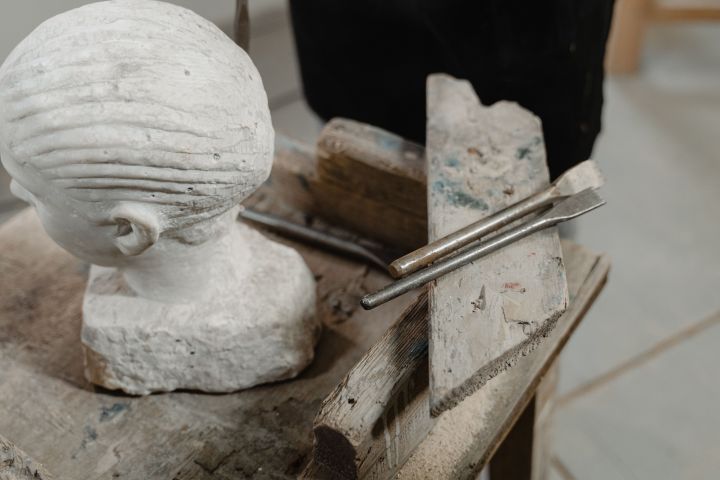


In the grey, damp heart of February, Italy undergoes a metamorphosis that is arguably the most ancient, subversive, and technically complex of its traditions, a collective ritual where the rigid social order is temporarily suspended and the entire peninsula transforms into an open-air theater of the grotesque and the magnificent. This is not merely a children’s party or a tourist attraction; it is a serious cultural affair rooted in the Roman Saturnalia, a time when chaos was permitted to reign so that order could eventually be restored, and nowhere is this organized chaos more evident than in Viareggio, the Tuscan coastal city that hosts the “Olympics of Carnival.” Here, inside the sixteen colossal hangars of the Cittadella del Carnevale, the “Maestri Carristi” (float masters) operate what are essentially shipyards of dreams, working year-round to build allegorical machines that defy the laws of physics. The art of Viareggio is the art of the “Carro Trionfale” taken to its extreme logical conclusion: these are not static displays but moving theaters rising over twenty meters high—taller than many buildings—and weighing up to forty tons, yet they move with the delicate fluidity of a dancer thanks to complex internal systems of levers, hydraulics, and animatronics that allow a giant papier-mâché politician to roll their eyes, open their mouth, or grasp at the crowd. The construction technique itself is a protected heritage; it begins with a clay model, which is then covered in plaster to create a negative mold, into which layers of humble newspaper and a specific flour-and-water glue are pressed by hand, drying to form a shell that is incredibly light yet tough enough to withstand the winter winds off the Tyrrhenian Sea. Once the “skin” is ready, it is mounted onto a skeleton of wood and steel, and the true magic begins: the satire. Viareggio’s floats are biting editorials in 3D, turning prime ministers, dictators, climate change deniers, and pop culture icons into monstrous caricatures that laugh at the absurdities of power; it is a place where art becomes a weapon of mass distraction, and where the “Burlamacco” mask reigns supreme over a sea of confetti. While Viareggio offers a cerebral, biting critique of the world, moving south to Sicily, the Carnival of Acireale offers a baroque explosion of sensory overload, claiming the title of the “Most Beautiful Carnival in Sicily” by merging the grotesque with the sublime. Here, the mastery lies in the illumination and the botany; as dusk falls, the allegorical floats do not just move, they ignite, transforming into moving cathedrals of thousands of LED lights that navigate the narrow, lava-stone streets of the baroque city center with mere millimeters to spare, a feat of driving precision that holds the breath of the entire crowd. Accompanying these giants are the unique Carri Infiorati (Flowered Floats), which abandon papier-mâché for a more fragile medium: fresh flowers. Tens of thousands of carnations and wildflowers are pinned one by one onto polystyrene shapes to create mosaic-like surfaces that smell of early spring, a fleeting art form that must be created at the last possible minute to ensure freshness. But the map of Italian Carnival is vast: it touches the archaic, terrifying wood masks of the Mamuthones in Sardinia, the violent “Battle of the Oranges” in Ivrea where tons of citrus are used as projectiles in a reenactment of a medieval revolt, and the refined, silent elegance of Venice, where the mask is not a caricature but a tool of anonymity. Yet, what truly unites the boot from the Alps to the Islands is the culinary anthropology of the “Fat Week.” The Carnival table is a celebration of the deep fryer, a ritual born from the agricultural necessity to consume all the lard, eggs, and sugar before the austere fasting period of Lent begins on Ash Wednesday. This creates a fascinating “Lipid Geography” of Italy, most famously represented by the crisp, ribbon-like strips of fried dough dusted with powdered sugar. The recipe is almost identical everywhere—flour, eggs, sugar, butter, and a splash of grappa or wine, rolled paper-thin and fried until golden and blistered—but the changing names reveal the intense regionalism of the Italian language: in Milan and Naples they are Chiacchiere (gossip), in Tuscany Cenci (rags), in Rome Frappe, in Liguria Bugie (lies), in Bologna Sfrappole, and in Piedmont Galani. They are the sound of Carnival, the crunch that breaks the silence. Beside these crunchy sheets sit the soft spheres of indulgence: the Castagnole of Central Italy, dense balls of dough often soaked in alchermes (giving them a bright red hue) or honey, and the majestic Frittelle Veneziane, which are the aristocracy of carnival sweets—airy clouds of yeast dough enriched with raisins and pine nuts, or filled with rich custard and zabaione, eaten while walking through the misty calli of the lagoon. Whether it is the biting satire of a forty-foot papier-mâché monster in Tuscany, the scent of thousands of carnations in Sicily, or the simple, greasy joy of a hot, sugar-coated frittella in a Venetian square, the Italian Carnival remains a vital, chaotic assertion of life, a necessary explosion of color, sugar, and anarchy that serves to exorcise the winter ghosts and prepare the spirit for the rebirth of spring.
Discover more from The Ambassador
Subscribe to get the latest posts sent to your email.