

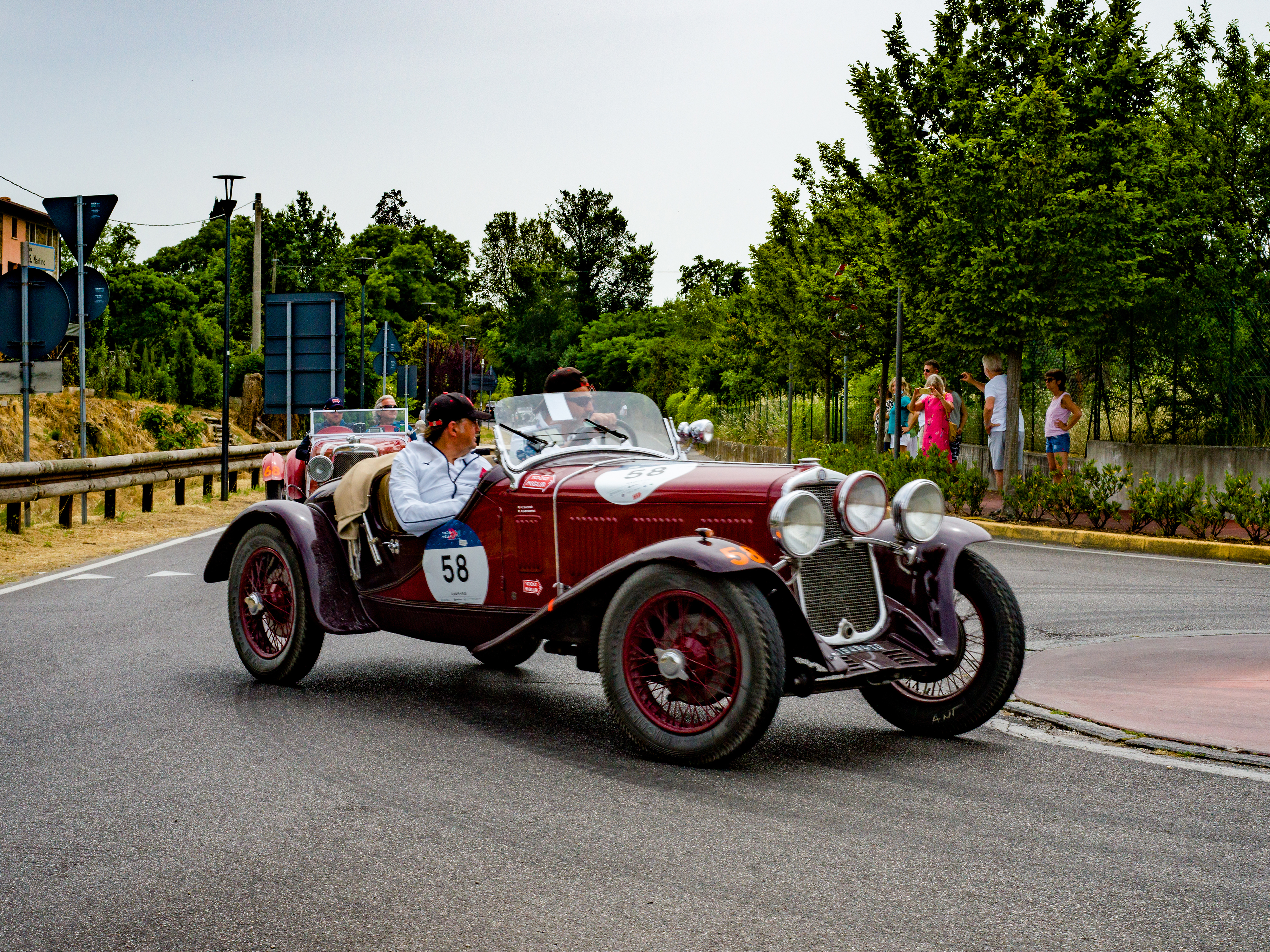
When the deafening, chest-rattling, and violently mechanical roar of over four hundred priceless, incredibly rare, and fiercely historic vintage combustion engines simultaneously, aggressively shatters the profound, deeply historic, and remarkably serene morning silence of Brescia’s stunning Piazza della Vittoria during the incredibly crisp, highly unpredictable, and wildly fragrant middle weeks of May, an absolute, undisputed, and globally worshipped titan of international motorsport spectacularly, violently awakens from its long winter hibernation. This is the legendary, fiercely uncompromising, and deeply mythological 1000 Miglia, proudly, accurately, and universally famously christened by the visionary, deeply stubborn, and fiercely competitive Enzo Ferrari himself as the absolute, undeniably “most beautiful race in the world,” a grueling, agonizingly uncomfortable, and deeply punishing thousand-mile endurance test that aggressively, beautifully carves its way down through the incredibly rugged, deeply shadowed spine of the Apennine mountains to the chaotic, monumental heart of Rome, only to violently, relentlessly turn back north toward the heavily industrialized, fiercely proud plains of Lombardy. To casually, lazily, or naively misinterpret this staggering, heavily romanticized, and deeply historic kinetic migration as a mere, polite, and leisurely springtime parade of highly polished, deeply pampered museum pieces safely driven by wealthy, entirely comfortable aristocrats is to fundamentally, unforgivably misunderstand the sheer, terrifying physical brutality, the profound, agonizing human exhaustion, and the wildly aggressive, deeply dangerous competitive spirit that absolutely, essentially defines the authentic, unbroken soul of this magnificent historical reenactment. When this spectacularly loud, deeply visceral, and fiercely kinetic phenomenon is aggressively stripped of its vibrant, highly distracting original colors—the iconic, blindingly bright Rosso Corsa of the Ferraris and Maseratis, or the deep, metallic silver of the dominant German Porsches and Mercedes-Benzes—and is instead forcibly, beautifully captured entirely through the stark, aggressively unforgiving, and profoundly dramatic lens of high-contrast black and white photography, the true, underlying mechanical and human grit of the event miraculously, spectacularly emerges with breathtaking, heartbreaking emotional clarity. The harsh, deeply romantic monochrome aesthetic violently, beautifully accentuates the pure, unadulterated, and fiercely aggressive architectural geometry of the legendary, hand-beaten aluminum aerodynamic hulls, highlighting the incredibly sharp, deeply evocative reflections of the surrounding ancient Roman aqueducts, towering, heavily shadowed medieval battlements, and deeply textured Renaissance facades as they violently, rapidly warp and slide across the meticulously polished, heavily curved, and fiercely hot metal hoods. Without the comforting, easily digestible distraction of bright, vivid springtime colors, the stark black and white imagery aggressively forces the viewer’s absolute, undivided attention directly onto the profound, deeply tangible, and fiercely tactile elements of the brutal race: the massive, violent, and entirely chaotic clouds of thick, choking white dust violently kicked up from the incredibly dry, heavily scarred, and highly unforgiving unpaved country dirt roads of Tuscany and Umbria; the incredibly sharp, blinding glint of the massive, highly complex, and heavily exposed spoked wire wheels spinning at terrifying, deeply unsafe velocities; and the deep, heavy, and remarkably viscous splatters of dark, boiling motor oil and thick, black road grime that inevitably, aggressively violently coat both the priceless, fiercely roaring machines and their deeply exhausted, highly exposed, and remarkably vulnerable human pilots. It is entirely within the cramped, deafening, and intensely claustrophobic confines of these tiny, highly dangerous, and entirely open-air vintage cockpits that the absolute, undeniable human drama of the 1000 Miglia is most powerfully, most viscerally, and most movingly captured by the monochrome lens; the stark shadows beautifully, ruthlessly carve out the deep, labyrinthine lines of sheer, agonizing physical exhaustion deeply etched into the unblinking, fiercely focused faces of the heavily vibrating drivers and their desperately navigating co-pilots, their wildly wind-whipped, intensely dirty features heavily framed by profoundly authentic, deeply uncomfortable, and tightly strapped vintage leather racing helmets and massive, heavily scratched, and intensely insect-splattered protective glass goggles. This profound, deeply moving, and undeniably powerful visual narrative is further, spectacularly intensified by the absolute, unparalleled, and fiercely passionate physical proximity of the millions of utterly devoted, wildly enthusiastic, and deeply knowledgeable local Italian spectators who continuously, aggressively line every single, perilous inch of the thousand-mile route, their dark, highly animated silhouettes violently leaning dangerously, enthusiastically over the flimsy, deeply inadequate protective hay bales to fiercely, joyously cheer on the roaring, sliding, and heavily drifting mechanical monsters as they violently navigate the incredibly tight, heavily cobbled, and profoundly ancient hairpin turns of the historic, deeply shadowed village centers. In these fleeting, aggressively loud, and highly chaotic moments, where the deafening, wildly misfiring, and profoundly mechanical screams of the heavily stressed vintage exhausts violently echo against the narrow, deeply scarred stone walls of profoundly ancient, fiercely silent medieval towns, the 1000 Miglia transcends the basic, utilitarian realm of mere historical automotive transportation to become a massive, living, breathing, and fiercely roaring monument, an absolute, undeniable, and deeply romantic triumph of pure, unadulterated Italian passion and raw, aggressive mechanical engineering beautifully, immortally suspended forever in the dramatic, deeply evocative, and utterly timeless poetry of black and white.
Discover more from The Ambassador
Subscribe to get the latest posts sent to your email.