


When one thinks of Italian design, iconic objects come to mind: an exquisitely tailored Poliform kitchen, a sculptural Cassina armchair, a perfectly proportioned B&B Italia sofa. These are symbols of taste and quality that grace luxury homes, hotels, and boardrooms from New York to Shanghai. But while their final destination is global, their soul is intensely local. The vast majority of these coveted objects are born in a remarkably small, densely populated patch of land in Lombardy, nestled between Milan and Lake Como: the Brianza furniture district. This is not merely a collection of factories; it is a unique and complex industrial ecosystem, a living organism where centuries-old craftsmanship and cutting-edge technology engage in a constant, fruitful dialogue. To understand Brianza is to understand the very heart of “Made in Italy.”
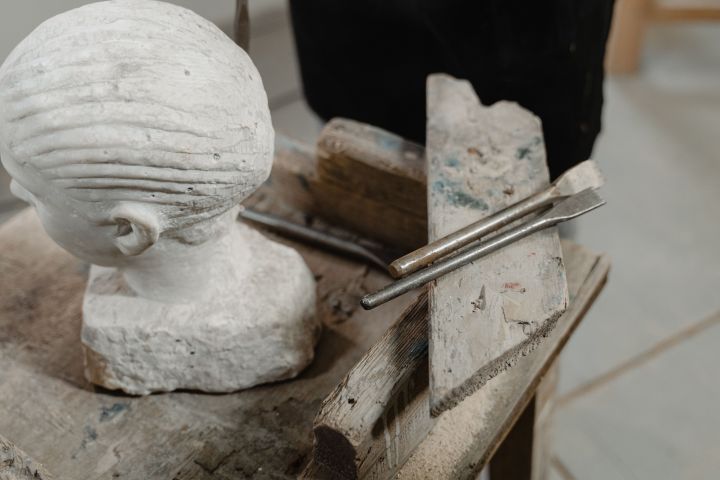
The district’s pre-eminence is not a recent phenomenon. Its roots sink deep into the 19th century, when the area became a hub for skilled woodworkers and cabinetmakers (ebanisti). These small, family-run workshops (botteghe) catered to the Milanese bourgeoisie and the aristocracy building lavish villas on the shores of Lake Como. A culture of saper fare—an untranslatable term for an intuitive, deeply ingrained knowledge of materials and techniques—was established and passed down from father to son. This was a world of manual skill, of patience, and of an uncompromising obsession with quality. A piece of furniture was not just an object; it was a testament to the family’s name and reputation.
The seismic shift occurred after World War II, during Italy’s boom economico, or economic miracle. A class of visionary Brianza entrepreneurs understood that the future lay not just in preserving craft, but in scaling it. They began an unprecedented collaboration with a new generation of architects and designers—figures like Gio Ponti, Vico Magistretti, and the Castiglioni brothers—who were eager to explore modern forms and new industrial processes. This was the moment the artisan’s workshop began its evolution into the design factory. Companies like Cassina, Poltrona Frau, and Azucena were pioneers, translating the bold ideas of designers into tangible, reproducible products without sacrificing the quality and attention to detail that were the hallmarks of their artisanal heritage. This unique alchemy between creative vision (the designer) and material expertise (the manufacturer) became the secret formula of the “Brianza model.”
Today, the district’s structure is its greatest strength. It is not dominated by a few monolithic corporations but is, instead, a dense and dynamic network of thousands of small, medium, and large companies, each hyper-specialized in a particular phase of production. A single high-end sofa is a collaborative masterpiece. A renowned brand like Minotti or Flexform might design the product and manage the final assembly and branding, but its creation relies on a vast, geographically concentrated supply chain. Within a few square kilometers, one company specializes in crafting the seasoned hardwood frames, another in forging the polished metal feet, a third in moulding the differentiated-density polyurethane foam, and a fourth, often a small family business, in the highly skilled art of cutting and stitching the premium leather or fabric upholstery.
This decentralized model fosters an environment of intense competition and constant innovation. Every supplier is a master of their specific craft, pushing the boundaries of what is possible. It also provides incredible flexibility, allowing brands to produce a wide variety of complex designs in relatively small batches. This system, studied by economists as a textbook example of an “industrial district,” is a fusion of craft-based quality and industrial efficiency that is almost impossible to replicate elsewhere. It is a collective intelligence, a shared pool of knowledge and skill that makes the entire district more than the sum of its parts.
The geographical proximity to Milan is the district’s other key strategic advantage. Every April, the Salone del Mobile, the world’s most important furniture fair, transforms Milan into the global capital of design. This is the ultimate showcase, the annual culmination of a year’s worth of research, development, and production in the workshops of Brianza. The fair is the district’s global stage, the moment it presents its latest innovations to an audience of architects, buyers, and journalists from every continent, setting the trends for the entire industry.
In the 21st century, the Brianza district faces new challenges: the pressure of global competition from lower-cost manufacturers, the demographic challenge of finding a new generation of skilled artisans, and the urgent need to embrace sustainability. Yet, the district is adapting with the same pragmatism and ingenuity that has always defined it. Companies are investing heavily in technology, using CNC routers and robotic arms to perform repetitive tasks with precision, freeing up human artisans to focus on the complex finishing and quality control that a machine cannot replicate. There is a growing focus on sustainable innovation, from the use of certified woods and recycled materials to the reduction of waste and emissions. The “Made in Brianza” label is being reinforced not just as a mark of aesthetic excellence, but as a guarantee of ethical and sustainable production. It is a testament to the fact that true luxury today encompasses not only how a product looks and feels, but also how it is made.
Discover more from The Ambassador
Subscribe to get the latest posts sent to your email.