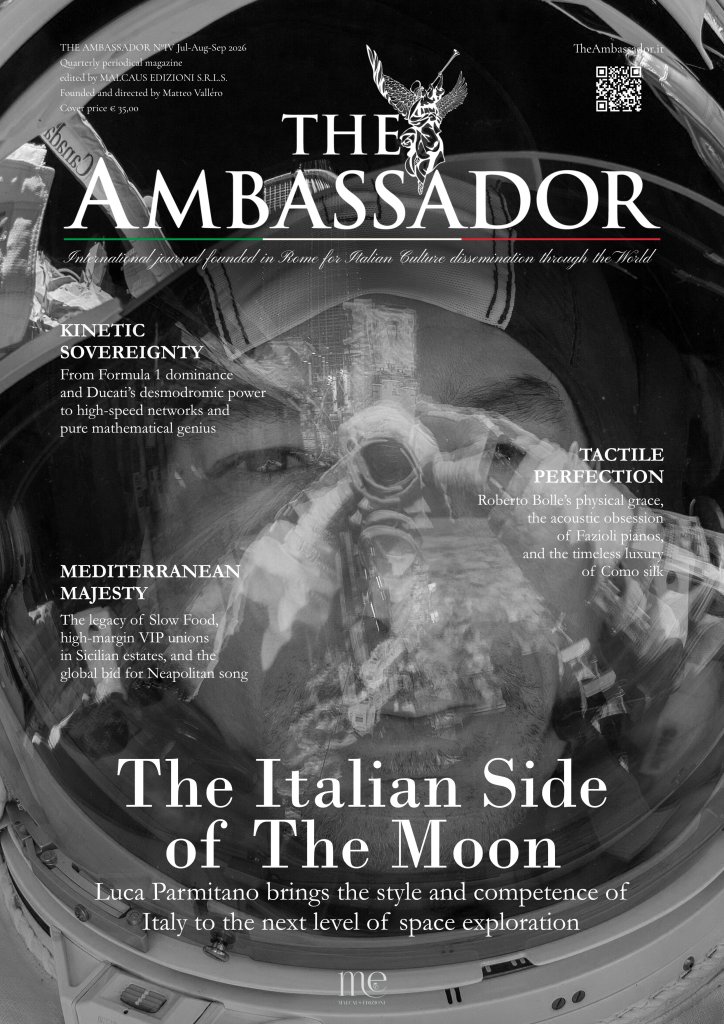


To comprehend the monumental gravity of the upcoming Artemis III mission, currently scheduled for launch in the second half of 2027, one must completely discard the romanticized, highly nostalgic narratives of twentieth-century space exploration. The modern theater of orbital mechanics is a fiercely hyper-capitalized, geopolitically charged arena where absolute psychological resilience and microscopic engineering precision dictate the survival of both multi-billion-dollar sovereign investments and fragile human life. It is within this stark, deeply unforgiving vacuum that the Italian aerospace sector has systematically consolidated an unassailable monopoly on intellectual and operational capital. This absolute supremacy was definitively cemented on June 9, 2026, when NASA and the European Space Agency (ESA) formally announced Colonel Luca Parmitano as the designated pilot for Artemis III. Parmitano, a decorated officer of the Italian Air Force, will join NASA commander Randy Bresnik and mission specialists Frank Rubio and Andre Douglas. He does not serve as a mere passenger on this historic endeavor; he represents the indispensable, highly calibrated human architecture tasked with executing the most complex, high-risk kinetic maneuvers of rendezvous and docking across the entire flight profile.
The selection of Parmitano over a vast pool of international candidates is fundamentally rooted in a deeply specialized, fiercely rigorous background forged across decades of elite military and experimental training. Having graduated with a degree in Political Science from the University of Naples Federico II and completed his initial officer training at the Accademia Aeronautica in Pozzuoli with the Sparviero IV class, the Sicilian officer refined his piloting capabilities in the United States at Sheppard Air Force Base before flying AMX combat aircraft with the 32nd Wing at Amendola. It was during this operational period that his name entered global aviation history: on May 11, 2005, while navigating a high-speed training sortie over the English Channel, his aircraft suffered a violent birdstrike against a large stork, shattering the canopy and destroying primary flight displays. Under extreme emergency conditions, battered by severe aerodynamic pressure and deprived of functional radio communications, Parmitano refused to eject, expertly executing a manual approach to safely land the crippled jet—a heroic feat that earned him the Silver Medal for Aeronautical Valour.
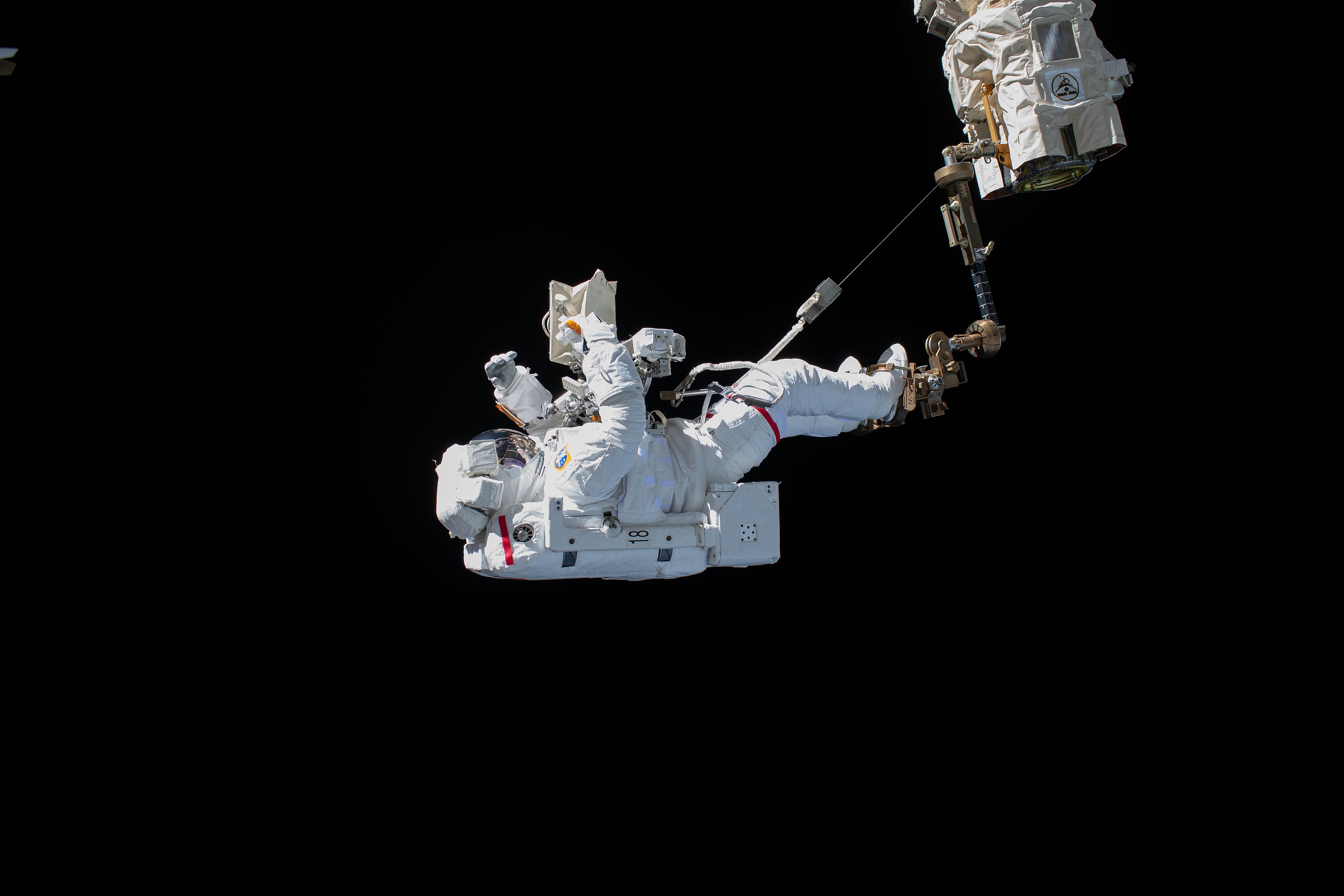
Subsequently qualifying as an experimental test pilot at the world-renowned EPNER academy in Istres, France, and obtaining a Master’s degree in Experimental Flight Engineering in Toulouse, Parmitano cultivated the exact operational mindset required to test and control unproven aerospace vehicles. This unrelenting psychological conditioning was famously demonstrated on July 16, 2013, during his second extravehicular activity (EVA) outside the International Space Station during the Volare mission. When a catastrophic mechanical failure in his spacesuit’s cooling system rapidly flooded his helmet with over one and a half liters of water, blinding him, severing audio links, and severely obstructing his airway, Parmitano maintained absolute composure. Relying purely on physical memory and spatial instinct, he executed a blind, flawless retreat to the airlock, saving his own life while maintaining a heart rate that never exceeded a remarkably calm eighty-five beats per minute. With 366 cumulative days logged in orbit, six complex spacewalks, and a historic tenure as the first Italian commander of the ISS during Expedition 61 on the Beyond mission, Parmitano stands today as the absolute zenith of global operational command.
Strategic Architecture of the New Lunar Race
From a rigorous macroeconomic, logistical, and geopolitical stance, the architecture of Artemis III represents one of the most critical structural junctures in modern technological history. Contrary to simplified public perceptions, the 2027 mission does not intend an immediate crewed lunar landing—an objective reserved for the subsequent Artemis IV in 2028—but operates as a foundational, highly complex orbital test flight in low Earth orbit. Parmitano’s primary mandate as pilot is to physically test and validate the complex rendezvous and docking procedures between the Orion spacecraft and two heavily modified commercial human landing systems: Blue Origin’s Blue Moon Mark 2 and SpaceX’s massive 50-meter Moonship variant of the Starship.
This operational imperative is amplified by recent supply-chain volatility and high-profile testing setbacks across the private space sector. On May 28, 2026, during a static engine fire test, a Blue Origin New Glenn heavy launcher exploded on pad LC-36 at Cape Canaveral, collapsing the infrastructure and destroying its lightning tower. With pad repairs estimated to extend potentially into 2028, the program has been forced to evaluate alternative heavy-lift solutions to insert the Blue Moon lander into orbit. Concurrently, SpaceX faces tight engineering timelines to demonstrate orbital cryogenic propellant transfer between two Starships—an unprecedented procedure required to enable the Moonship to reach lunar distance.
In this volatile ecosystem, the selection of an ESA pilot from Italy represents a masterstroke of institutional diplomacy and a stark validation of the nation’s financial weight. Italy, serving as President of the ESA Ministerial Council and holding the position of second-largest contributor to European human spaceflight programs, recently executed a landmark bilateral agreement between the Italian Space Agency (ASI) and NASA in Washington to design and manufacture the lunar habitation module—the primary living infrastructure for future surface crews. This industrial investment directly counters intense geopolitical competition from China, whose lunar program advances with methodical precision toward a targeted 2030 crewed landing. Facing these strategic stakes, Western space agencies cannot afford operational errors, entrusting the critical flight interface to the proven discipline of the Italian commander. Furthermore, as artificial intelligence continues to pervade aerospace automation, Parmitano actively defends the irreplaceable necessity of human judgment: while machine algorithms can identify anomalies and process raw data, the ultimate strategic command and critical decision-making in high-risk environments must remain an exclusively human domain capable of multidimensional reasoning.
Sartorial Aerospace Engineering: The Prada x Axiom Monopoly
The absolute supremacy of Italian human capital is flawlessly mirrored by an equally disruptive, highly profitable revolution in material science and luxury manufacturing. On June 8, 2026 (following a high-profile premiere in New York and initial unveiling at the International Astronautical Congress in Milan), the Prada Group and American aerospace leader Axiom Space officially presented the Liquid Cooling and Ventilation Garment (LCVG). This high-performance interior layer forms the foundational core of the Axiom Extravehicular Mobility Unit (AxEMU) spacesuit, engineered specifically to protect astronauts during surface operations at the lunar South Pole during Artemis IV in 2028.
To evaluate Prada’s integration into aerospace engineering as a mere branding venture is to completely misjudge the commercial and technological depth of the alliance. The Milanese luxury powerhouse systematically translated its advanced textile engineering, 3D modeling precision, and proprietary yarn development directly into the most hostile environment known to science. The LCVG garment represents a masterpiece of biomechanical design, integrating a specialized circulatory system that active channels cool fluid and fresh oxygen across the astronaut’s body while removing exhaled carbon dioxide and managing extreme thermal shifts during eight-hour spacewalks.
As emphasized by Lorenzo Bertelli, Chief Marketing Officer of the Prada Group, this engineering triumph represents the direct evolutionary result of advanced material research initiated in the 1990s for the extreme maritime environment of the Luna Rossa America’s Cup syndicate. By transitioning seamlessly from oceanic endurance to space vacuum protection, Prada has secured an absolute Italian monopoly on off-world material science. This entry of high-margin luxury conglomerates into the expanding space economy—a multi-hundred-billion-dollar domain attracting global wealth via orbital tourism and private spaceflight initiatives by SpaceX, Blue Origin, and Virgin Galactic—positions the ‘Made in Italy’ ecosystem at the primary node of future extraterrestrial infrastructure.
Capitalizing the Frontier: The Paradigm of Future Made in Italy
The cover story of this issue of The Ambassador delivers an authoritative, uncompromising portrait of contemporary Italy. The seamless convergence between the military flight discipline of an astronaut piloting a planetary vehicle and the high-tech protective suits woven in Milanese laboratories thoroughly dismantles passive, outdated perceptions of the nation’s capabilities.
Italy does not merely preserve the monuments of its historic past; it stands as a capitalized financial, technological, and intellectual fortress capable of dictating the standards of off-world human expansion. Through strategic state agency investments, the elite athletic and scientific conditioning of its commanders, and the visionary risk-taking of its industrial champions, the nation proves that true ‘Made in Italy’ excellence is a dynamic matrix of continuous innovation. It is an enduring model where creative vision and uncompromising engineering logic merge to dominate the furthest horizons of human knowledge and global trade, guaranteeing that the definitive milestones of planetary exploration will forever bear the indelible mark of absolute Italian perfection.
Discover more from The Ambassador
Subscribe to get the latest posts sent to your email.