

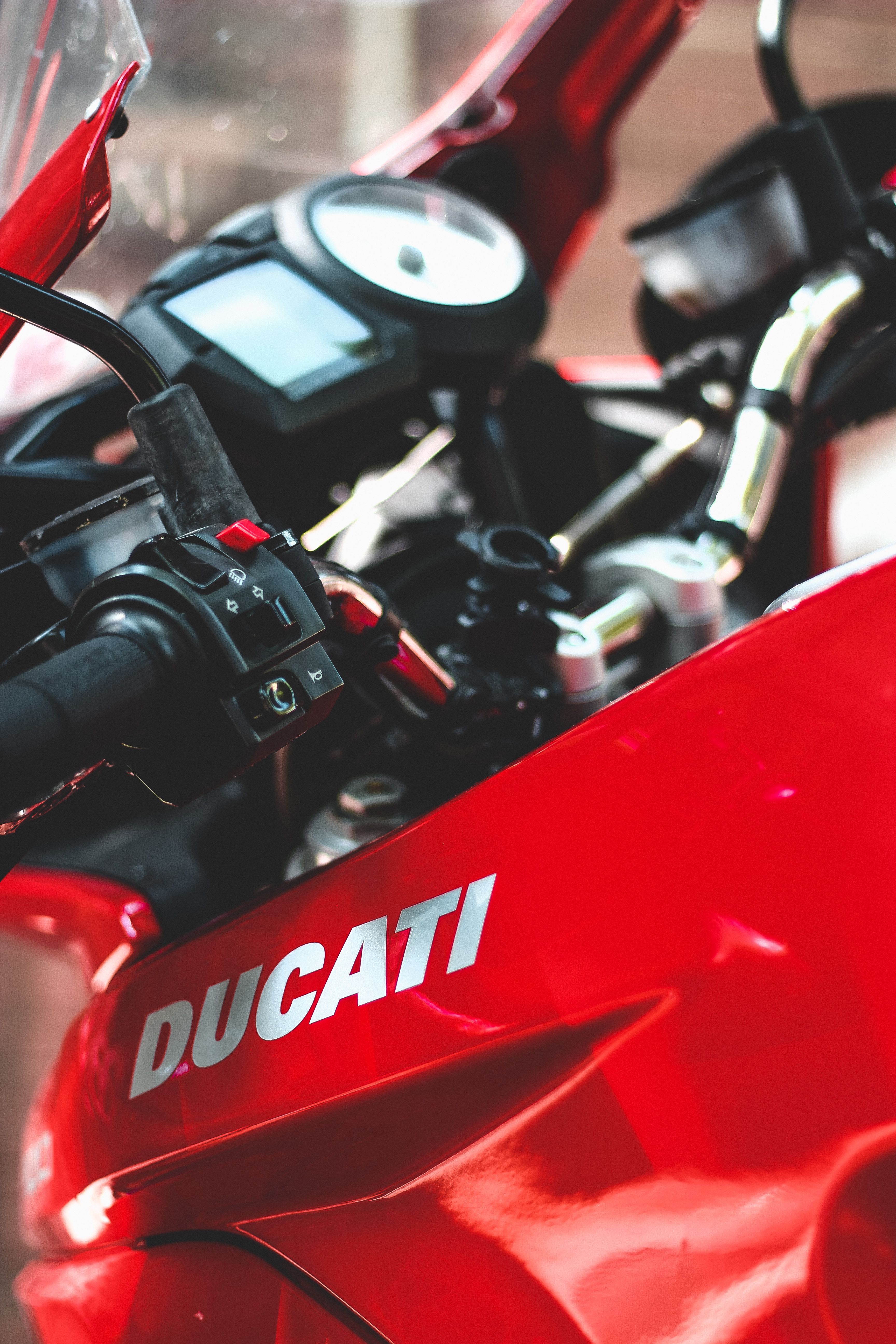
Within the fiercely competitive, highly integrated industrial cluster of Emilia-Romagna’s legendary Motor Valley, the urban enclave of Borgo Panigale operates as a sacred, high-security temple of thermodynamic precision and mechanical velocity. Ducati stands entirely apart from mass-market corporate automotive manufacturers, functioning instead as a elite, high-margin engineering laboratory that systematically dictates the absolute zenith of two-wheeled performance and lifestyle prestige. Stripped of the iconic, highly saturated scarlet pigments that traditionally define its racing pedigree on the world’s television networks, the uncompromising lens of contemporary monochrome photography exposes the raw, brutal skeletal truth of these machines. It is a visual landscape of absolute structural clarity and clinical perfection, where the gleaming, light-reflecting surfaces of CNC-machined aluminum components, ultra-lightweight titanium exhausts, and woven carbon fiber fairings violently collide with the deep, ink-black shadows of the assembly lines. This is a universe governed by the strict, unyielding laws of fluid dynamics, materials science, and advanced telemetry, demonstrating to the international financial elite how an unbreakable dedication to mechanical perfection can successfully transform a manufacturing facility into an unassailable global fortress of intellectual property and design authority.
Desmodromic Invulnerability and Material Mastery
The absolute, undisputed technological heart of Ducati’s global supremacy resides within the mathematical genius of the Desmodromic valve actuation system—a magnificent, highly non-conformist piece of mechanical engineering that completely eliminates conventional valve springs in favor of a dual-cam, positive-closure architecture. Originally engineered to structural perfection by the legendary Fabio Taglioni, this sophisticated system forces the engine’s intake and exhaust valves to be mechanically driven both open and closed with absolute, flawless synchronization, completely eliminating the catastrophic phenomenon of valve float at terrifyingly high rotational frequencies exceeding sixteen thousand revolutions per minute. Through the dramatic chiaroscuro perspective of the Borgo Panigale racing division, this internal mechanical ballet emerges as a monument of pure material intellect. High-intensity laboratory spotlights pierce the clinical, dust-free atmosphere, casting long, razor-sharp geometric shadows across the intricate gear trains, complex camshaft profiles, and precision-ground rocker arms. Every single metallic component is micro-polished to near-molecular smoothness, reducing internal friction parameters to absolute minimums and transforming raw kinetic explosions into a perfectly controlled, highly predictable wave of devastating forward momentum that forcefully commands the asphalt of the world’s premier racing circuits.
This obsessive, almost monastic dedication to structural weight reduction and structural rigidity requires an uncompromising mastery over contemporary metallurgical science. Master engine builders sitting at heavy, dust-free workbenches manipulate advanced magnesium casings, specialized steel trellis subframes, and load-bearing structural engine blocks that function as the primary architectural anchor of the entire motorcycle chassis. The physical assembly process represents a magnificent, deeply silent dialogue between human tactile intuition and hyper-precise robotic torque-calibrators, ensuring that every single thread, fast-acting sensor, and micro-engineered bearing is secured to absolute, mathematically invulnerable specifications. There is absolutely no space for ornamental artifice or decorative superficiality within this manufacturing matrix; every single line, cooling fin, and computational wiring harness is ruthlessly optimized for aerodynamic packaging and thermal efficiency, resulting in a product that represents the absolute, unsentimental marriage of heavy industrial capability and hyper-delicate material science.
Macroeconomics of the Motor Valley and Corporate Synergy
From a rigorous corporate governance and macroeconomic perspective, Ducati’s operational model serves as a spectacular global benchmark for asset optimization, brand equity preservation, and high-margin luxury positioning. Operating within the highly integrated ecosystem of the Audi Group’s progressive luxury brand umbrella, the company has masterfully preserved its complete, absolute design and engineering sovereignty while simultaneously capitalizing on immense global corporate procurement synergies, advanced supply chain logistics, and high-stakes financial framework stabilities. By strictly and deliberately restricting annual volumetric output to maintain absolute product scarcity, the enterprise has insulated its global dealer network from the highly volatile, destructive price-compression cycles that routinely devastate generic, high-volume mass motorcycle manufacturers in Asia and North America.
Consequently, the commercialization of these high-performance Italian masterpieces generates extraordinary corporate margins, positioning products like the Panigale V4 and the ultra-exclusive Superleggera series not as recreational vehicles, but as highly liquid, rapidly appreciating luxury capital assets sought after by ultra-high-net-worth individuals, elite international collectors, and sovereign wealth syndicates across the globe. The immense financial revenues generated by these premium consumer segments are immediately, aggressively reinvested directly into the company’s multi-million-euro racing research and development programs, creating a highly efficient, self-sustaining circular economic matrix. The technological breakthroughs achieved on the grueling proving grounds of MotoGP and World Superbike championships—ranging from complex predictive traction control algorithms to radical aerodynamic winglet profiles—are seamlessly, rapidly transferred directly into the commercial production lines, proving unequivocally to global institutional investors that elite motorsport victory is a highly profitable, forward-looking strategy for long-term corporate asset appreciation and global nation branding.
Aerodynamic Architecture and the Sculpting of Velocity
The final, highly protected phase of Ducati’s design methodology involves a relentless, deeply analytical warfare against atmospheric drag, executed within the highly secure, cavernous environments of specialized aerospace wind tunnels. Contemporary motorcycle design has evolved far beyond the boundaries of traditional ergonomics, transitioning into the radical domain of active fluid dynamics where the exterior carbon-fiber bodywork is engineered to actively manipulate the surrounding air columns, generating massive amounts of aerodynamic downforce to stabilize the chassis under extreme acceleration and high-velocity cornering maneuvers. The monochrome visual narrative captures these aerodynamic silhouettes as continuous, highly fluid geometric sculptures that seamlessly slice through the air with terrifying efficiency. Sharp, slanting lasers illuminate the invisible paths of advanced particulate air streams, carving out the exact geometric lines of the massive front fairing winglets and rear stabilizers that press the machine violently into the ground.
The surface finish of these elite machines represents an absolute refusal to compromise on tactile prestige, showcasing a raw, unadulterated display of technical carbon weave patterns that catch the ambient light with a deep, multi-layered visual complexity. When these monolithic structures are unleashed across international circuits or displayed within the minimalist, concrete-drenched showrooms of Milan, London, and New York, they command an immediate, unquestionable authority over the surrounding architectural volume. This is the enduring, fiercely powerful legacy that The Ambassador proudly delivers to its universal, highly sophisticated readership: an exclusive initiation into an Italy that does not merely design beautiful objects, but possesses the raw computational muscle, the heavy industrial capability, and the strategic financial vision to completely master the physical laws of velocity, permanently inviting the international cultural and financial elite to discover a territory where beauty is an indestructible, high-margin monument to human intelligence.
Discover more from The Ambassador
Subscribe to get the latest posts sent to your email.