

The ability to bring different disciplines and national experiences into a shared inquiry lies at the heart of the project promoted and coordinated by Professor Fabrizio Giulimondi. Through his work connecting scholars and institutions across Europe, the dean of the College of Legal Sciences in Lublin at the Warsaw-based Nicolaus Copernicus Superior School has helped build a forum for examining one of the most consequential questions facing public institutions: how to use artificial intelligence while preserving human judgment and responsibility.
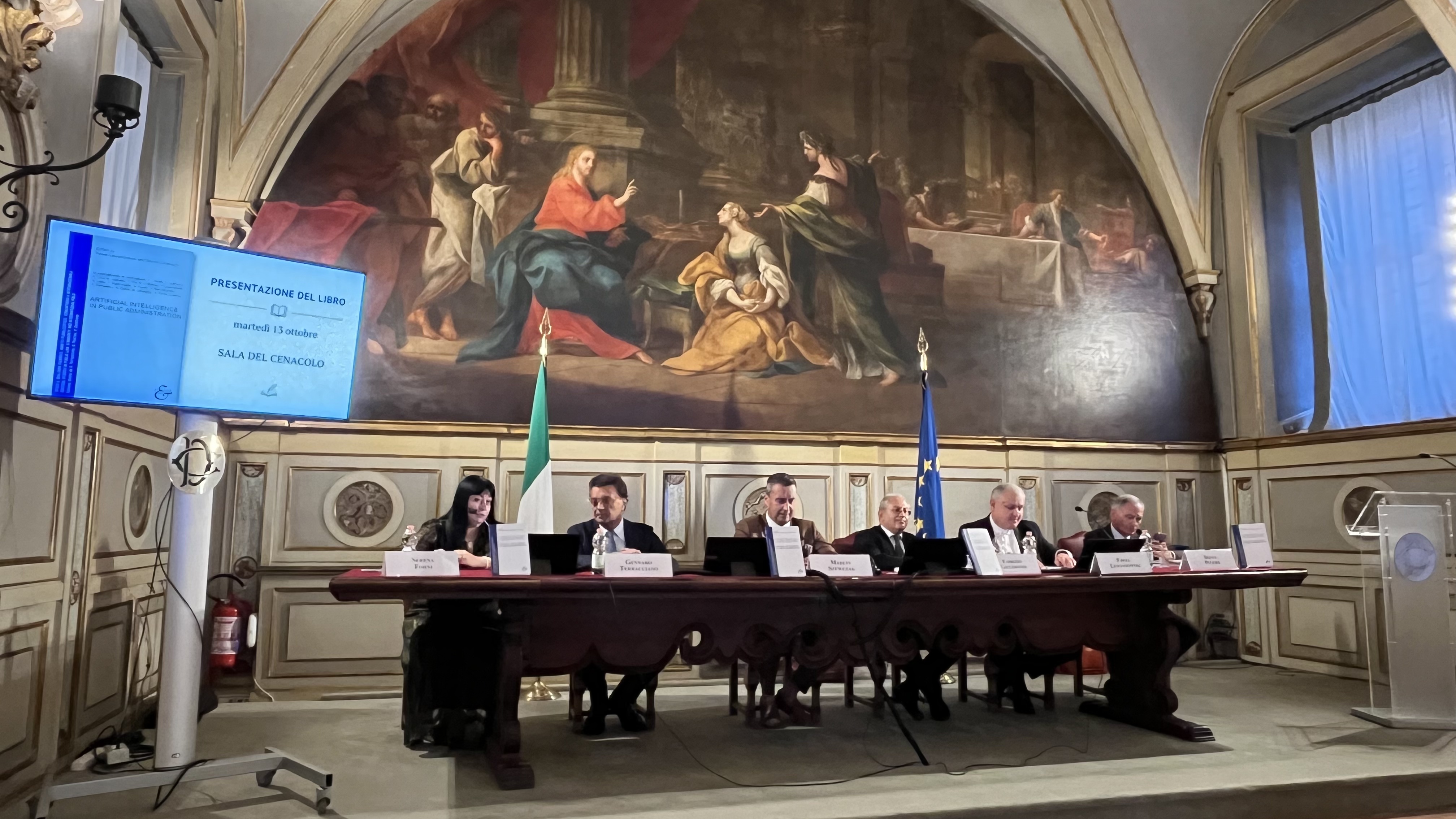
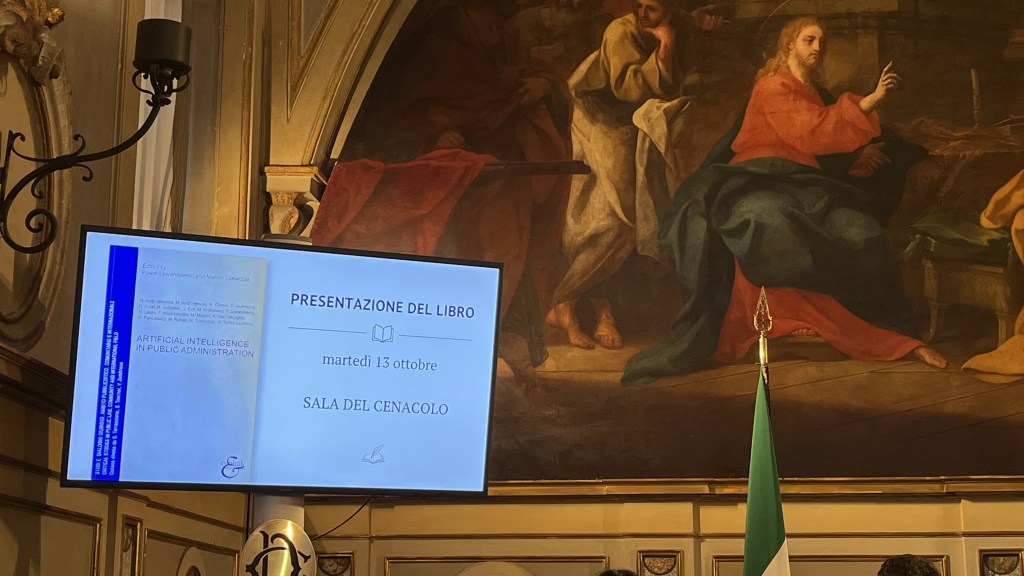
That commitment took concrete form at the presentation of Artificial Intelligence in Public Administration, held on October 13, 2026, in the Sala del Cenacolo at the Chamber of Deputies’ Vicolo Valdina complex in Rome. Published by Eurilink University Press and edited by Paweł Lewandowski and Marcin Szewczak, the volume reflects the international and multidisciplinary dialogue that Giulimondi has worked to foster, bringing legal analysis into conversation with philosophy, ethics, education and professional practice.
Italy, Poland and Ukraine were central to the discussion, within a broader network of European contributions. Giulimondi’s role as promoter and coordinator gave these exchanges a common purpose: to examine how technological change affects the relationship between public institutions and the people they serve. Who remains accountable when an algorithm influences a public decision? What becomes of professional competence when officials increasingly rely on answers they have not developed themselves? These questions connected the afternoon’s different perspectives.
Public Decisions Must Remain Accountable
The discussion was moderated by Serena Forni, a philosopher and director of Domus Europa, a center for European cooperation with a particular focus on relations between Italy and Ukraine. Forni also contributed throughout the proceedings, drawing connections between the speakers’ arguments and the human purposes of public administration.
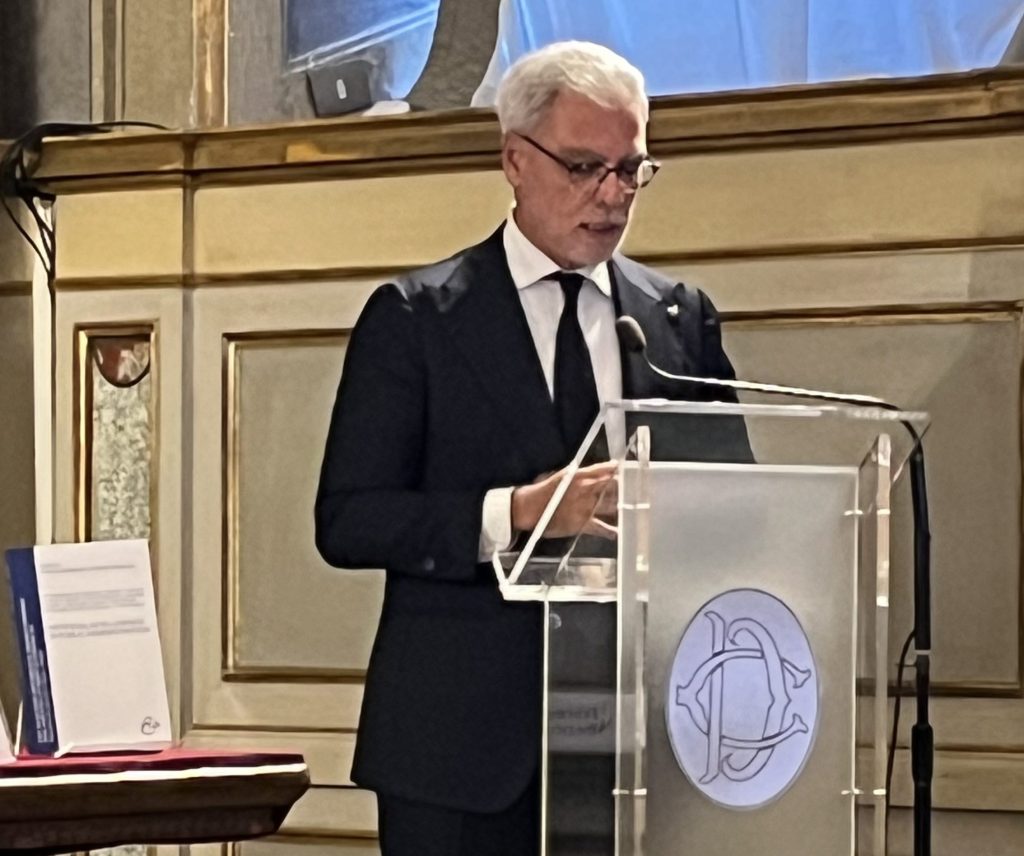
Opening the institutional addresses, Federico Mollicone MP, chair of the Chamber’s Culture, Science and Education Committee, emphasized that introducing AI into government changes the relationship between public power and the individual. Efficiency must remain compatible with transparency, protection of personal data and the possibility of scrutinizing decisions. An opaque system, he argued, must not become a barrier between citizens and the administration.
Forni then read a message from Fabio Rampelli MP, vice president of the Chamber of Deputies, who was unable to attend. His greeting stressed digital sovereignty, constitutional safeguards and human responsibility for decisions.
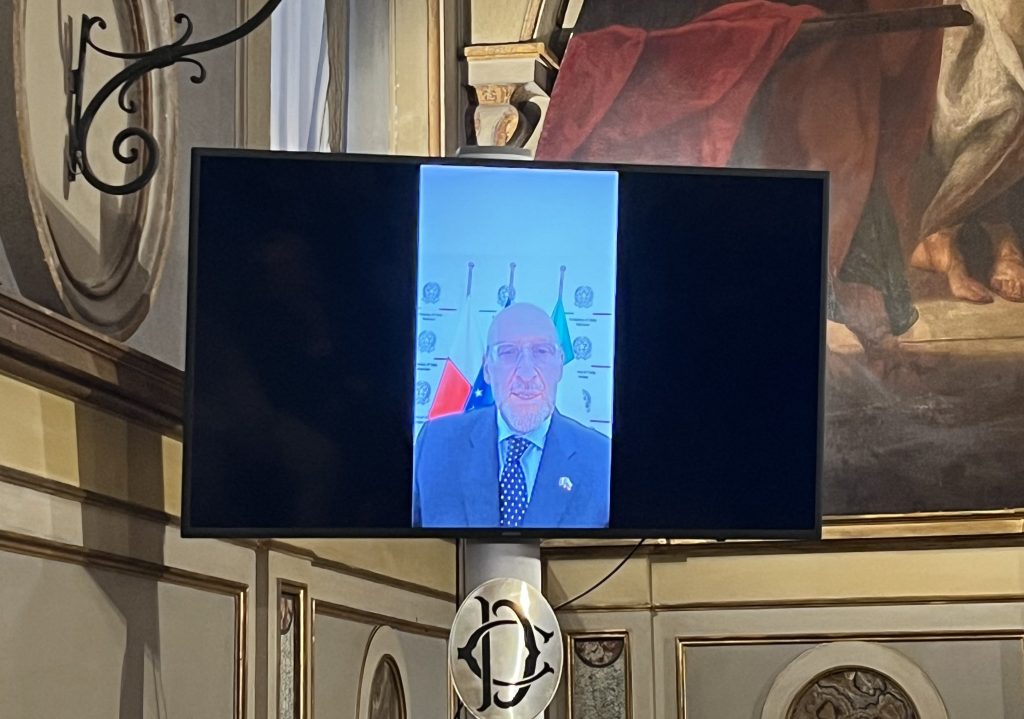
A video message followed from Ambassador Luca Franchetti Pardo, Italy’s ambassador to Poland. He placed the publication within Italian-Polish scholarly cooperation and recalled that public institutions must be judged by their impartiality and transparency as well as their effectiveness. The quality of their decisions, he observed, directly affects people’s lives.
Terracciano: Training Officials to Exercise Judgment

The first academic speaker, Professor and lawyer Gennaro Terracciano, President of Italy’s National School of Administration (SNA) and co-director of the legal studies series in which the volume appears, described the book as the outcome of an ongoing international exchange, including discussions with Polish colleagues. His central concern was the relationship between decision-making authority and personal responsibility: the public official entrusted with a power must remain answerable for its exercise.
For the SNA, that principle creates an extensive training challenge. AI cannot be treated as a subject reserved for technical specialists when its applications are entering everyday administrative work. Officials need the competence to assess outputs, recognize unreliable information and understand whether a result serves the public interest.
“We must first master the tool,” Terracciano said. His argument extended beyond learning to operate software: training must equip people to question it.
Giulimondi: What Becomes of Merit?

Professor Fabrizio Giulimondi, dean of the College of Legal Sciences in Lublin at the Warsaw-based Nicolaus Copernicus Superior School, developed the discussion around merit, learning and intellectual independence.
His starting point was the confidence that conversational systems can inspire by imitating human interaction. A persuasive answer may encourage users to trust a system before they have checked what it says. In public administration, that tendency raises questions about both the reliability of decisions and the competence of those responsible for them.
Giulimondi connected this concern to competitive examinations, a central route into Italian public employment. If writing, analysis and problem-solving are increasingly delegated to AI, what should selection procedures measure? How can institutions distinguish individual preparation from a machine-assisted performance?
He also defended the place of error in education and research. Recalling his advice to doctoral students, he argued that finding an immediate solution is different from learning how to investigate a problem. Mistakes, revision and sustained effort help develop the abilities that a researcher or public official will later need.
His warning concerned the possibility that repeated delegation could weaken the very judgment that human oversight is supposed to guarantee. Forni took up that point, linking the loss of independent thought to the avoidance of responsibility in public life.
Lewandowski: An International and Multidisciplinary Project
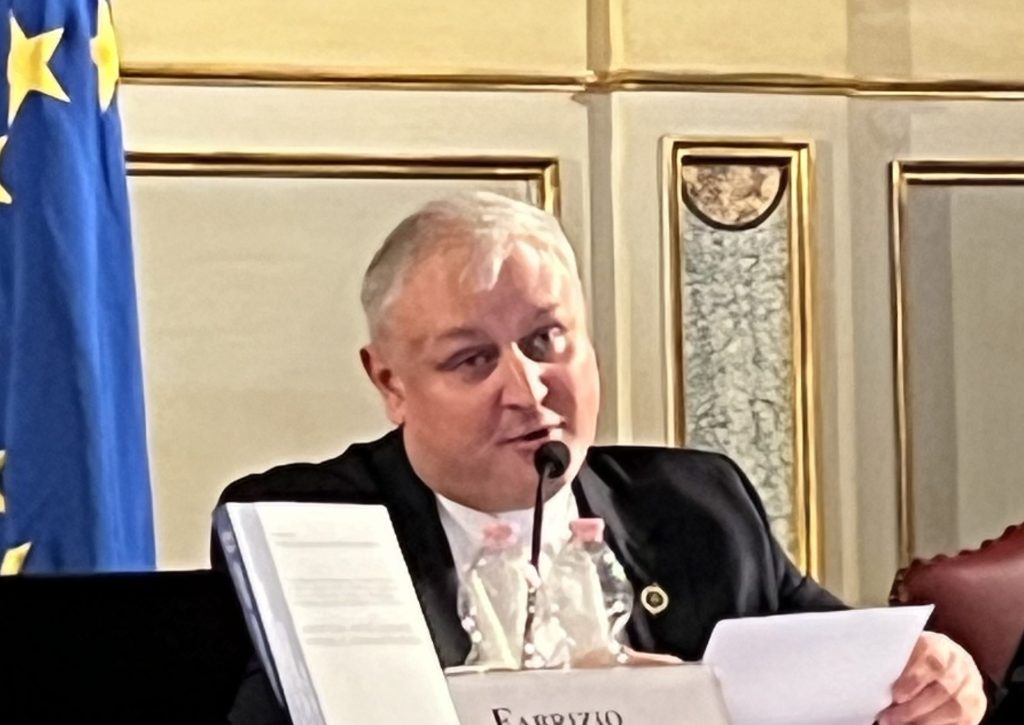
The Reverend Dr. Paweł Lewandowski, a Catholic priest and legal scholar, is vice dean of the College of Legal Sciences in Lublin at the Warsaw-based Nicolaus Copernicus Superior School and teaches at the John Paul II Catholic University of Lublin. As co-editor, he explained the volume’s structure and the collaboration behind it.
The book moves from AI’s theoretical and legal foundations to the automation of administrative decisions and experiences in different national settings. Lewandowski highlighted contributions representing Italy, Poland, Spain, Ukraine, Slovakia and Belgium.
That breadth allows different legal traditions to enter the same discussion. The multidisciplinary approach likewise connects questions of institutional organization and technical efficiency with discrimination, interpersonal relationships, human dignity and the common good.
Lewandowski’s account gave concrete form to the event’s international outlook: researchers working across borders were comparing how administrations change, which safeguards they need and what their experience may offer to others.
Szewczak: Different National Approaches Within Europe
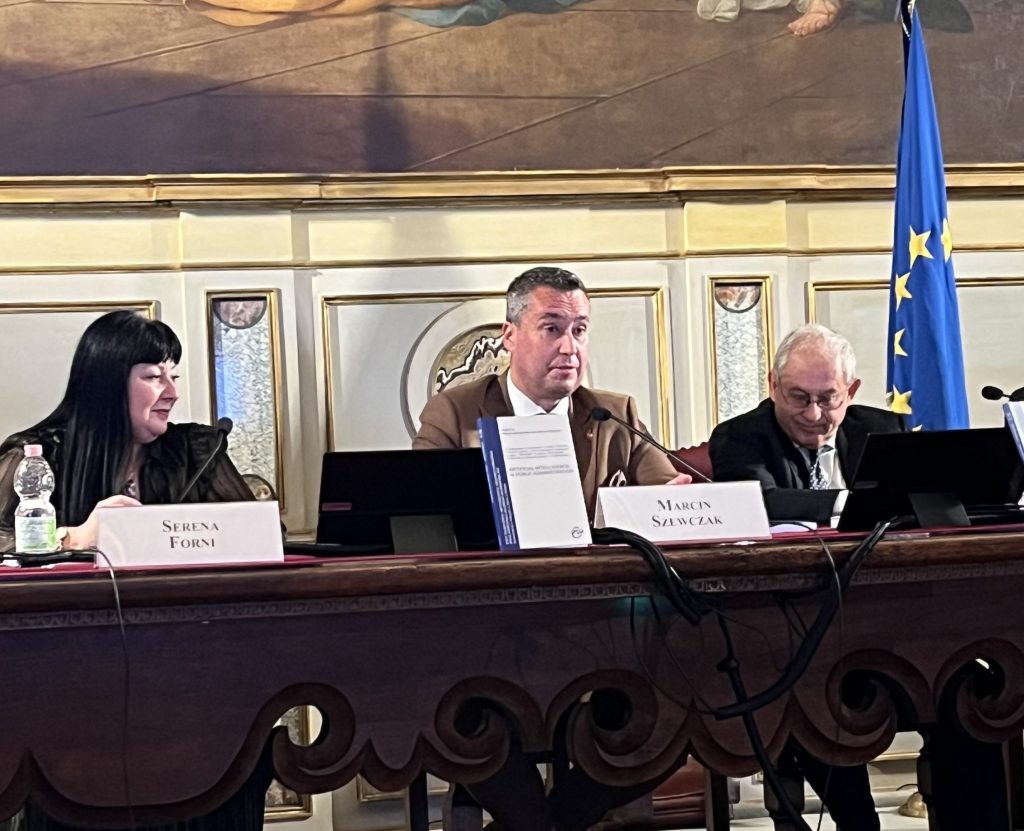
The other co-editor, Dr. habil. Marcin Szewczak, a professor at the John Paul II Catholic University of Lublin, teaches local government law and administrative science. He is also a member of the executive board of Poland’s Lublin region.
Szewczak placed AI within a longer transformation of public administration, from hierarchical bureaucracy through management models influenced by business and systems of governance involving European, national, regional and local authorities.
His contribution to the book compares Italian and Polish approaches to AI regulation. In his reading, the Italian approach gives greater prominence to the person and human dignity, while the Polish approach places more emphasis on procedural and market considerations.
The comparison illustrated why an international dialogue is necessary even within a shared European framework. National choices reflect different institutional priorities, and comparing them can expose questions that a purely domestic debate leaves underexamined.
Szewczak also conveyed greetings from Professor Przemysław Czarnek, a Polish parliamentarian and former education minister, whose planned remote participation could not take place.
Ukraine: Turning Guidance Into Procedures

Joining by video, Solomiia Kira, a Ukrainian doctoral researcher at the College of Legal Sciences in Lublin, part of the Warsaw-based Nicolaus Copernicus Superior School, brought the discussion to the practical relationship between technological adoption and legal certainty.
Her contribution, presented under the title Beyond Soft Law: Toward a Procedural Framework for AI in Ukrainian Public Administration, examined the gap between the use of AI by public authorities and the rules governing it.
Kira described the role of guidance, recommendations and other nonbinding policy documents, collectively known as soft law. In her analysis, these already contain useful mechanisms for assessing risks, checking results and guiding officials. The next task is to give those mechanisms an appropriate institutional structure and binding legal basis.
Her proposal was therefore to build on existing work rather than begin again. She connected that process to Ukraine’s alignment with the European framework, while suggesting that Ukrainian experience could also contribute to discussions within EU member states.
Pittori: The Professional Cost of Uncritical Reliance
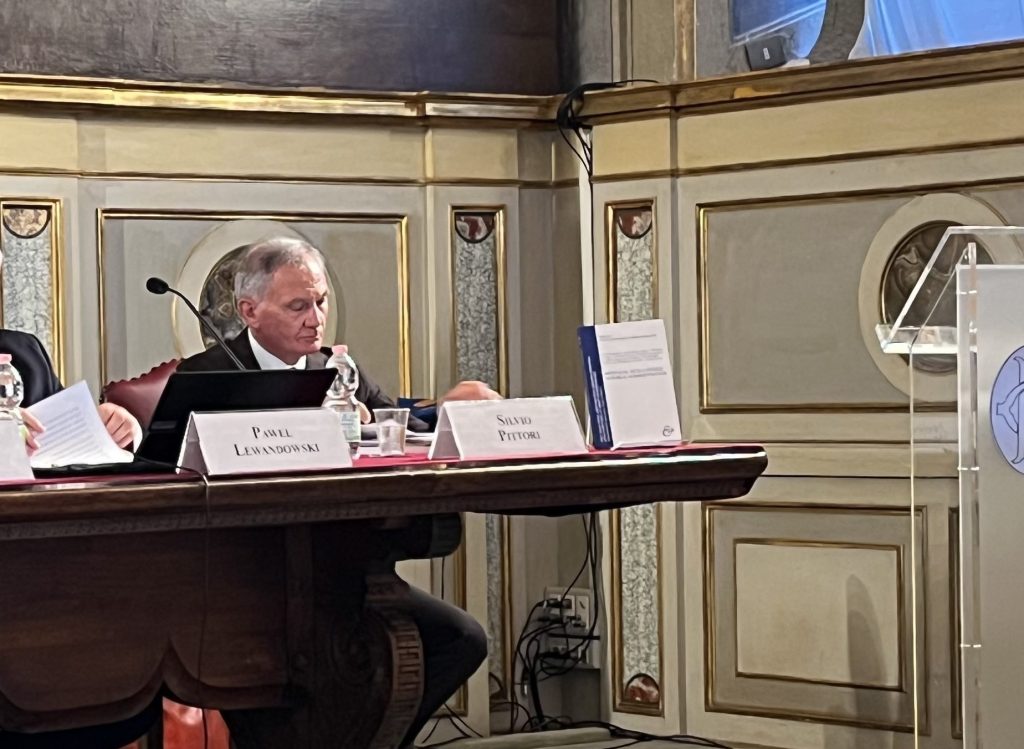
The closing speaker, Attorney Silvio Pittori, is president of the board of the Educandato Statale della Santissima Annunziata, a historic educational institution in Florence, and chairs Domus Europa’s Justice and Human Rights Commission.
Drawing on legal practice, Pittori discussed the dangers of relying on plausible-looking material without checking its reasoning or sources. His concern extended to professional formation: if junior practitioners routinely delegate the development of an argument, they may lose opportunities to acquire the skills needed to evaluate it.
The issue, in his account, is the gradual surrender of discernment. The ability to produce a polished document does not establish the quality of the legal thought behind it.
Forni’s closing remarks returned to education and the search for the human person at the center of technological change.
Exclusive Interview: Can Europe Choose to Stop?
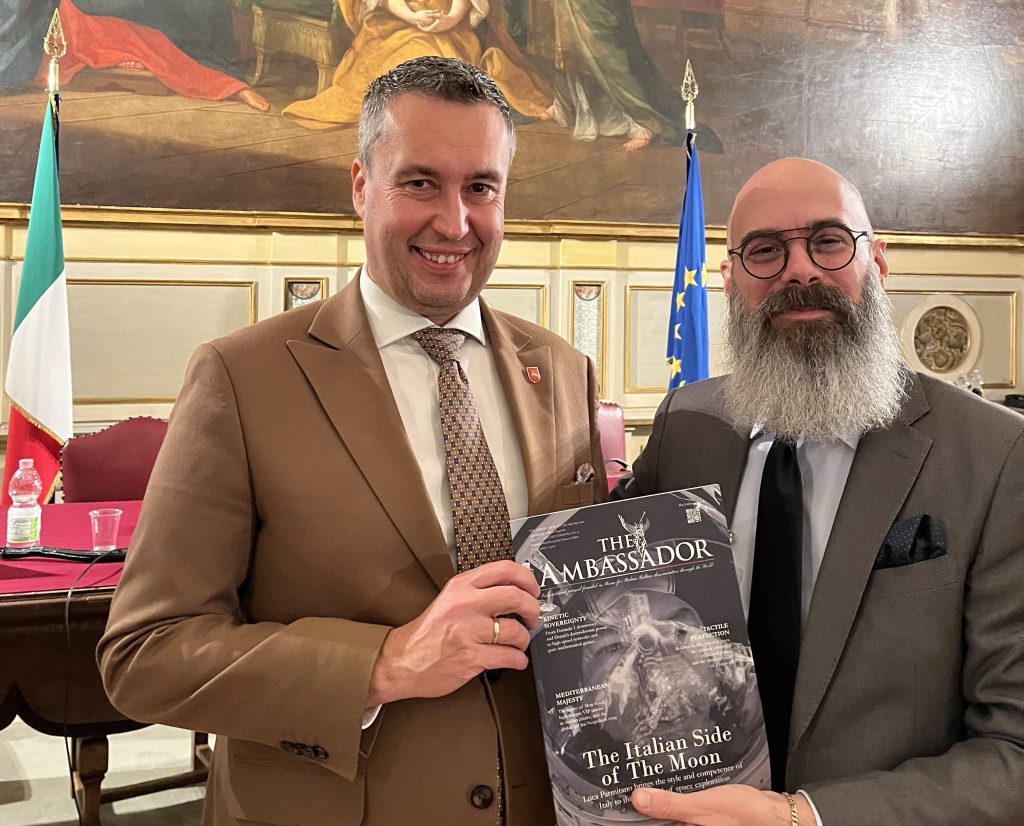
Speaking exclusively to Matteo Valléro for The Ambassador on the sidelines of the event, Professor Szewczak addressed a further question: could Europe choose a much more restrictive path, limiting AI’s role and potentially excluding it from areas such as public administration?
“I think it’s impossible,” he replied.
His answer rested first on economic interdependence. European countries and businesses are connected to international corporations and markets, including China and the United States. In his view, those relationships make a general European withdrawal from AI impractical.
He then turned to political coordination. Szewczak argued that the European Union’s economic cooperation coexists with substantial disagreements among member states, making a common political response difficult. He linked the AI debate to a broader need for Europe to reconsider its position and capacity for collective action.
His response concerned the prospect of broad exclusion, rather than the justification for restrictions on particular applications. It brought the interview back to the question running through the afternoon: how can European institutions make deliberate choices about AI while retaining the competence and authority to put those choices into practice?
The importance of this project, and of the book that gives it a lasting form, extends across civil society. How public authorities use AI concerns everyone who relies on a public service, seeks an explanation for a decision or expects fair treatment from an institution. By bringing countries and disciplines into the same conversation, the initiative promoted by Giulimondi opens a debate whose relevance will endure as technologies and their applications change. Scholars and practitioners have an essential contribution to make, but citizens also have a stake and a voice in deciding what kind of public administration should serve them.
Discover more from The Ambassador
Subscribe to get the latest posts sent to your email.