

There are moments in the history of literature that defy the laws of probability. One of these occurred exactly one hundred years ago, when the Swedish Academy looked down from the austere heights of Stockholm and decided to bestow the highest honor in the literary world upon a woman from the deepest, wildest heart of the Mediterranean. Grazia Deledda remains, to this day, the only Italian woman to have won the Nobel Prize for Literature. As we enter the centenary celebrations (she was awarded the 1926 prize in 1927), the magnitude of this achievement appears even more staggering than it did then. Deledda was not a salon intellectual from Rome or a polished academic from Turin. She was a daughter of Nuoro, a town isolated by mountains and bandits, a woman who had ceased formal schooling at the age of ten because social conventions deemed it unnecessary for a girl. Yet, she possessed a force of will that was as granite-like as the landscape surrounding her. She taught herself to write, she taught herself to observe, and ultimately, she taught the world that the human drama played out in a shepherd’s hut in Barbagia was as universal as a Greek tragedy.
The Athens of Sardinia
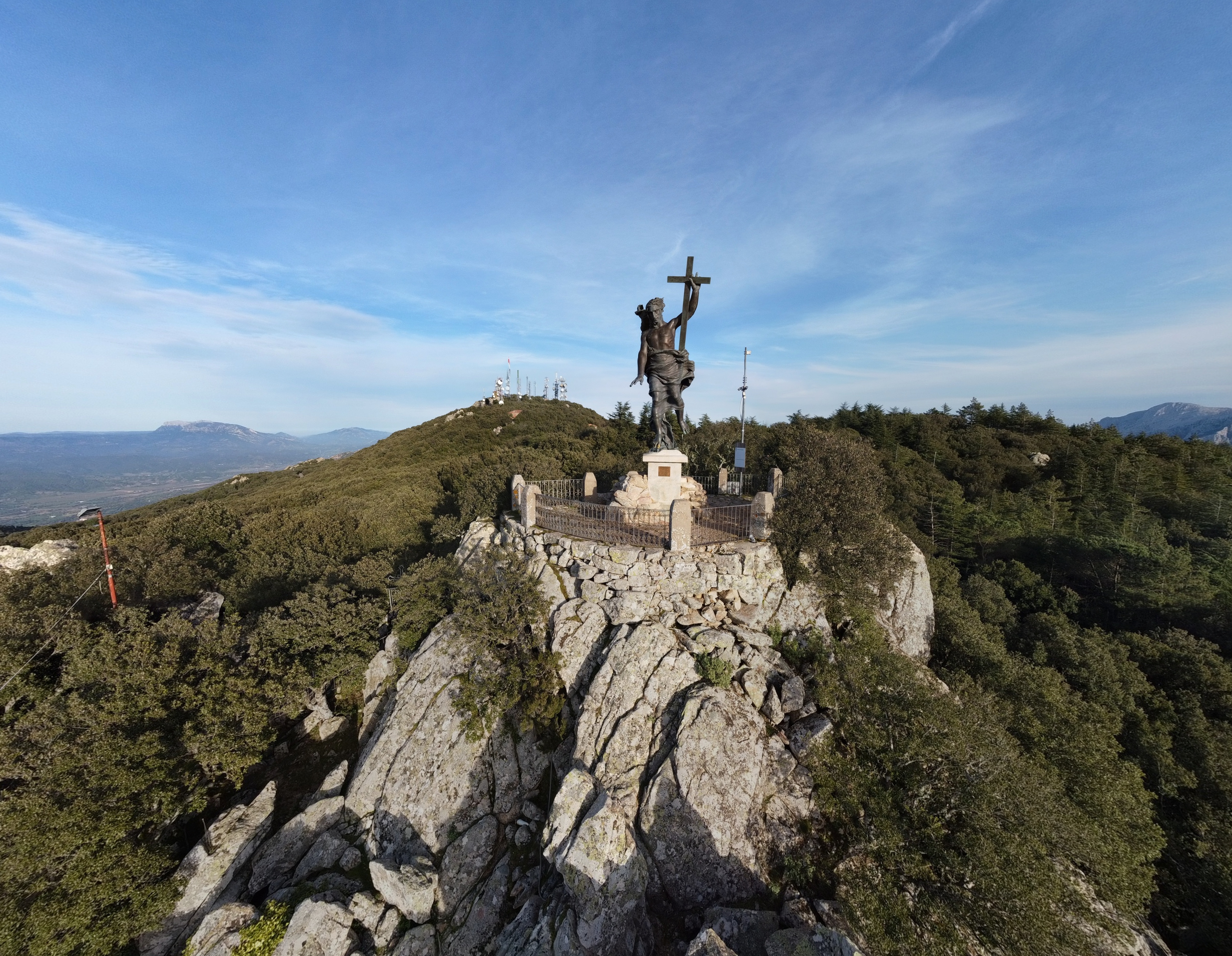
To understand Deledda, one must first understand Nuoro. In the late 19th and early 20th centuries, this town perched on the slopes of Mount Ortobene was a paradox. It was an archaic place, governed by ancient codes of honor and vengeance, yet it was also known as the “Athens of Sardinia” for its extraordinary concentration of poets, lawyers, and thinkers. It was here, in a house that smelled of olives and almond cakes, that Grazia absorbed the “mythic” quality of her surroundings. The Nuoro of her youth was a place of shadows and silence, where the supernatural coexisted with the mundane. In 2026, visitors to her ancestral home—now a museum—can still feel the claustrophobia and the magic of that environment. It was a world where modernity was a distant rumor, and life was dictated by the cycle of the seasons and the unwritten laws of the community. Deledda did not just describe this world; she breathed it onto the page.
Landscape as Destiny
In her masterpieces, such as Reeds in the Wind (Canne al vento) or Elias Portolu, the landscape is never merely a backdrop. It is a protagonist. In Deledda’s Sardinia, the wind has a voice, the oak trees have memories, and the moon is a judging eye. She pioneered a form of “magical realism” long before the term became associated with Latin American literature. Her characters are inextricably bound to the earth. They are shaped by the wind that bends the reeds; they are hardened by the sun that cracks the soil. The 2026 reader, increasingly disconnected from the natural world, finds in Deledda a startling reminder of our dependence on the environment. She describes a “biocultural” unity where man and nature are locked in a struggle that is both violent and tender. To read her descriptions of the Barbagia mountains is to understand that geography is destiny.
The Anthropology of the Invisible
Beyond the physical landscape, Deledda documented the invisible landscape of the Sardinian psyche. Her novels are saturated with a pre-Christian spirituality that lies just beneath the surface of Catholicism. She writes of the Janas (the fairies who weave gold in domed tombs), of the Panas (the spirits of women who died in childbirth), and of the ever-present concept of “Destiny” (Sorte). This is not mere folklore used for decoration; it is the operating system of her society. Her characters live in a world where a gust of wind or the flight of a bird can be an omen. For the modern international audience, this anthropological richness is mesmerizing. Deledda captures a Mediterranean worldview that is vanishing, a way of thinking where the boundary between the living and the dead, the magical and the real, is porous. She preserves the collective memory of a people who, for millennia, used myths to explain the harshness of their existence.
The Weight of Conscience
While her setting was local, her themes were Dostoevskian. Deledda was obsessed with the concept of sin, guilt, and the possibility of redemption. Her characters are often tormented souls, wrestling with a moral dilemma that eats away at them from the inside. Efix, the servant in Reeds in the Wind, is one of the great tragic figures of European literature—a man who spends his life trying to atone for a past crime through silent, humble service. This psychological depth is what convinced the Nobel committee. They saw that behind the folklore and the exotic costumes, Deledda was exploring the fundamental architecture of the human conscience. She explored the conflict between passion and duty, between the desire for freedom and the chains of tradition. In a secularized 2026, her exploration of the “sacredness” of moral law remains powerfully resonant.
Galte: A Literary Pilgrimage
To truly grasp the texture of Deledda’s world, one must travel to Galtellì, the village she renamed “Galte” in Reeds in the Wind. Nestled in the shadow of Monte Tuttavista, this village has preserved the atmosphere of the novel almost intact. The “Literary Park” established here allows visitors to walk in the footsteps of Efix and the Dame Pintor. One can visit the ancient cathedral of San Pietro, with its medieval frescoes that seem to watch the faithful, and the ruins of the castle that dominate the valley. In 2026, Galtellì has become a model for “literary tourism,” offering an experience that is the antithesis of the crowded beaches of the Costa Smeralda. Here, silence is the attraction. Walking these cobblestone streets, listening to the wind rattle the shutters, one understands how Deledda transformed a small, dusty village into a universal stage for the human condition. It is a place where literature is written in stone.
A Feminist Before Her Time
Grazia Deledda never labeled herself a feminist, yet her life was a radical act of female emancipation. In a society where a woman’s destiny was strictly confined to the domestic sphere—marriage, children, and the loom—she dared to want more. She dared to send her stories to magazines in Rome and Milan. She dared to negotiate contracts. She dared to leave the island. Her move to Rome was an escape, but a physical one only; spiritually, she never left Sardinia. She demonstrated that a woman could have a voice, that she could be an artist without sacrificing her identity as a wife and mother. Today, she stands as a monumental figure for Italian women, a testament to the power of self-determination against overwhelming odds.
The Language of Silence
One of Deledda’s greatest challenges was linguistic. She thought in Sardinian—a language distinct from Italian—but wrote in Italian. This tension created a unique style. Her Italian is limpid, almost biblical in its simplicity, yet it vibrates with the rhythms and structures of her native tongue. She had to “translate” a culture that was largely oral into the written form of the mainland. In doing so, she saved a civilization from oblivion. Before Deledda, Sardinia was often depicted by outsiders as a savage, primitive land. She reclaimed the narrative. She showed the dignity, the complexity, and the profound wisdom of her people. She gave a voice to the silent shepherds and the grieving women who had been ignored by history.
The Legacy in 2026
A century after her triumph, Grazia Deledda is experiencing a renaissance. She is no longer relegated to school textbooks as a regional curiosity. She is being re-read as a European master, translated into new languages, and adapted for cinema and theater. The “Literary Park” dedicated to her in Galtellì and Nuoro has become a destination for a new kind of tourism—slow, reflective, seeking the “soul of place” that she described so vividly. In an era of globalization that tends to erase cultural differences, Deledda reminds us of the power of roots. She teaches us that the more specific and local a story is, the more universal it can become.
The Eternal Wind
Ultimately, Grazia Deledda remains the guardian of the island’s mystery. She did not solve the enigma of Sardinia; she deepened it. Reading her today, one can still hear the rustle of the reeds, the howling of the wind over the granite peaks, and the whisper of ancient prayers. She proved that greatness does not require a formal education or a cosmopolitan address. It requires only an open eye and a heart capable of feeling the “tragic sense of life.” As the Nobel medal shines in the museum case in Nuoro, it reflects not just the glory of a writer, but the indomitable spirit of an entire people who, through her, finally spoke to the world.
Discover more from The Ambassador
Subscribe to get the latest posts sent to your email.