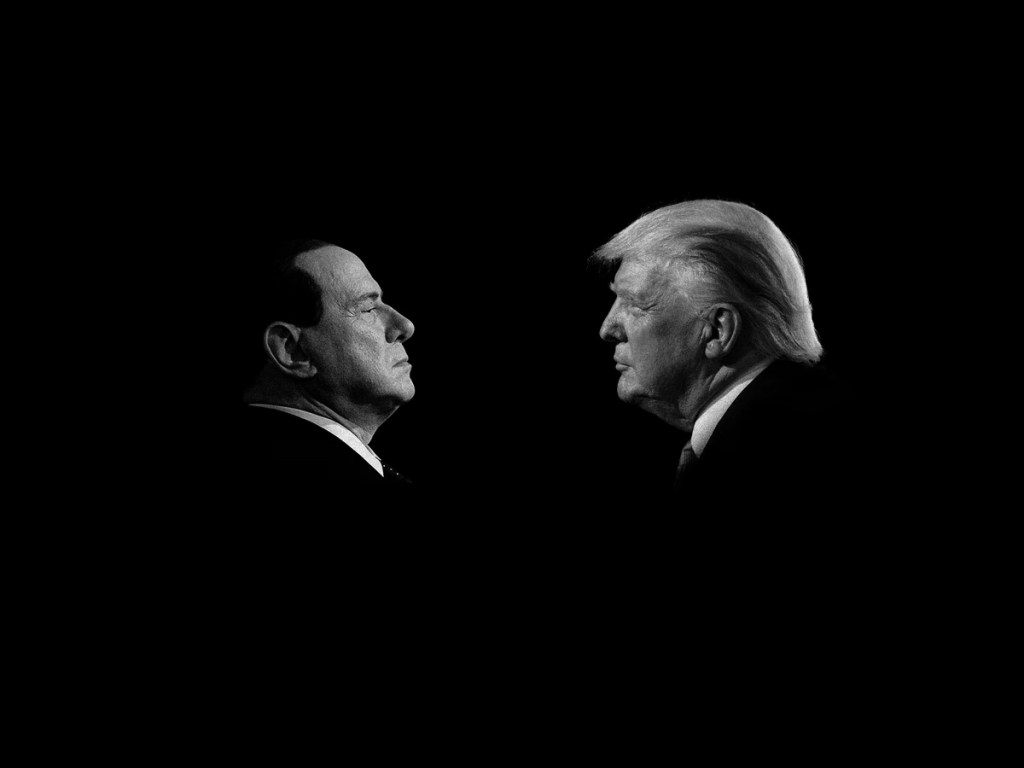

Donald Trump and Silvio Berlusconi are two of the most controversial and influential political figures of the 21st century. Both have left an indelible mark on their countries’ political landscapes, and their leadership styles have sparked debates worldwide. This article delves into the similarities and differences between Trump and Berlusconi, examining whether Italy’s experience with Berlusconi foreshadowed the rise of Trump in the United States.
Similarities
- Business Background: Both Trump and Berlusconi entered politics after successful careers in business. Trump, a real estate mogul and television personality, and Berlusconi, a media tycoon, leveraged their business acumen and public personas to gain political traction.
- Populist Appeal: Both leaders capitalized on populist sentiments, appealing to voters who felt disenfranchised by the political establishment. Their campaigns focused on nationalism, economic growth, and anti-immigration policies.
- Media Savvy: Trump and Berlusconi are known for their adept use of media to shape public opinion. Berlusconi’s control over Italian media and Trump’s mastery of social media platforms allowed them to communicate directly with their supporters and bypass traditional media channels.
- Controversies and Legal Issues: Both figures have faced numerous legal challenges and controversies throughout their careers. Trump’s impeachment trials and Berlusconi’s multiple legal battles have kept them in the headlines and fueled public debate.
Differences
- Political Experience: Berlusconi served as Italy’s Prime Minister for three non-consecutive terms, while Trump held the presidency for a single term. Berlusconi’s longer tenure allowed him to implement more extensive policy changes.
- Policy Focus: While both leaders prioritized economic growth, their policy agendas differed in other areas. Berlusconi focused on tax cuts and deregulation, while Trump emphasized trade protectionism and immigration reform.
- International Relations: Berlusconi maintained close ties with European leaders and played a significant role in international diplomacy, such as the Pratica di Mare summit. In contrast, Trump’s “America First” approach often strained relationships with traditional allies.
Did Italy Anticipate the United States?
Italy’s experience with Berlusconi can be seen as a precursor to Trump’s rise in the United States. Both leaders’ populist appeal, media savvy, and controversial personas resonated with voters who felt disconnected from the political establishment. However, the unique political and cultural contexts of Italy and the United States also shaped their respective trajectories.
A Tribute to Silvio Berlusconi
Biography
Silvio Berlusconi was born on September 29, 1936, in Milan, Italy. He began his career in real estate and later founded Mediaset, one of Italy’s largest media companies. Berlusconi entered politics in the early 1990s, founding the Forza Italia party and becoming Prime Minister in 1994. He served three non-consecutive terms as Prime Minister, leaving a lasting impact on Italian politics.
Foreign Policy Achievements
One of Berlusconi’s most notable contributions to Italian foreign policy was the Pratica di Mare summit in 2002. This historic meeting brought together NATO and Russia, leading to the establishment of the NATO-Russia Council. The summit marked a significant step towards improving relations between Russia and the West, and Berlusconi played a key role in facilitating the dialogue.
Donald Trump and Silvio Berlusconi are two of the most polarizing figures in modern politics. Their similarities in business backgrounds and media strategies highlight the global trend of outsider candidates challenging the political establishment. While Italy’s experience with Berlusconi may have foreshadowed Trump’s rise in the United States, the unique contexts of each country shaped their respective political journeys.
Article written with the help of AI
Discover more from The Ambassador
Subscribe to get the latest posts sent to your email.